
Architecture of Presence: Mirante de São Jorge
For generations, the hilltop overlooking Chapada dos Veadeiros National Park has drawn residents and travelers to witness a timeless ritual: watching the sun dip beneath the rugged mountains of the Brazilian Cerrado. This gathering around the solar spectacle has long been embedded in the collective memory of the region, marking the end of the day with a shared moment of quiet reverence. Yet this daily pilgrimage connects to something far older and more profound than a local tradition. Across centuries, cultures, and continents, humanity has always turned toward the horizon at dusk. The sunset ritual is a primordial human instinct, a sacred pause where our ancestors marked the passage of time, surrendered to the cycles of the cosmos, and acknowledged our tiny, fragile place within a vast universe. The fading light signifies both an ending and a promise of renewal, calling for stillness in a world that rarely stops moving.
When the sun begins its descent over the raw, ancient topography of the Cerrado, the act of gathering transforms from a simple viewing into a collective meditation. In a modern era defined by artificial illumination and relentless speed, watching the sun set forces a return to biological time. It strips away ego, status, and noise, reducing human experience to its most fundamental elements: light, shadow, earth, and breath. To stand together on a high peak and watch the light yield to darkness is to participate in an archetype as old as consciousness itself, a unifying ceremony that reminds us of our shared human vulnerability, our deep earth-bound roots, and the quiet awe that still connects us all.
“Across centuries, cultures, and continents, humanity has always turned toward the horizon at dusk. The sunset ritual is a primordial human instinct, a sacred pause where our ancestors marked the passage of time, surrendered to the cycles of the cosmos, and acknowledged our tiny, fragile place within a vast universe. The fading light signifies both an ending and a promise of renewal, calling for stillness in a world that rarely stops moving.”

Photo by Larissa Sad
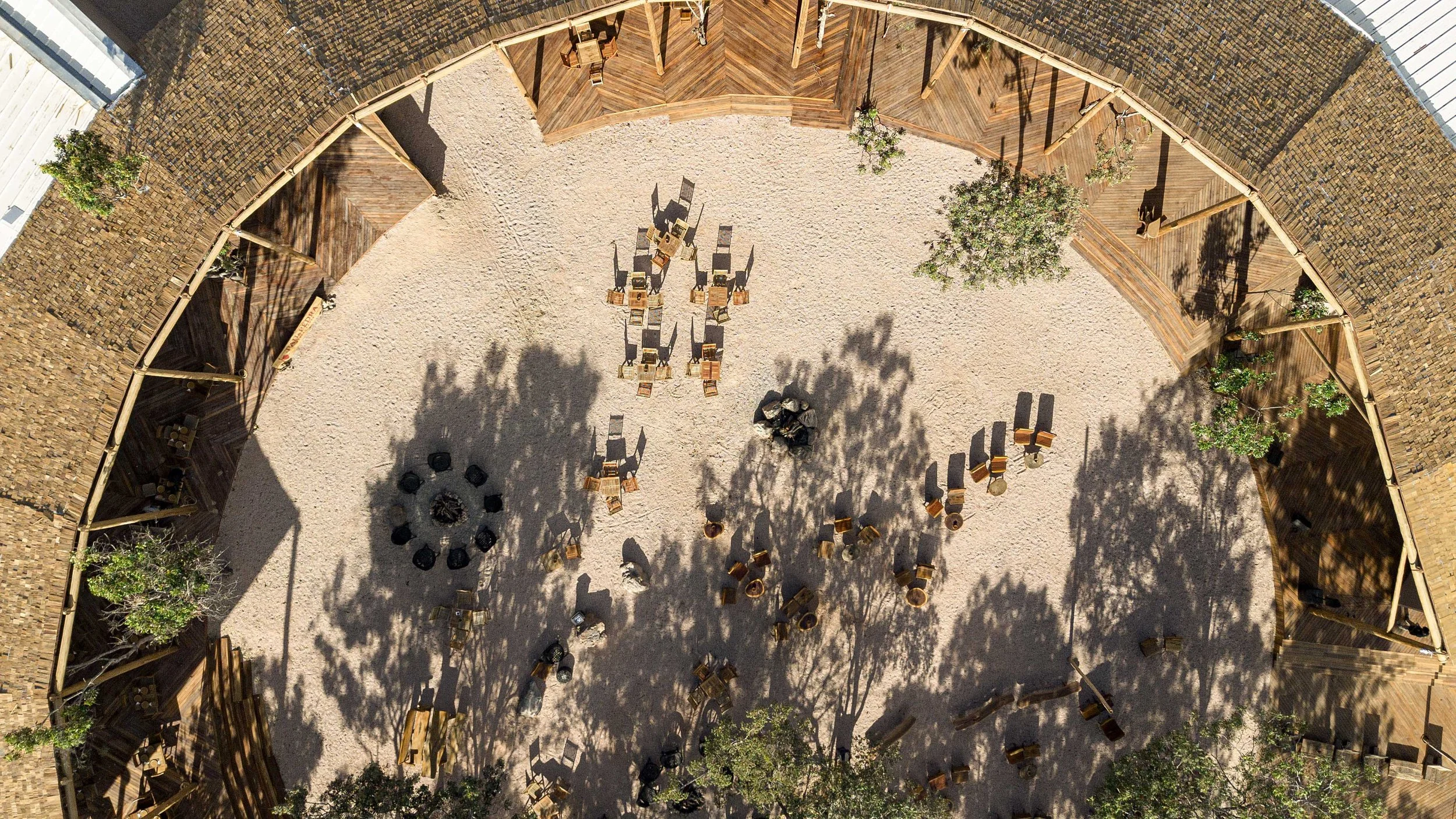
Photo by Larissa Sad
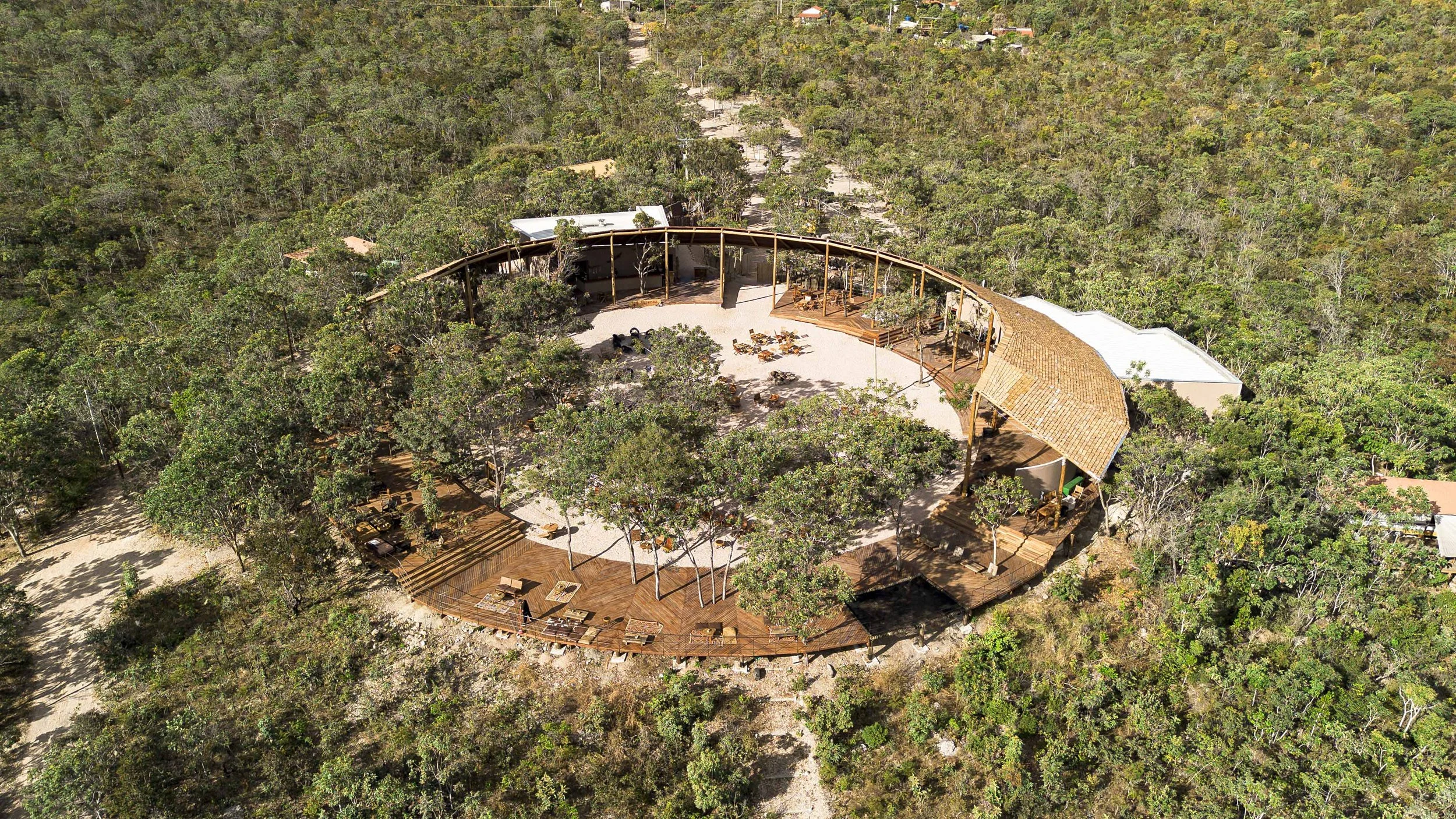
Photo by Larissa Sad
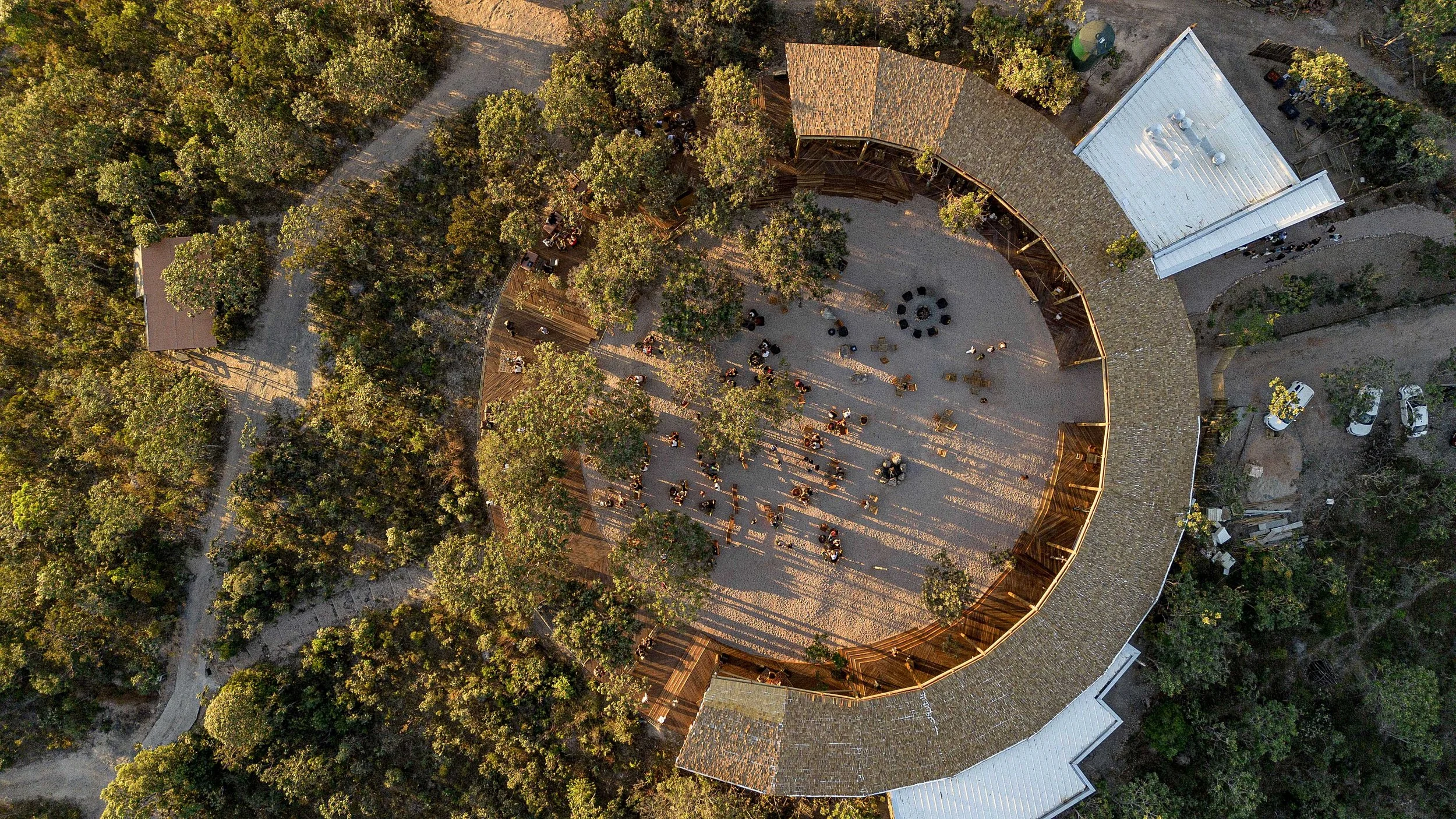
In 2026, architect Alan Chu gave spatial form to this longstanding tradition with Mirante de São Jorge. The project anchors the ancient ritual in a continuous circular ribbon, a form that throughout human history has signified gathering, orientation, and contemplation. Measuring fifty-seven meters in diameter with an eight-meter-wide ring surrounding a central void, the pavilion creates a sacred locus. The circle turns the solar spectacle into an architectural experience, inviting visitors to reconnect with the primitive rhythm of light, shadow, and horizon.
“In 2026, architect Alan Chu gave spatial form to this longstanding tradition with Mirante de São Jorge. The project anchors the ancient ritual in a continuous circular ribbon, a form that throughout human history has signified gathering, orientation, and contemplation. ”
Rooted in a philosophy of strict ecological stewardship, the intervention by Alan Chu and his design team, Cristina Chu, Ana Clara Cavalcante, and Bruno Ottoni, was built with minimal impact on the fragile ecosystem. Spanning 2,858 square meters, the pavilion occupies a natural clearing, completely bypassing the need for heavy earthworks or native flora removal. The elevated structure rests lightly upon slender piles, following the natural contours of the site. This light-touch approach allows natural drainage pathways, soil life, and native biological corridors to flow beneath the building uninhibited, demonstrating how high-design hospitality can honor the earth beneath its foundation.
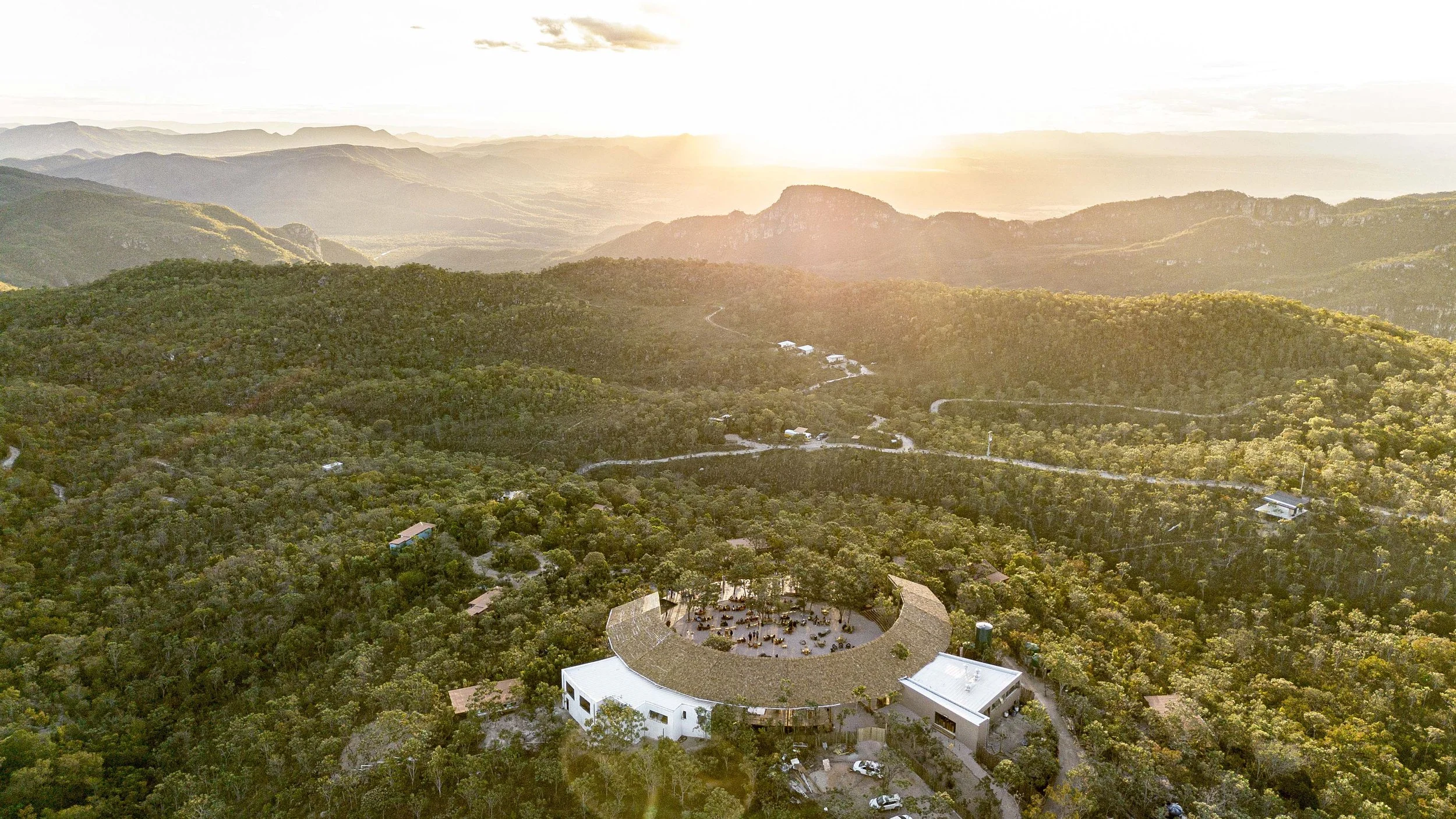
Photo by Larissa Sad
The physical architecture behaves as a framing device, deliberately heightening the perception of the surrounding wild. A gently curved timber canopy provides shelter, introducing a grounded, human scale that never severs the visual connection to the Cerrado. Existing trees pierce directly through the structure, blurring the line between engineered timber and wild canopy. Here, vegetation is never relegated to decorative landscaping; it remains an active, living component of the spatial experience, reminding guests at every step that the forest is the true host.
“The physical architecture behaves as a framing device, deliberately heightening the perception of the surrounding wild. A gently curved timber canopy provides shelter, introducing a grounded, human scale that never severs the visual connection to the Cerrado. Existing trees pierce directly through the structure, blurring the line between engineered timber and wild canopy. Here, vegetation remains an active, living component of the spatial experience, reminding guests at every step that the forest is the true host.”
At the epicenter of the circular ribbon lies an open sky courtyard that serves as the heart of Mirante de São Jorge. Open to the elements, this central void acts as an elemental clock, measuring time through the movement of clouds, shifting light, and weather patterns across the sky. The courtyard invites guests to slow down, breathe in the high-altitude air of Alto Paraíso de Goiás, and fully inhabit the immediate moment.
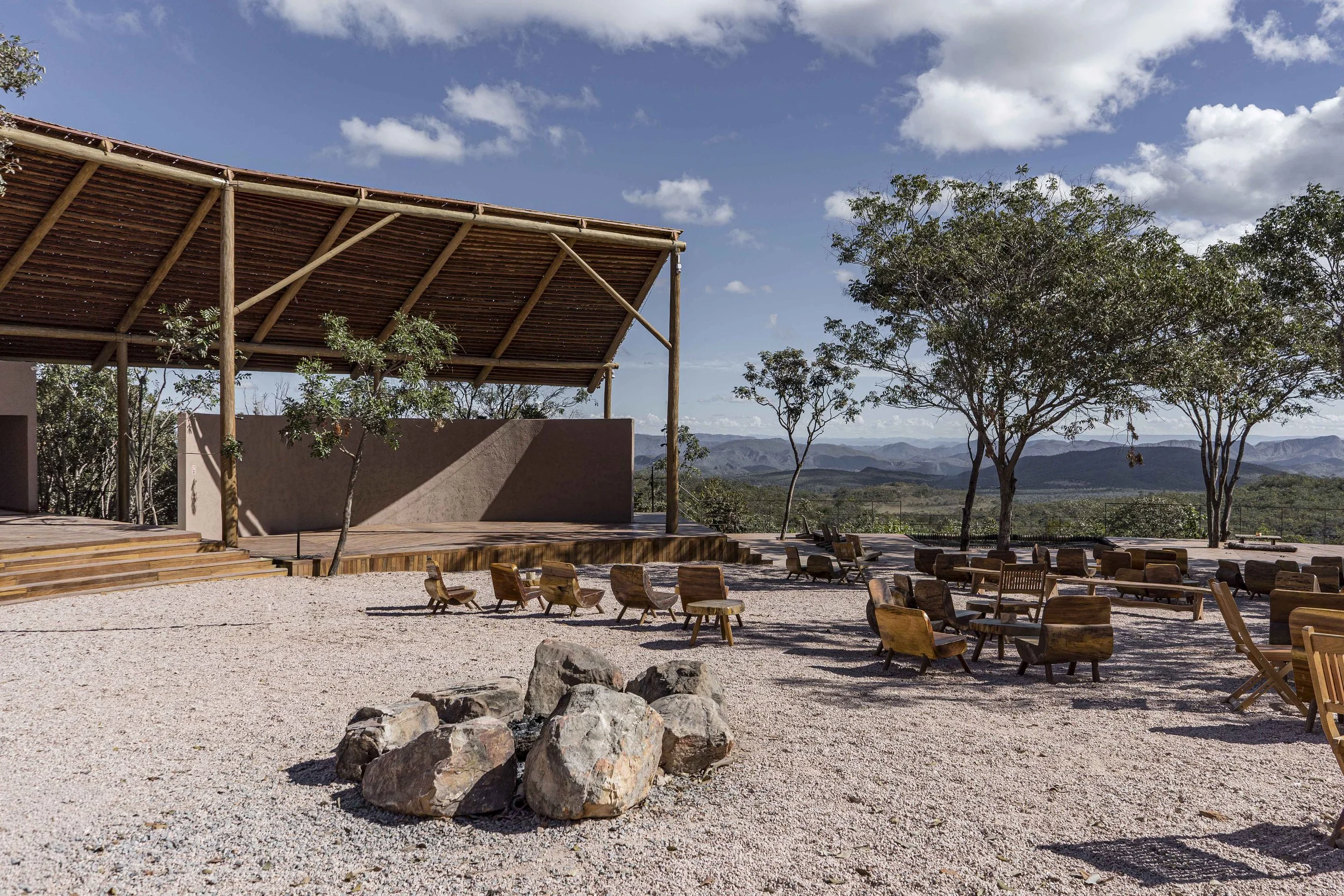
Photo by Larissa Sad
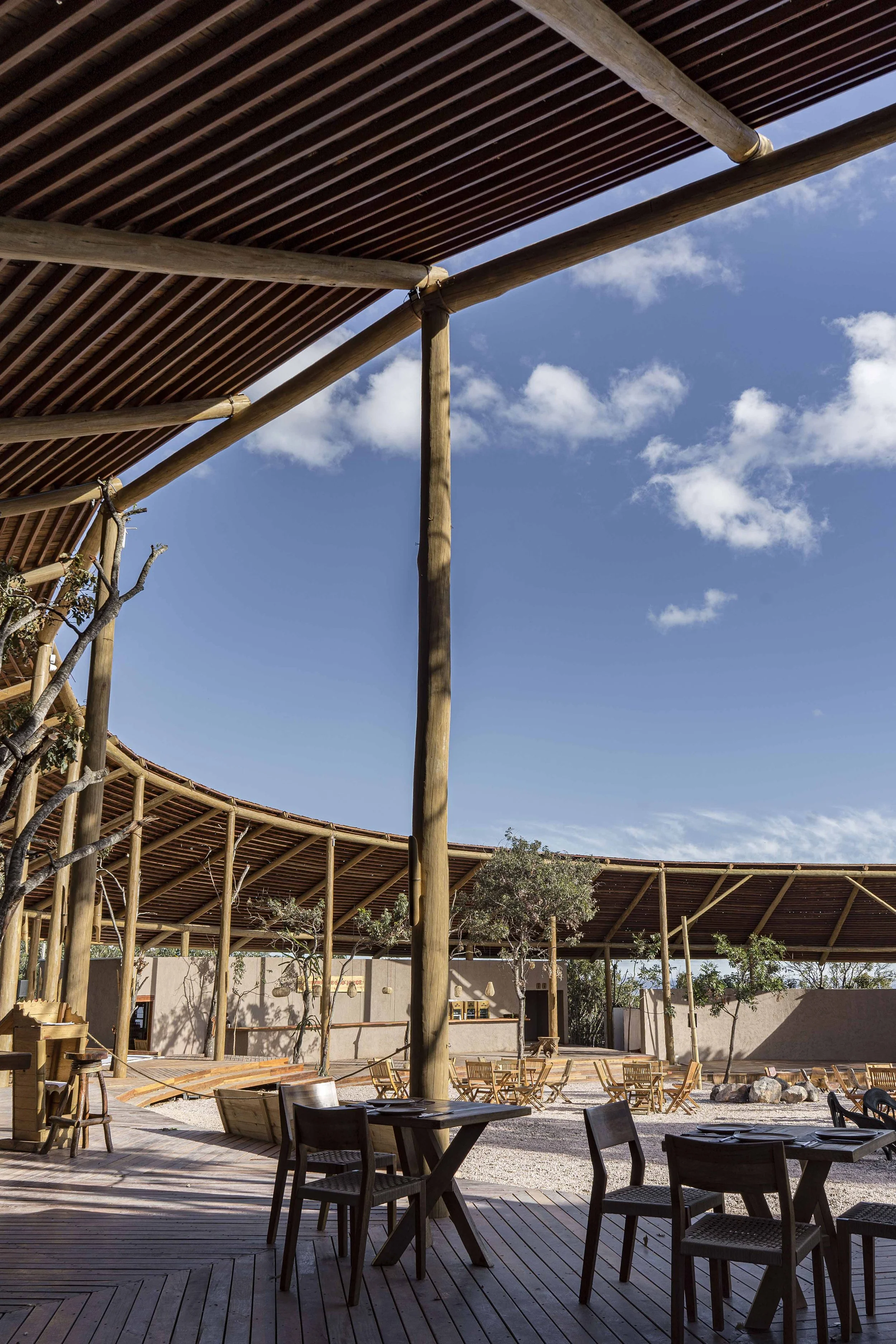
Photo by Larissa Sad
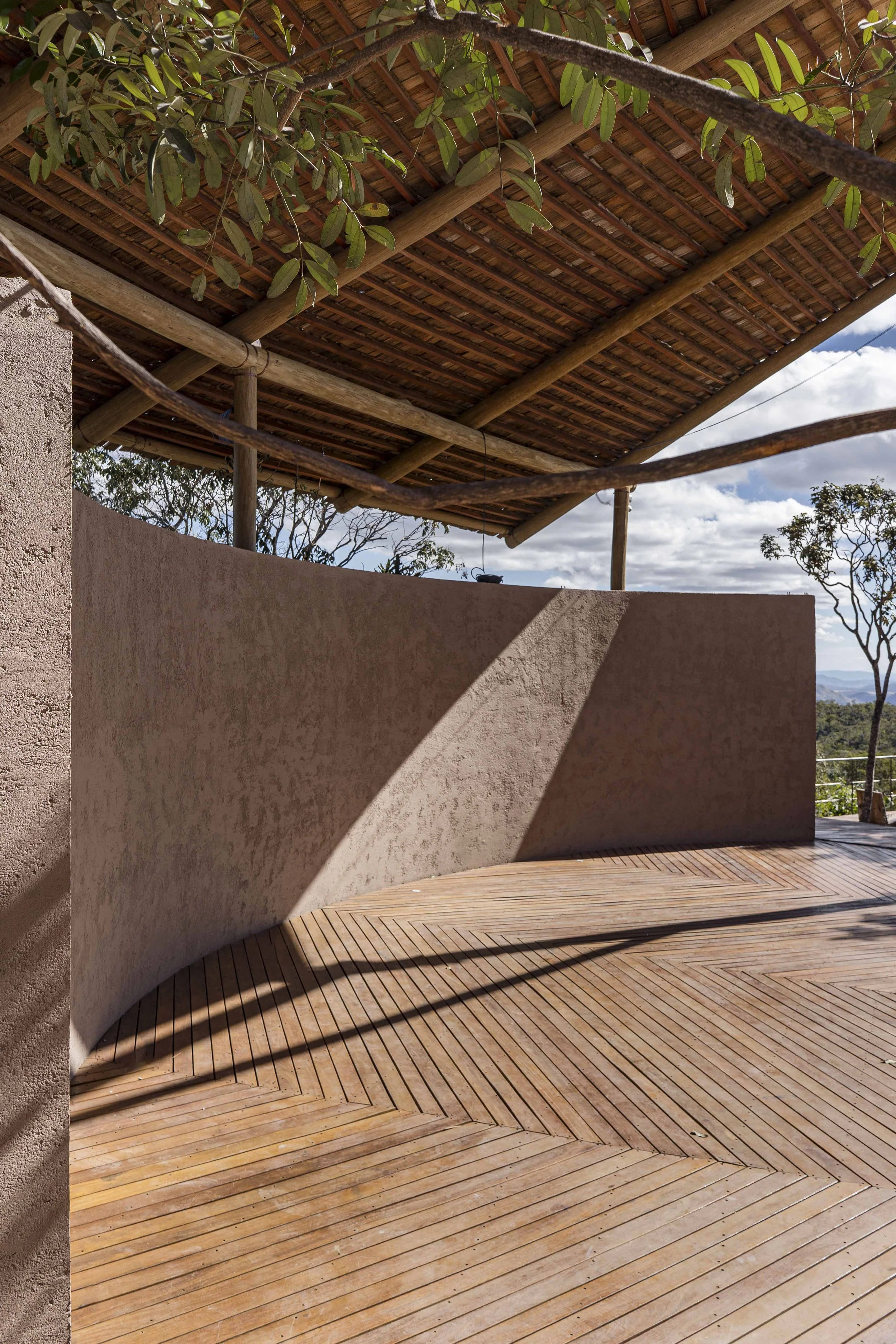
Photo by Larissa Sad
As twilight descends over the valley, the experience naturally shifts into a slower night time economy. Rather than dispersing once the sun disappears behind the mountains, visitors are drawn into the open-air restaurant, bar, and central fire pit. Built by Umbu Engenharia, the venue extends the sunset ritual into an evening affair. Enjoying local flavors under the starry skies of the Central Plateau allows the transition from day to night to become an immersive, tactile part of the architectural narrative.
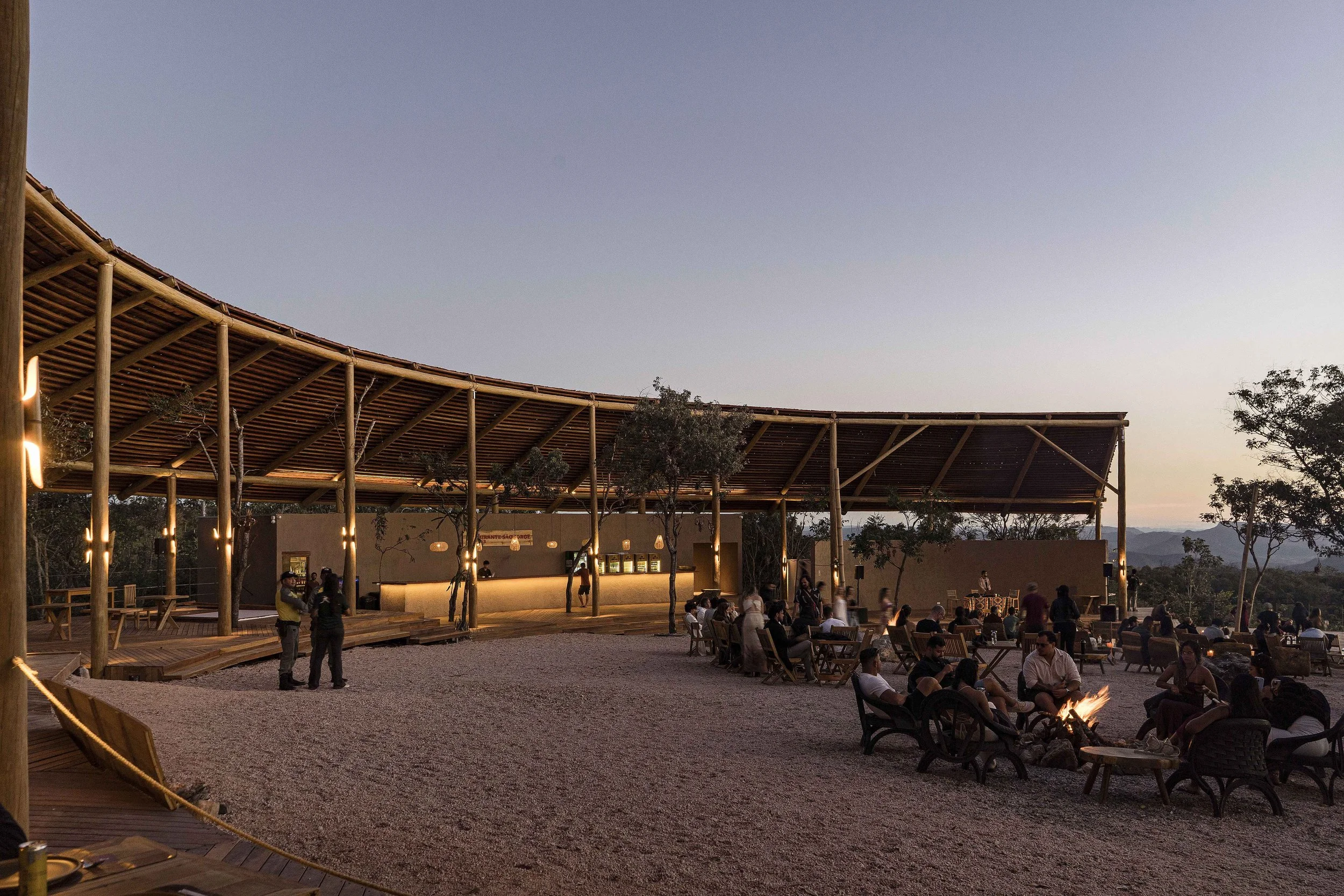
Photo by Larissa Sad
Beyond serving as a world-class hospitality space, Mirante de São Jorge stands as a catalyst for environmental conservation. Chapada dos Veadeiros is one of Brazil's most vital ecological sanctuaries and a headwater source for countless rivers. Alan Chu’s design demonstrates that long-term land preservation relies on fostering deep, emotional connections between people and place. Capturing the romance of the wild through Larissa Sad’s lens and framing the Cerrado’s raw beauty for every guest, Mirante de São Jorge proves that architecture can inspire a lasting commitment to protecting our planet's wild places.
“Beyond serving as a world-class hospitality space, Mirante de São Jorge stands as a catalyst for environmental conservation. Chapada dos Veadeiros is one of Brazil’s most vital ecological sanctuaries and a headwater source for countless rivers. Alan Chu’s design demonstrates that long-term land preservation relies on fostering deep, emotional connections between people and place. ”
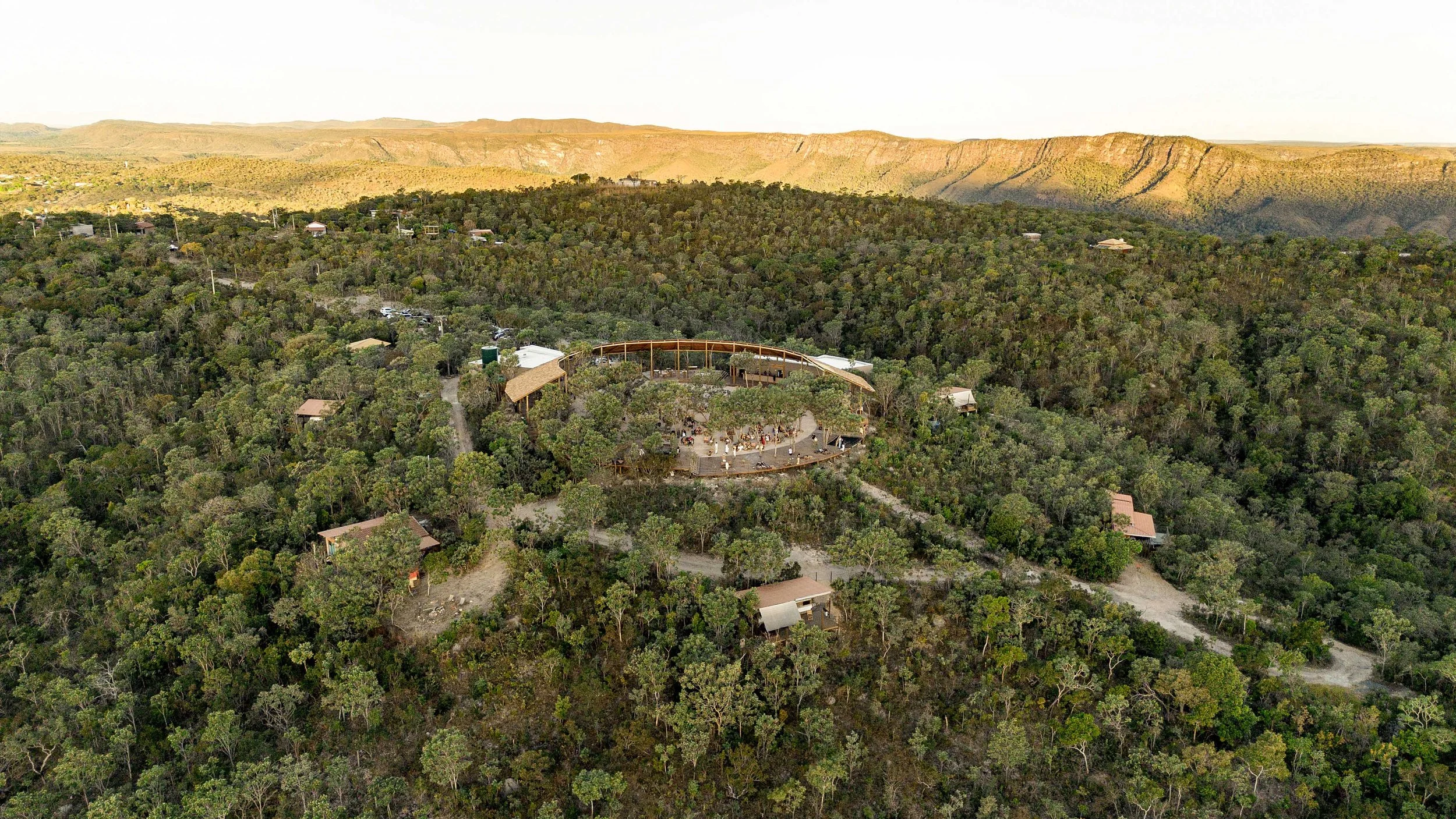
Photo by Larissa Sad
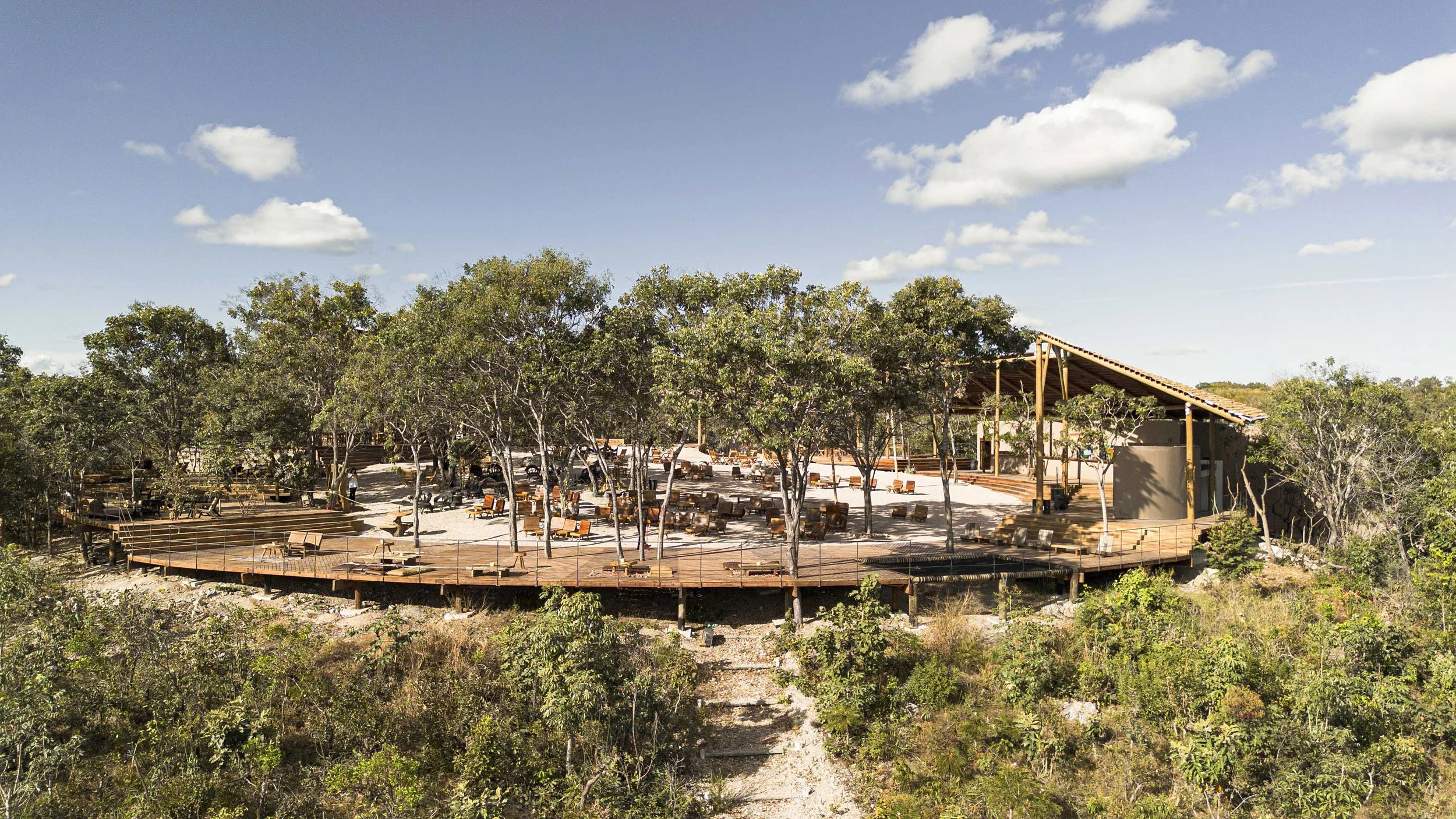
Photo by Larissa Sad
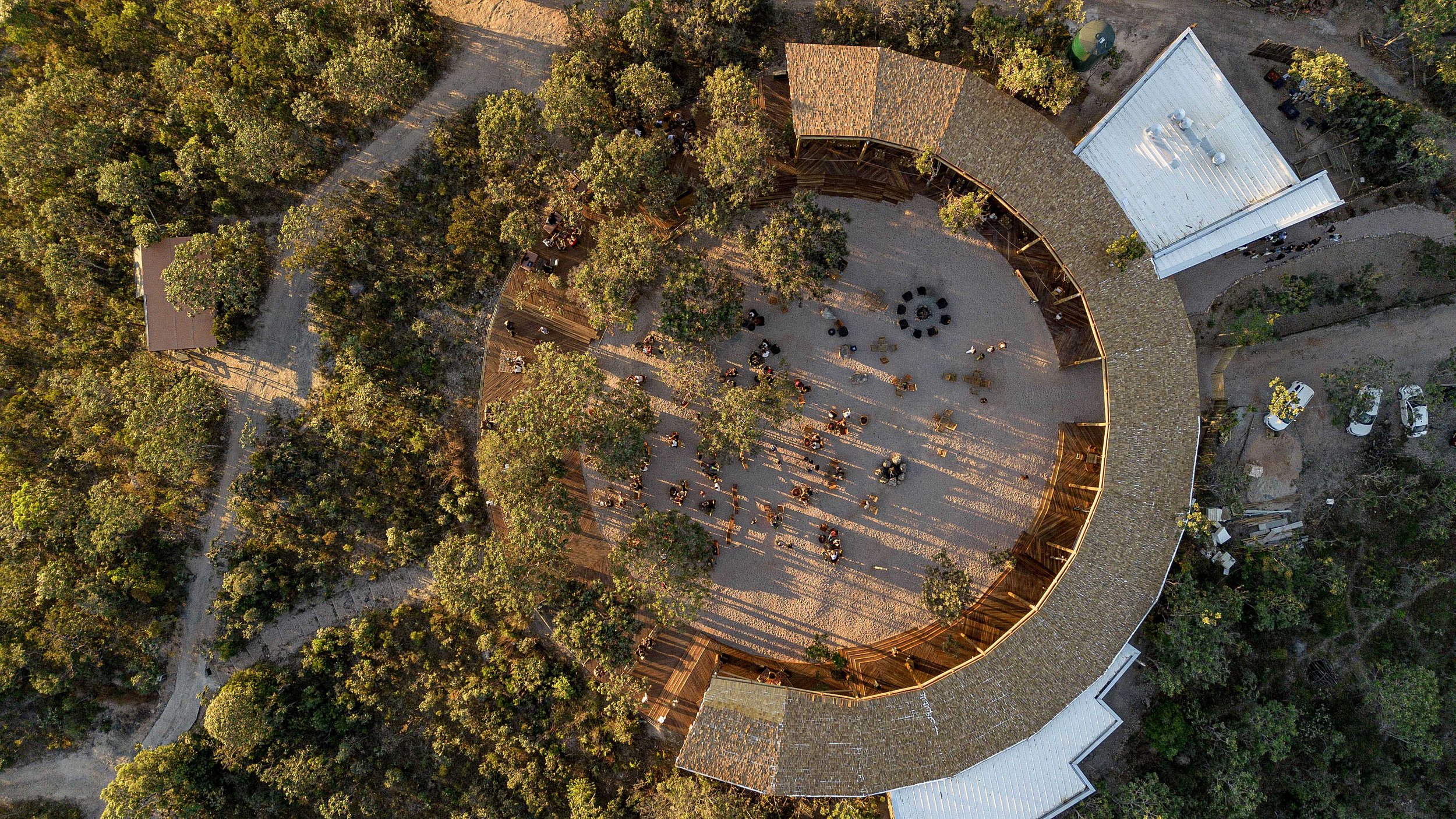
Photo by Larissa Sad
Program: Sunset Pavilion, Restaurant & Bar
Location: São Jorge, Alto Paraíso de Goiás, Brazil
Year: 2026
Area: 2.858,00m²
Architecture: Alan Chu @alan_chu
Team: Cristina Chu / Ana Clara Cavalcante / Bruno Ottoni
Construction: Umbu Engenharia
Photos: Larissa Sad
Room + Wild is the world's first and leading collective and platform for landscape-enhanced accommodation, ecotourism, nature-based destinations, and sustainable luxury travel experiences. We consistently inspire, influence, and spread awareness through our tailored travel guides, curated media content/channels, brand activations, press trips as well as visual and narrative storytelling.
Set high above Chapada dos Veadeiros National Park in Brazil, Mirante de São Jorge by Alan Chu elevates the ancient human ritual of watching the sunset into an immersive spatial experience. Designed as a fifty-seven-meter elevated circular ribbon, this sustainable sunset pavilion and restaurant in Alto Paraíso de Goiás honors the raw Cerrado landscape through minimal-impact architecture.