
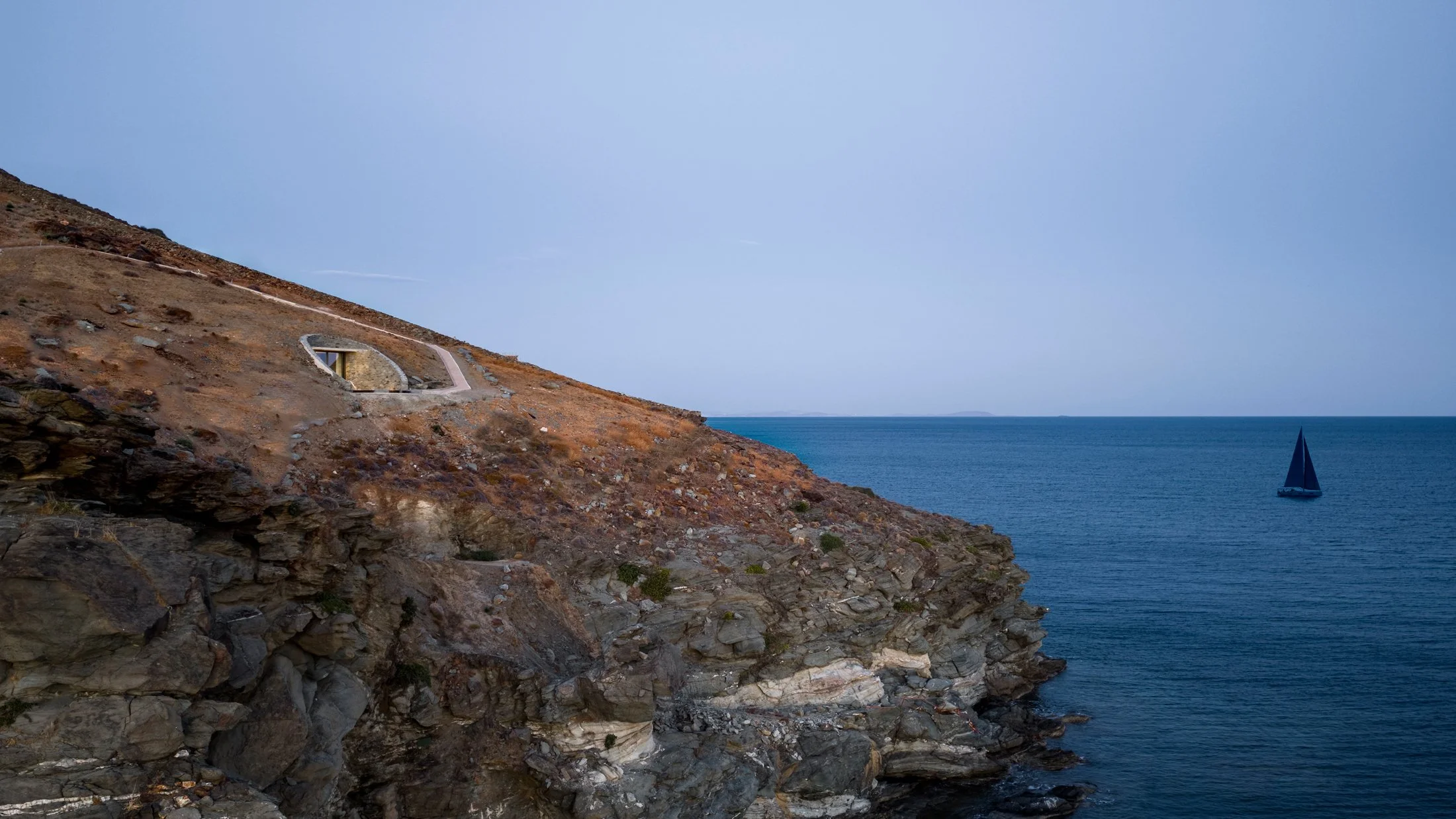
Wild Architecture: The Future of Landscape-Integrated Design
Architecture is shifting toward deeper alignment with landscape, where terrain, climate, vegetation, and time actively inform form and experience. The most compelling work today emerges through this exchange, where design responds to its setting with sensitivity and precision. Across forests, coastlines, and mountain regions, architecture is increasingly shaped through context, allowing place to guide structure, rhythm, and materiality.
This integration reshapes perception. Spaces embedded within nature create a heightened awareness of light, air, sound, and temperature, where environment becomes part of daily experience. Movement through these spaces heightens a sense of immersion, while openness extends living toward horizon, wind, and surrounding elements. The boundary between interior and exterior softens, creating environments that feel more attuned, where architecture supports presence and a closer reading of natural systems.
The future of landscape-integrated design continues to evolve through this sensitivity. Projects by Ateno Studio, Javier Senosiain, Studio MK27, and Atelier LAVIT among others reflect a growing emphasis on material restraint, local context, and ecological awareness. Wild architecture becomes an approach, shaped by collaboration with land and climate. It explores how buildings can remain light on the earth while offering deeper forms of connection, where design and landscape operate as a continuous system.
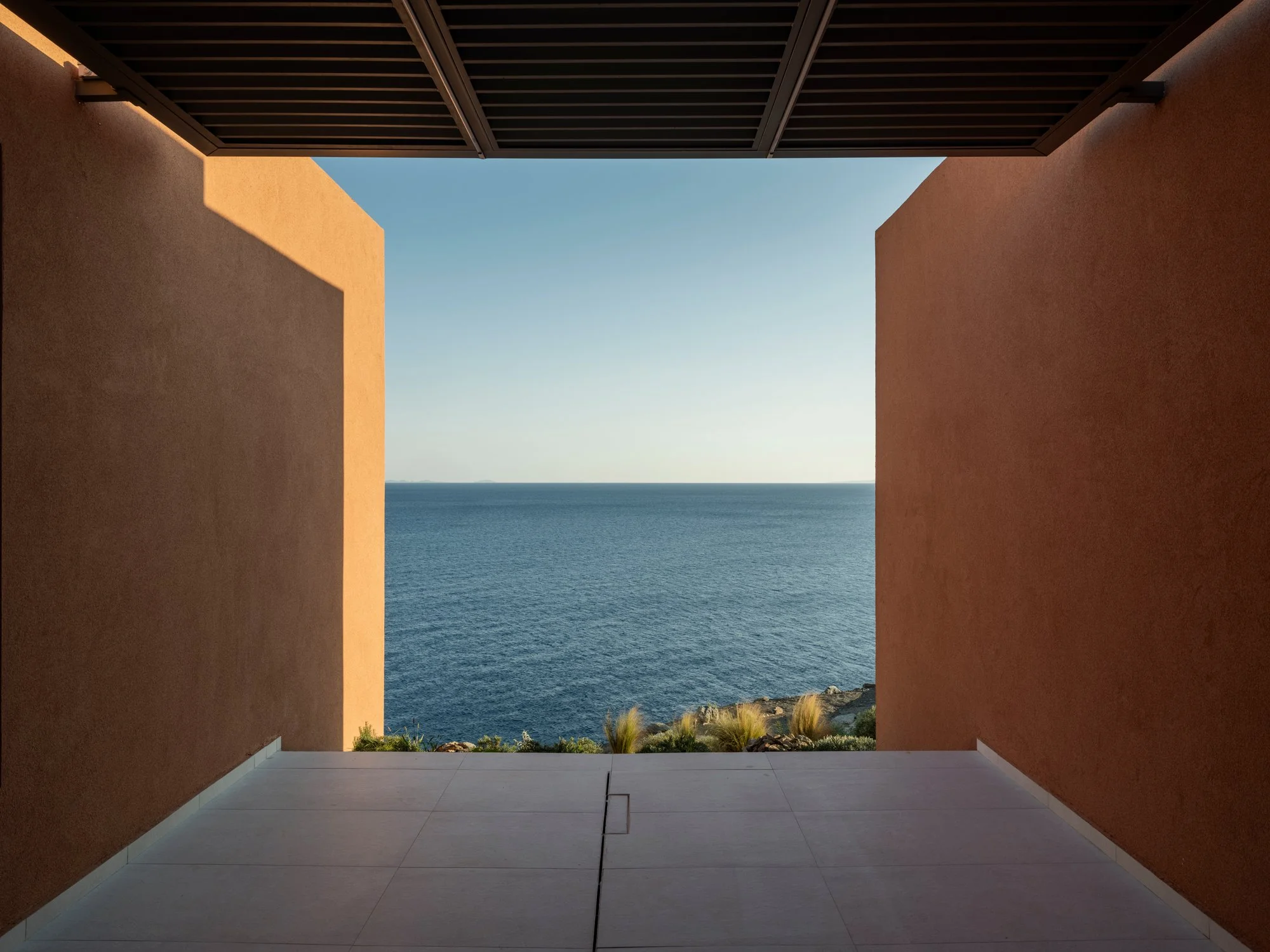
Photo by Yiorgis Yerolymbos
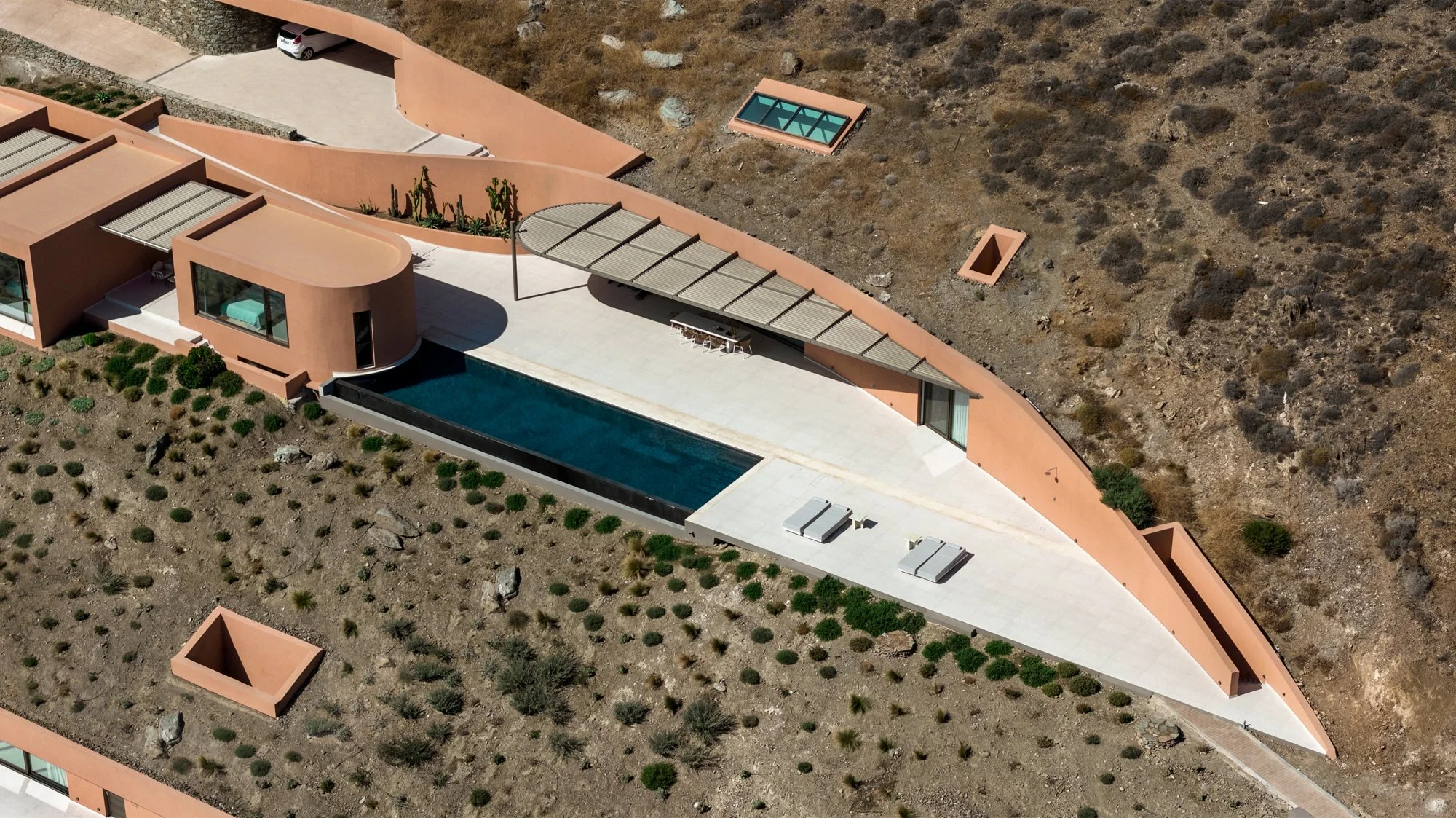
Photo by Yiorgis Yerolymbos
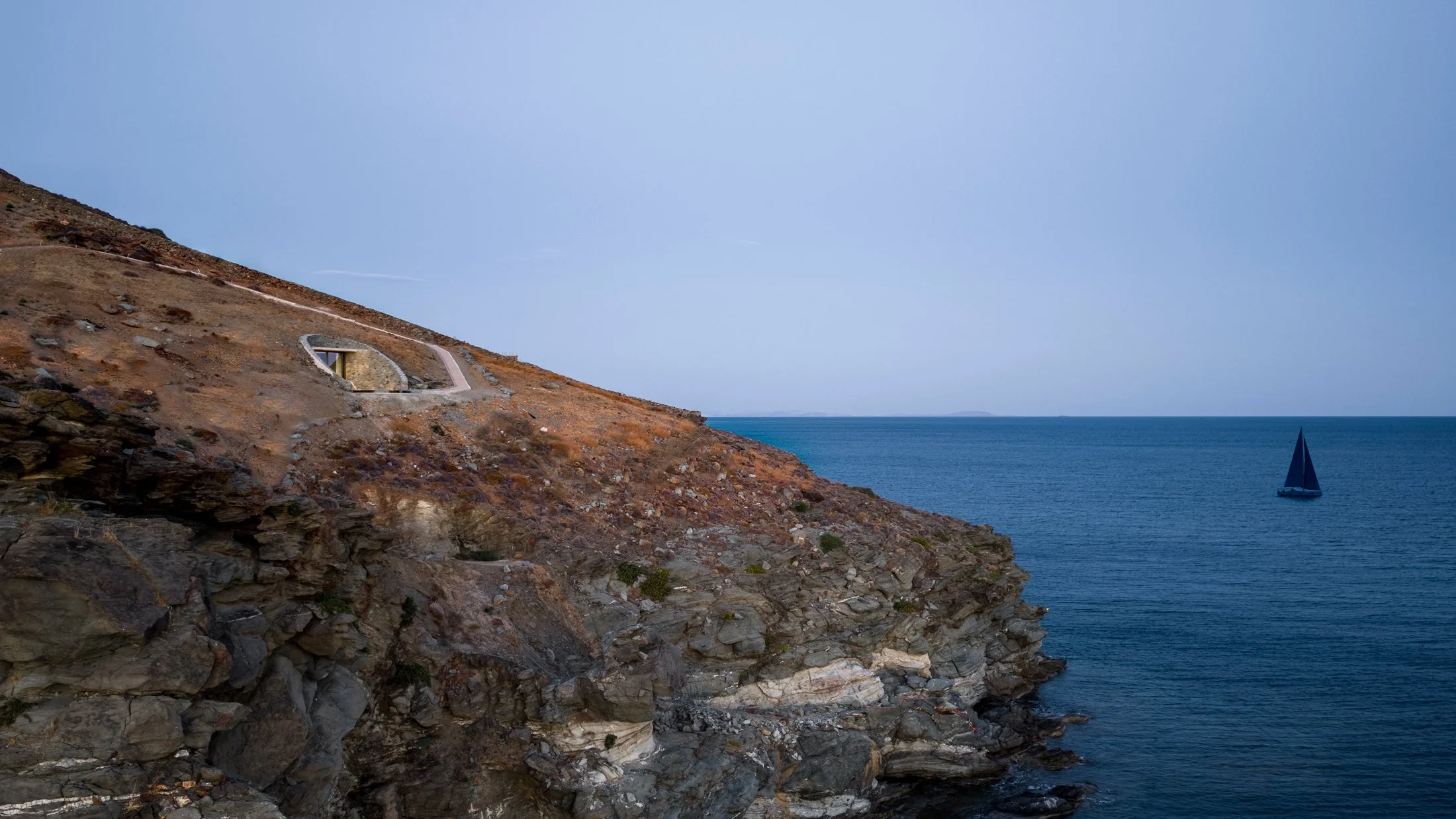
Photo by Yiorgis Yerolymbos
Olen by Ateno Studio
Syros, Greece
On the island of Syros, Olen by Ateno Studio unfolds across a steep, amphitheatrical coastal landscape overlooking the Aegean Sea. The terrain drops southward toward the water, shaping a design that responds directly to topography rather than resisting it. Conceived by Ateno Studio as a composition of three elements, a Point, a Line, and a Plane, the project organizes living spaces across multiple landscapes, blending submerged and above-ground structures. At the highest point, an arched retaining wall defines a shared terrace, creating a sense of enclosure while guiding movement through ramps and stairs. This upper layer becomes a communal plane, where architecture frames horizon, light, and collective experience.
Further down the slope, the architecture recedes. A linear, partially submerged volume acts as a quiet backdrop, housing private living spaces while minimizing visual impact through careful setback and shading. At the lowest level, closest to the sea, a singular subterranean guesthouse disappears almost entirely into the land, built from materials sourced on-site. Only a circular terrace remains visible, opening outward toward the Aegean. The experience is one of gradual immersion, moving from shared elevation to quiet isolation, where architecture dissolves into terrain and sound, wind, and water take over.
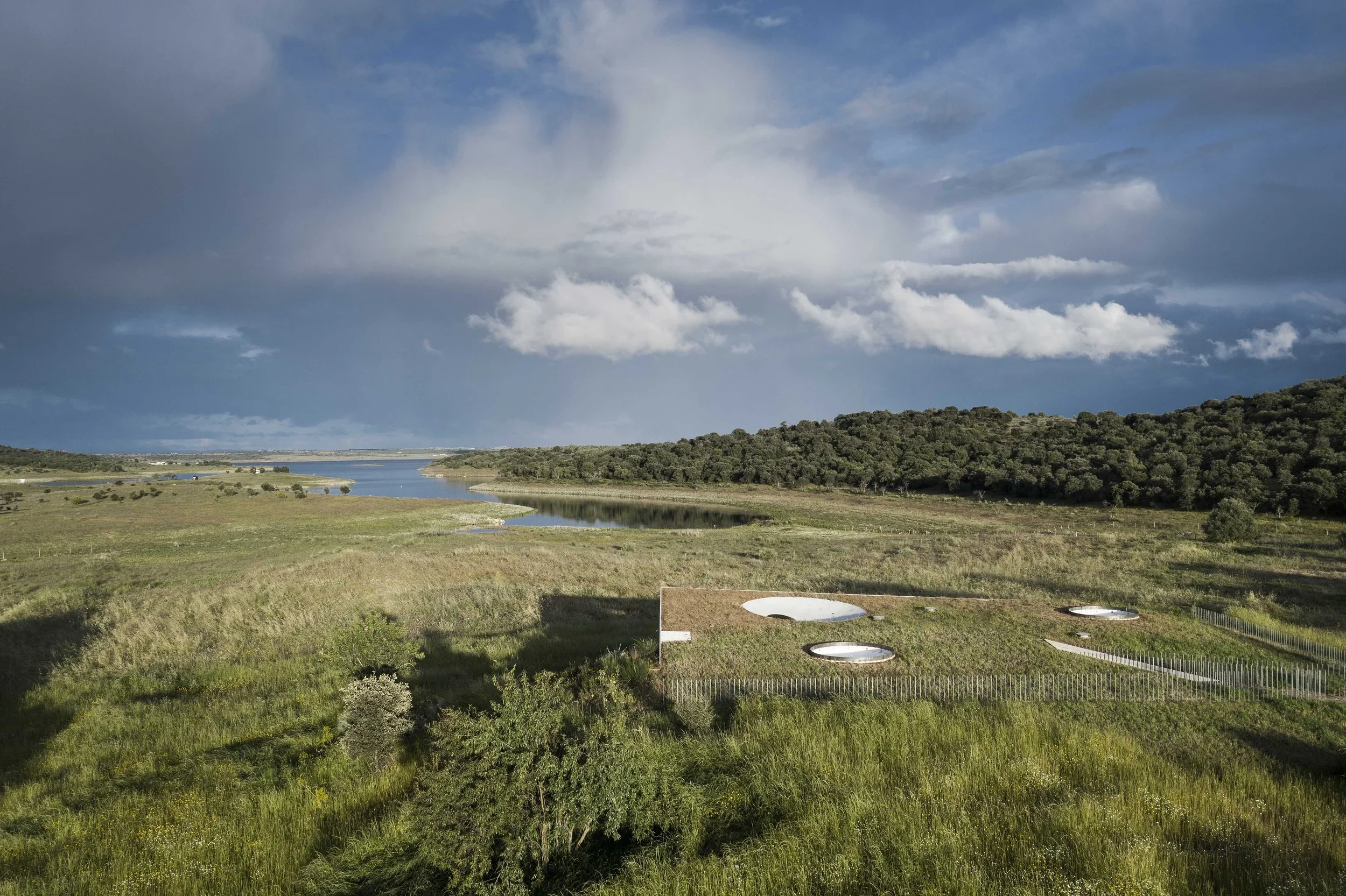
Photo by Nelson Garrido
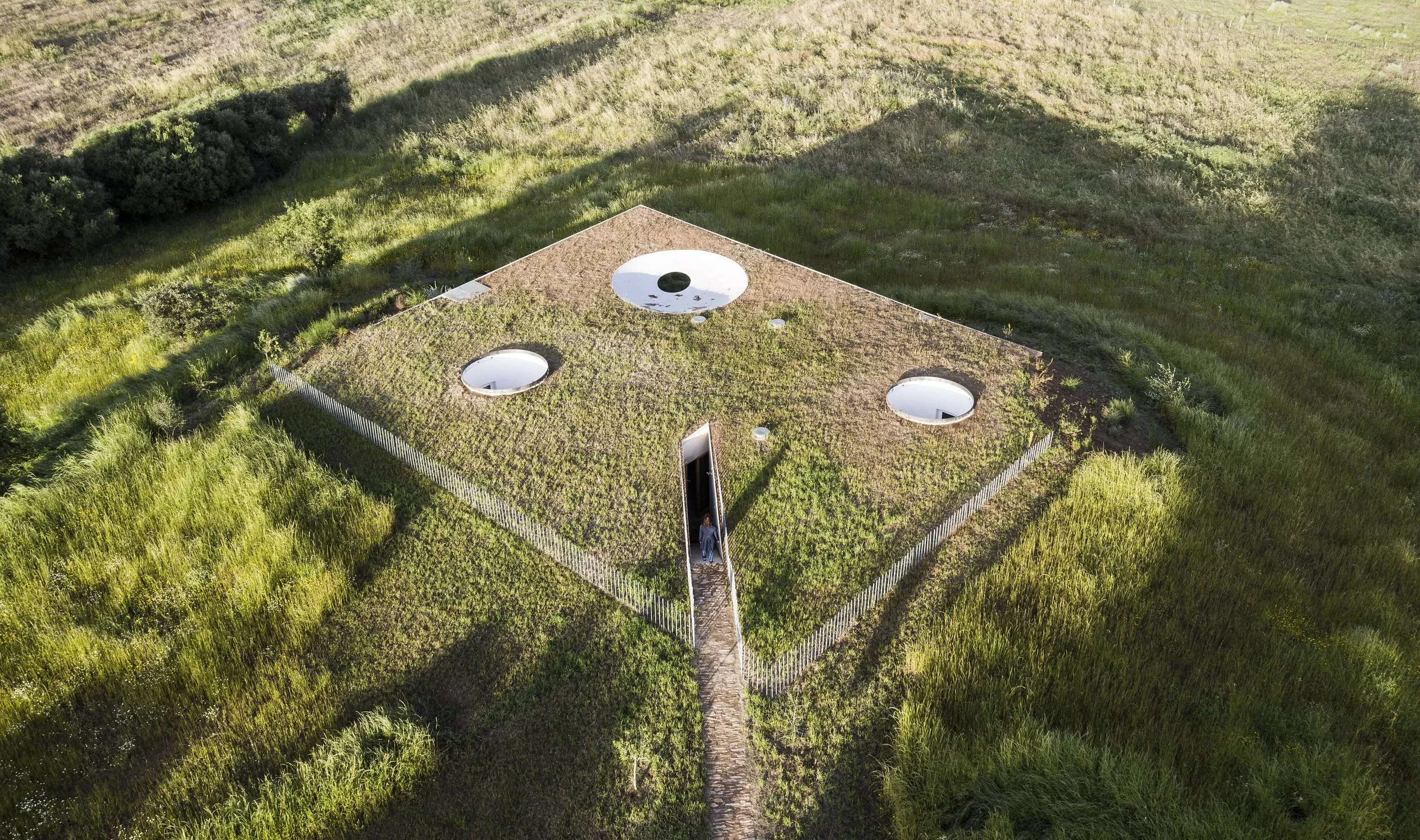
Photo by Nelson Garrido
Casa na Terra by Silent Living
Algarve, Portugal
In Alentejo, Casa na Terra is immersed in a landscape of cork oak forests, rolling plains, and vast, open sky. Designed by Manuel Aires Mateus and created by the founders of Silent Living, the house is built into the landscape itself, feeling hidden rather than placed. Its form is both bold and restrained, with circular skylights and carved openings that draw in light with quiet precision. Raw plaster, stone, and earth-toned materials anchor the structure in its surroundings, allowing architecture and terrain to read as one continuous surface shaped by climate, season, and stillness.
Inside, the experience is defined by simplicity and solitude. The accommodation is singular and deeply private, where texture, temperature, and light replace excess. There is no formal wellness offering, yet the space restores through silence and atmosphere, encouraging a slower rhythm aligned with the land. Openings frame fragments of the Alentejo landscape as it shifts throughout the day, while interiors remain minimal and tactile. Casa na Terra becomes less about destination and more about attunement, where design is reduced to its essence, creating space to reconnect with place through quiet.
Casa Orgánica photos by Leandro Bulzzano
Casa Orgánica
Mexico City
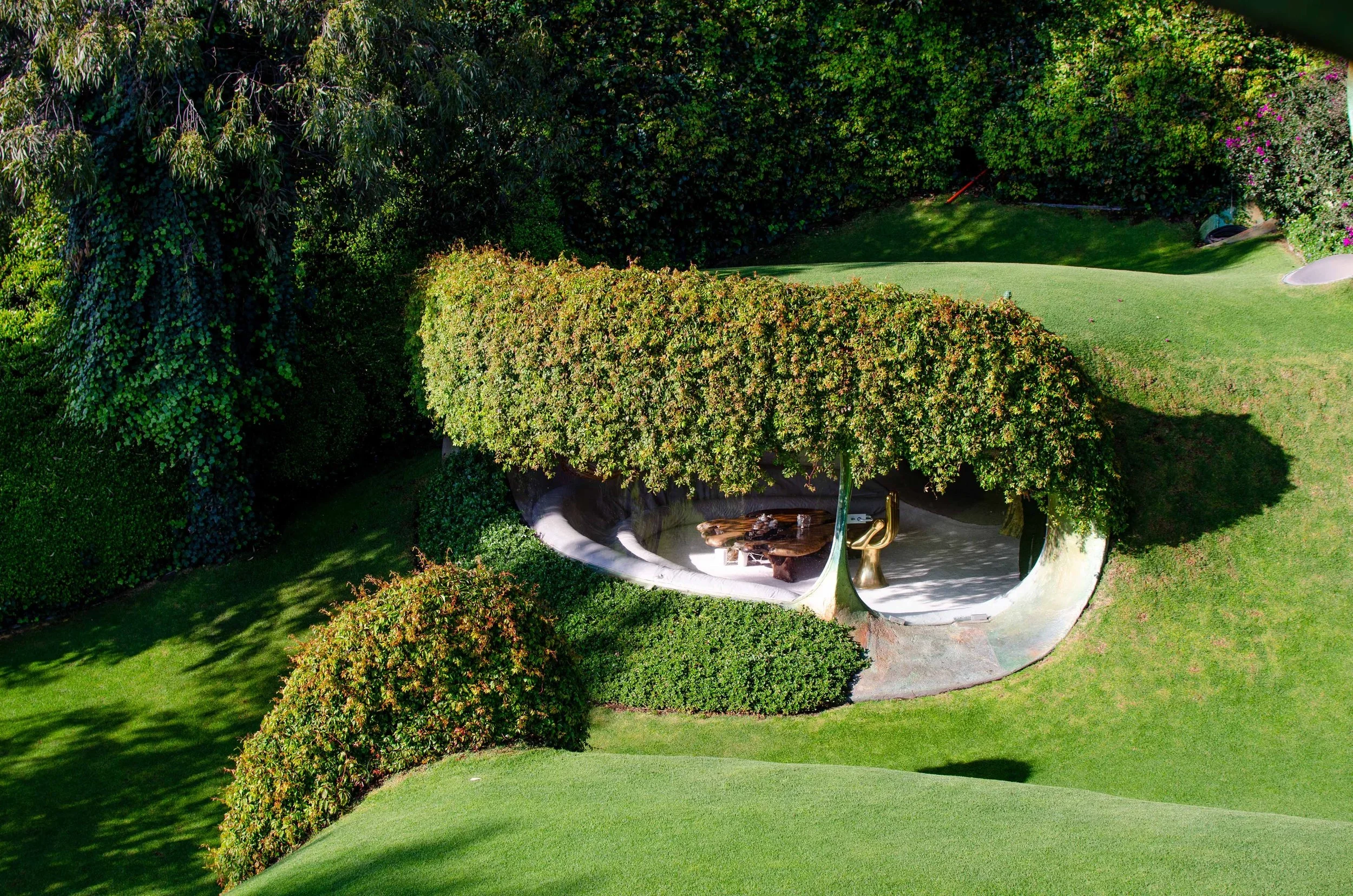
In Mexico City, Casa Orgánica by Javier Senosiain is less a house and more a continuation of the landscape. Built into the ground within a lush residential area, its form is entirely organic, inspired by caves, shells, and natural shelters. The geography here is volcanic and fertile, allowing the structure to disappear beneath a living layer of grass and vegetation, making the architecture almost invisible from above.
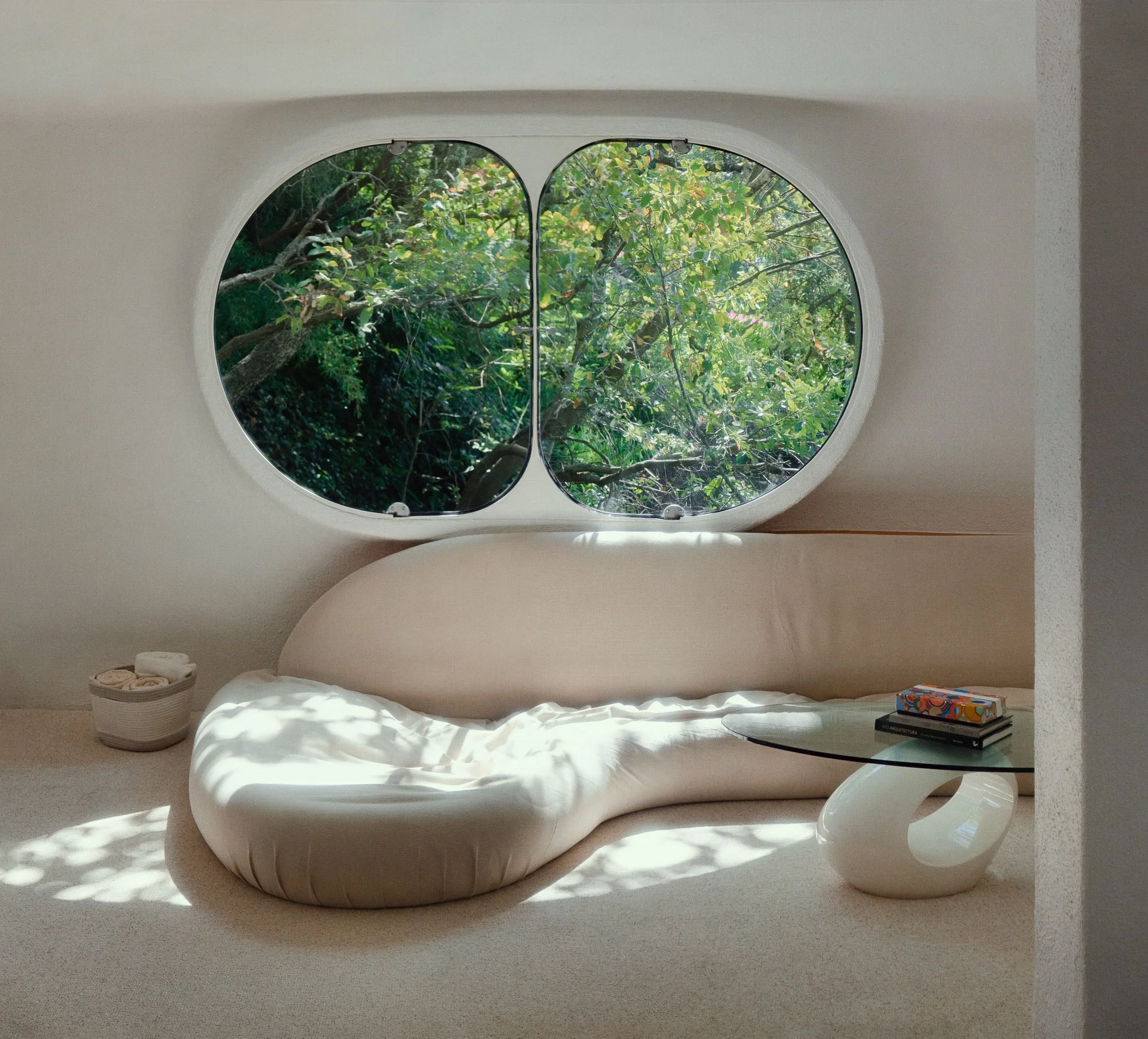
Inside, space flows in curves rather than lines. Walls bend, ceilings rise and fall, and light enters through rounded openings that mimic natural fissures. The experience is deeply sensory and protective, creating a feeling of being held within the land itself. Rather than framing nature, the house becomes part of it, dissolving the idea of separation and offering a more instinctive way of inhabiting space.
El Nido de Quetzalcóatl photos by Dimitri Roggon
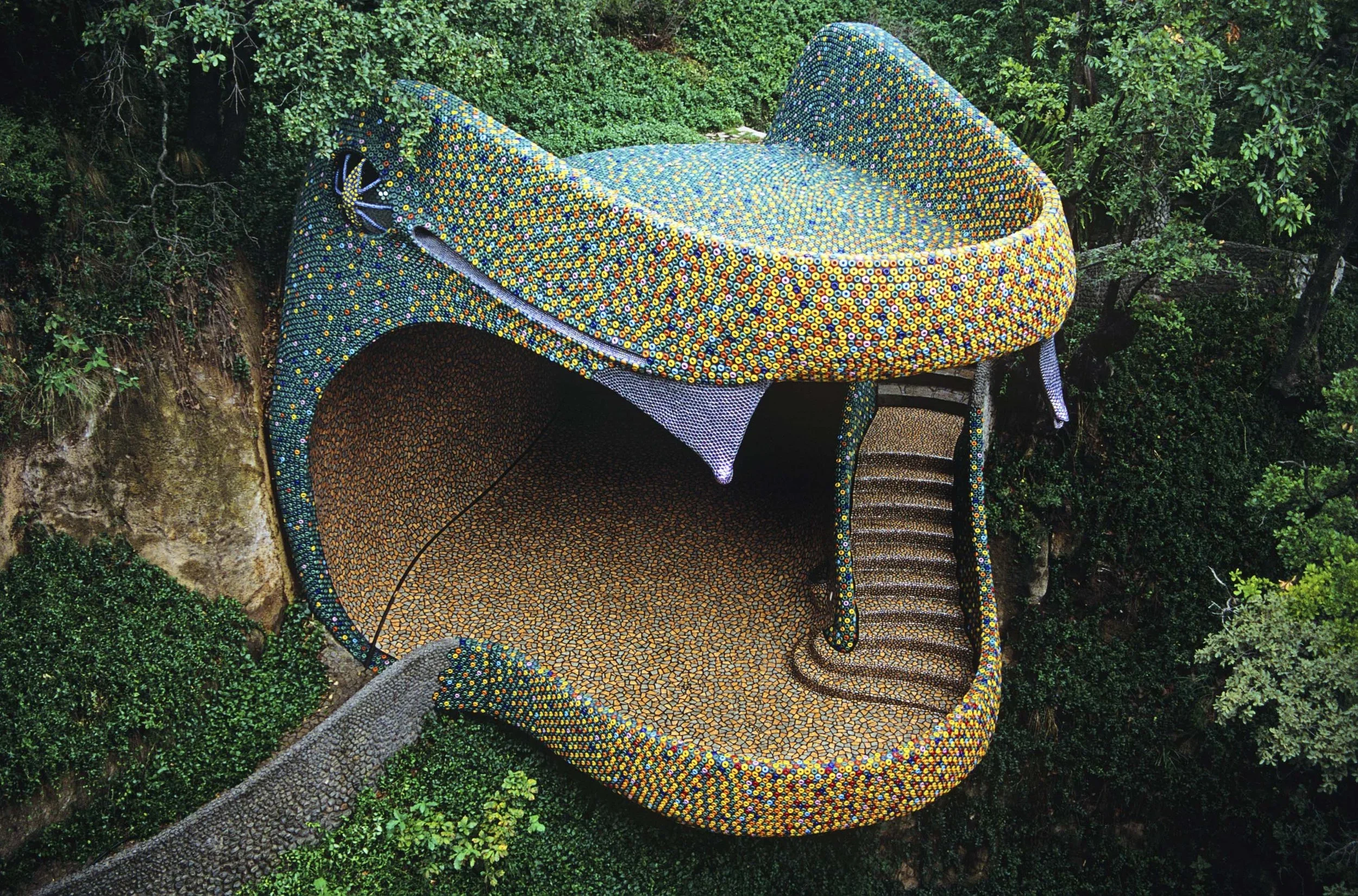
Photo by Javier Senosiain and Arquitectura Orgánica
El Nido de Quetzalcóatl
Naucalpan, Mexico City
Set within the irregular terrain of Naucalpan, just outside Mexico City, El Nido de Quetzalcóatl by Javier Senosiain weaves through a landscape left intentionally untouched. The site is defined by caves, slopes, and dense vegetation, elements that typically challenge construction but here become the foundation of the design. The project takes the form of a massive serpent, referencing the Aztec deity Quetzalcóatl, integrating mythology with geography.
Apartments are embedded within this undulating form, allowing the natural topography to remain intact. Windows open onto unexpected views of greenery and rock formations, while pathways follow the curves of the terrain. Living here feels surreal yet grounded, as architecture becomes both narrative and environment, offering an immersive experience shaped by land, culture, and imagination.
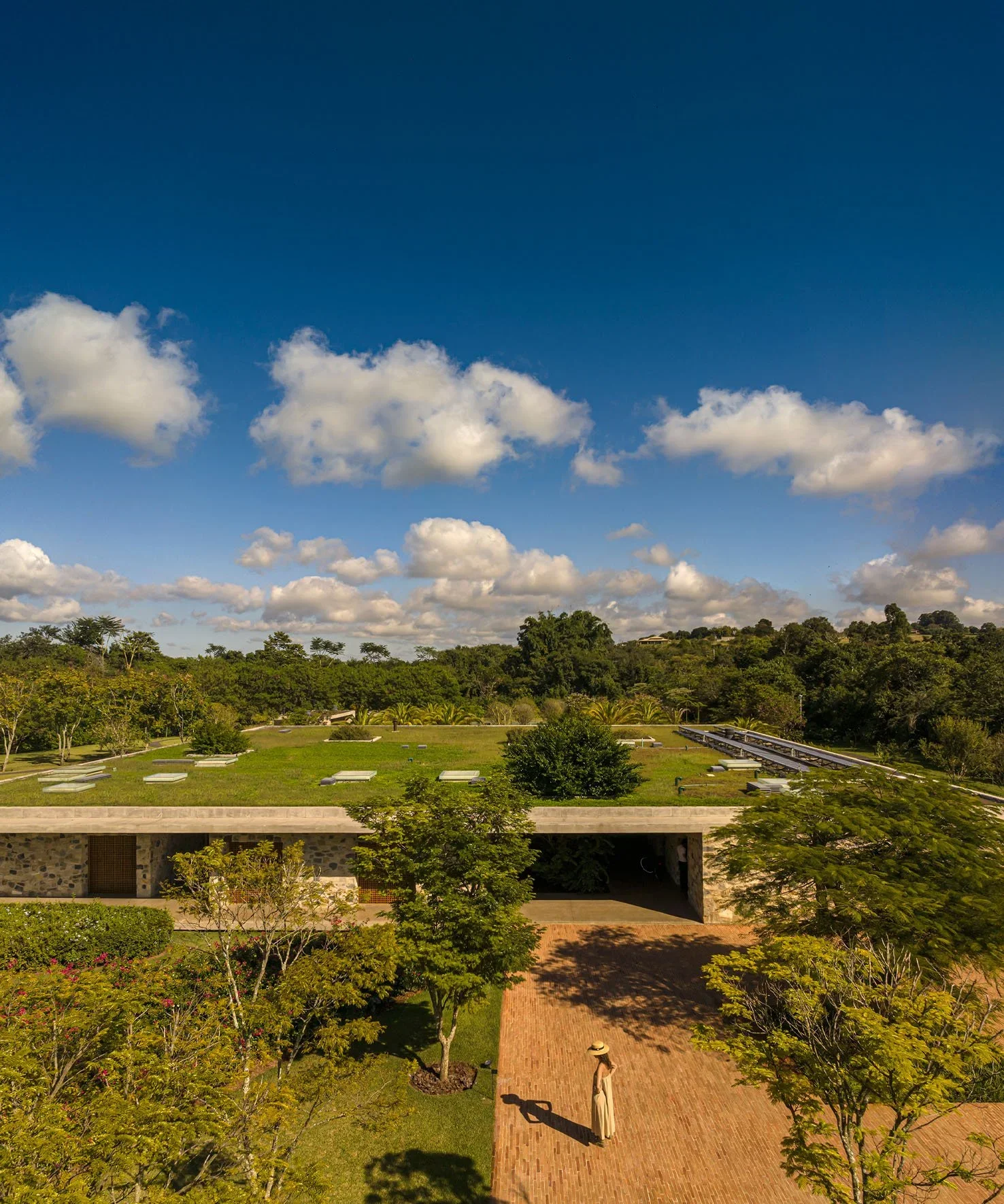
Village House | photographer > fernando guerra
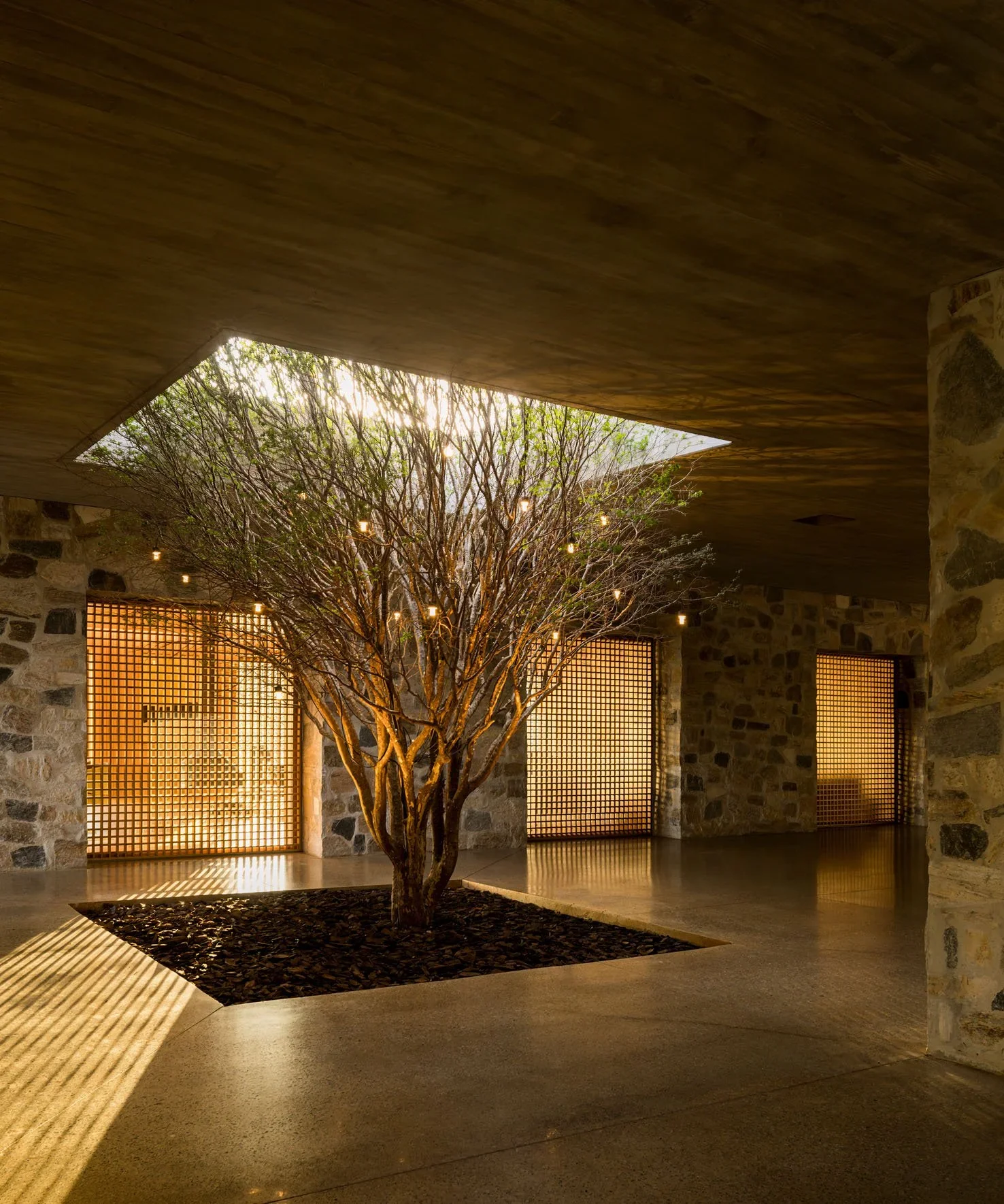
Village House | photographer > fernando guerra
Village House by Studio MK27
São Paulo, Brazil
In São Paulo, Village House by Studio MK27 responds to a tropical setting through openness and horizontal expansion. The surrounding geography is lush and green, with dense vegetation that informs the structure’s low, linear composition. Rather than rising above the land, the house stretches into it, creating a series of interconnected volumes that extend into the garden.
Glass walls, shaded terraces, and open corridors allow nature to flow through the architecture. Light filters in softly, while breezes move uninterrupted across spaces. The experience is one of quiet continuity, where indoor and outdoor life merge, and the house becomes a framework for living within the landscape rather than apart from it.
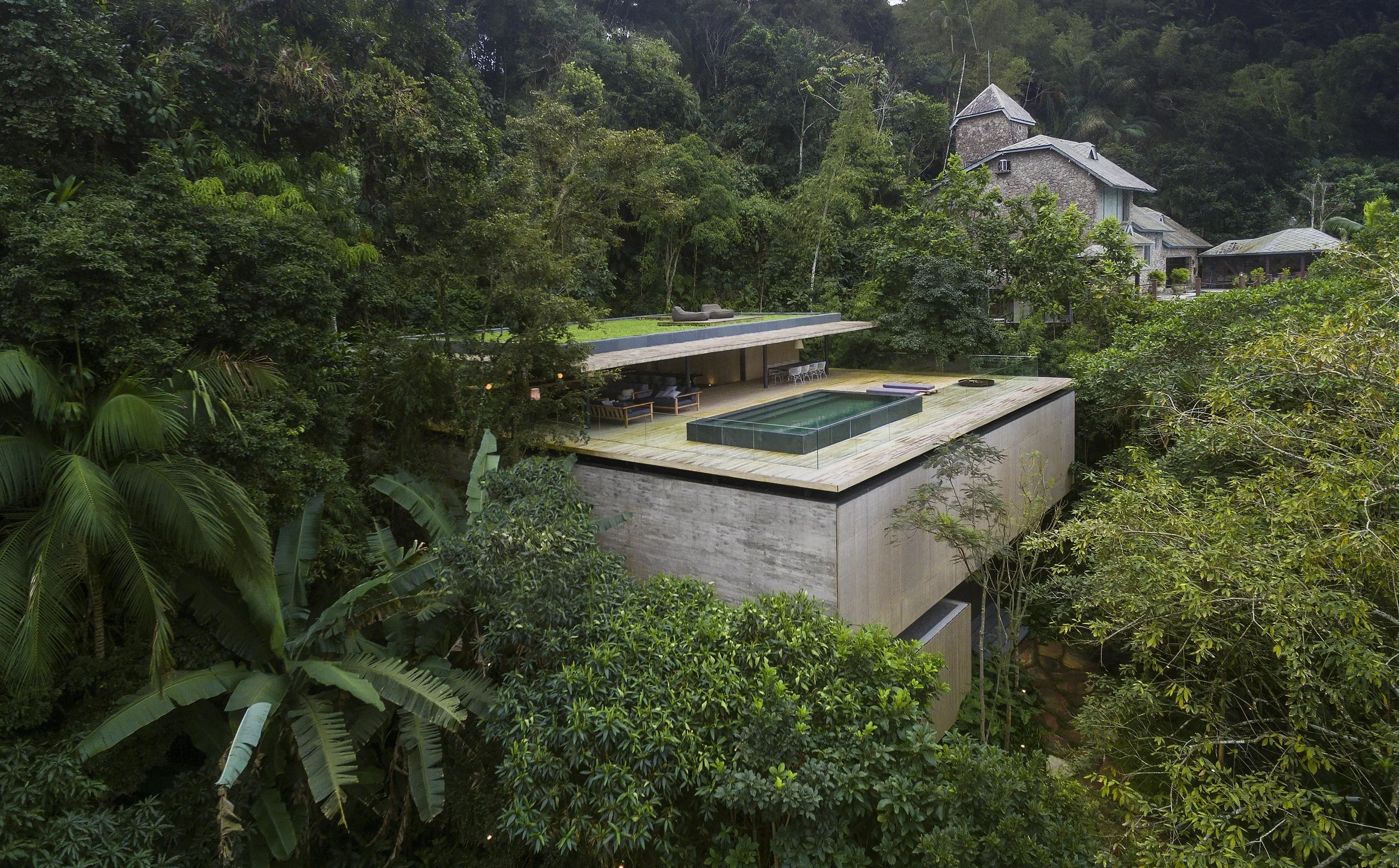
Jungle House | photographer > fernando guerra
Jungle House by Studio MK27
Brazil
Located along Brazil’s coast in the Atlantic Forest, Jungle House by Studio MK27 is shaped by a dense, humid landscape where vegetation and topography guide every decision. The project begins with a natural clearing at the center of the site, allowing the architecture to emerge within an already open landscape. Native species are reintroduced through landscape design, while the terrain itself informs the form of the wooden deck that extends organically across the ground. From this base, a single horizontal volume rises and projects outward into the forest, appearing to touch the earth lightly on just two pillars, as if suspended within the canopy.
The design balances precision with immersion. Developed through a sectional approach, the house integrates elements such as a pool partially embedded into the roof slab, while subtle shifts in floor levels refine proportions and maintain a strong horizontal presence. Clean architectural lines contrast with the surrounding jungle, yet the experience feels deeply connected to it. Light, humidity, and vegetation move through the space, softening boundaries and creating a continuous dialogue between built form and environment. The result is a structure that feels both exact and instinctive, as if it has grown from the landscape itself, offering a way of inhabiting the forest that is both deliberate and deeply sensory.
On the Sand House | photographer > fernando guerra
On the Sand House | photographer > fernando guerra
On the Sand HOUSE by Studio MK27
Brazil
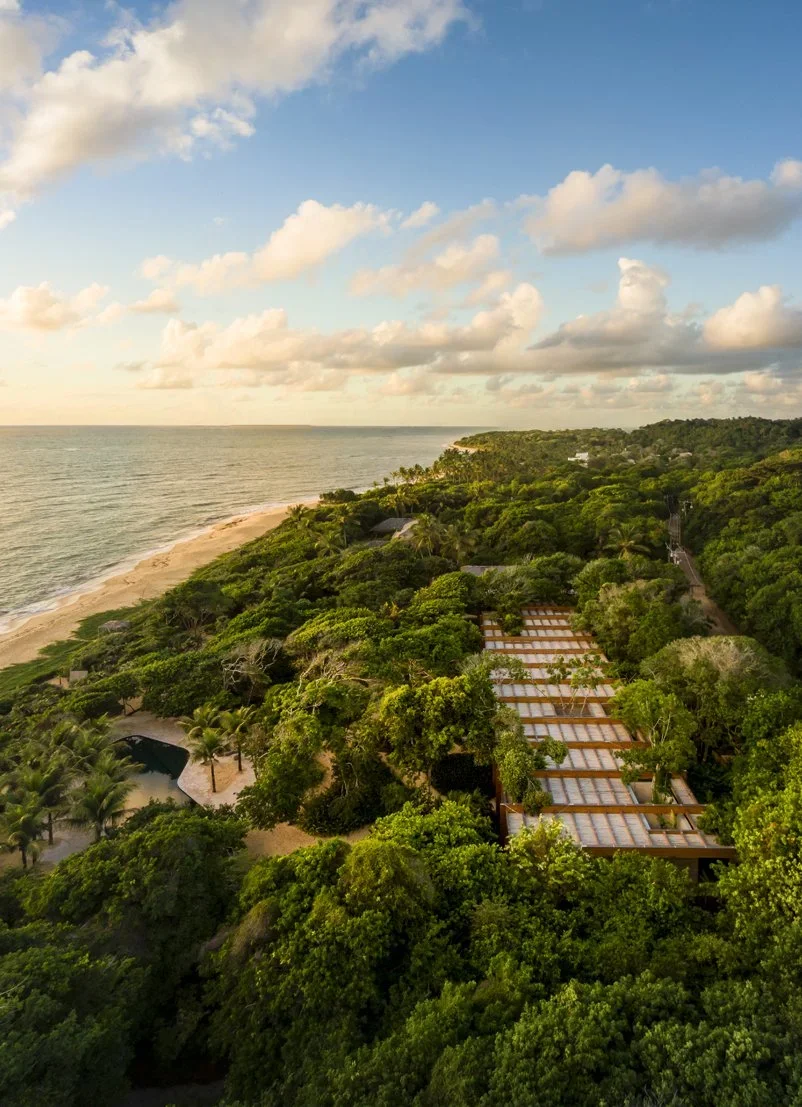
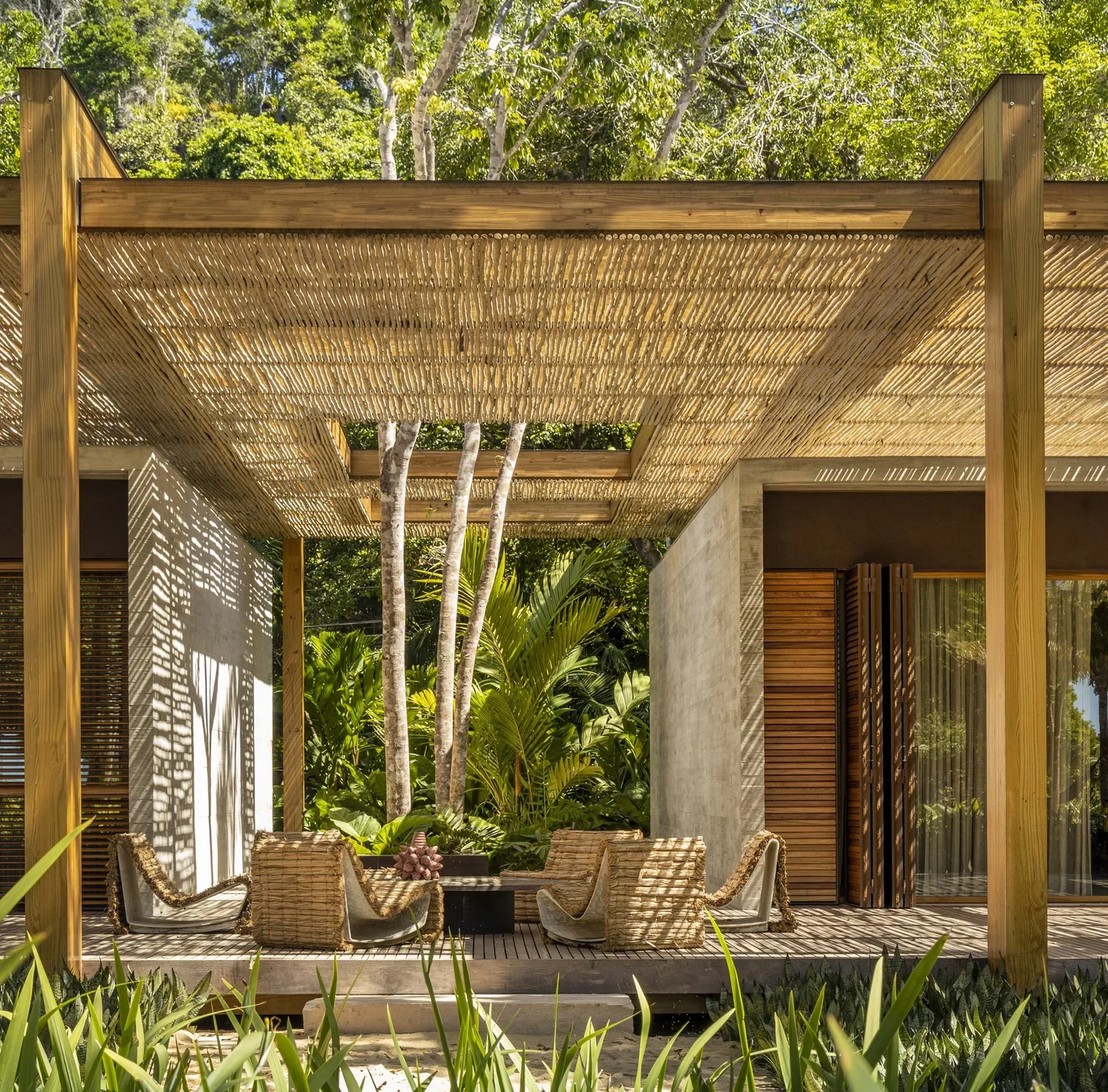
On Brazil’s northeastern coast near Trancoso, On the Sand House by Studio MK27 unfolds between tropical forest and the Atlantic Ocean, where the landscape feels both expansive and elemental. The house engages directly with this threshold, opening itself toward the horizon while dissolving into the surrounding vegetation. The program is reduced to its essentials and organized into five separate volumes, each dedicated to a single function, kitchen, dining, living, master suite, and guest rooms. These volumes rest lightly on an elevated wooden deck and are unified beneath a eucalyptus pergola, creating a structure that is both rational and porous. Trees pass through the architecture, interrupting its geometry and allowing light to filter through in shifting patterns.
Life moves between these volumes and across the deck, which becomes the connective landscape of the house. The permeability of the canopy softens the boundary between shelter and exposure, filtering sunlight, rain, and ocean air into a constantly changing atmosphere. Shadows from the pergola and surrounding foliage create a layered, almost suspended environment where nature becomes the primary material. A separate pool, positioned closer to the beach and set at an angle to the main structure, extends this dialogue between built form and landscape. Here, architecture becomes a sensorial system shaped by light, sound, and movement, where the presence of the ocean, the rhythm of the trees, and the shifting sky define the experience.
Azul | photographer > andré scarpa
Azul | photographer > andré scarpa
CASA AZUL by Studio MK27
Brazil
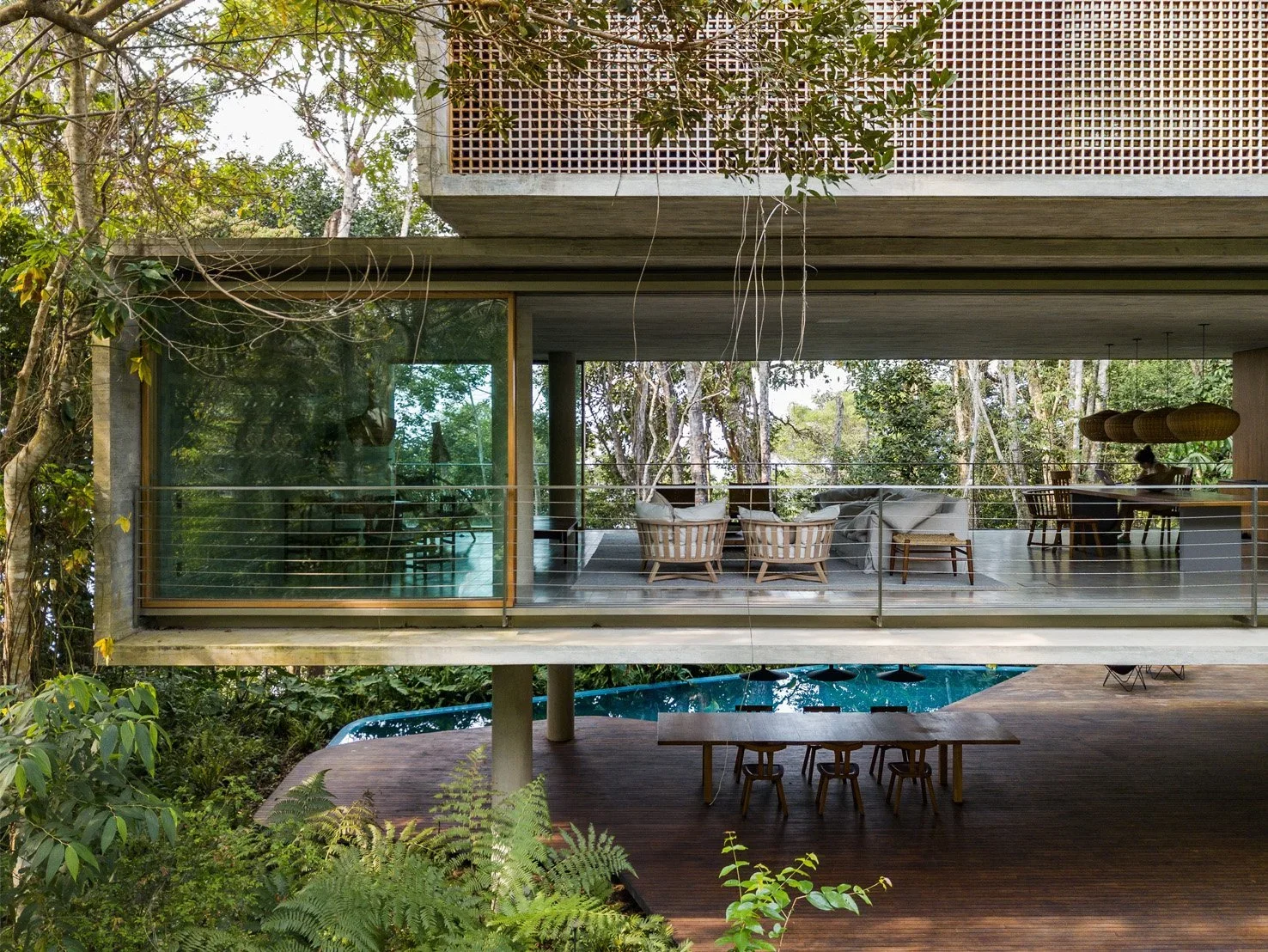
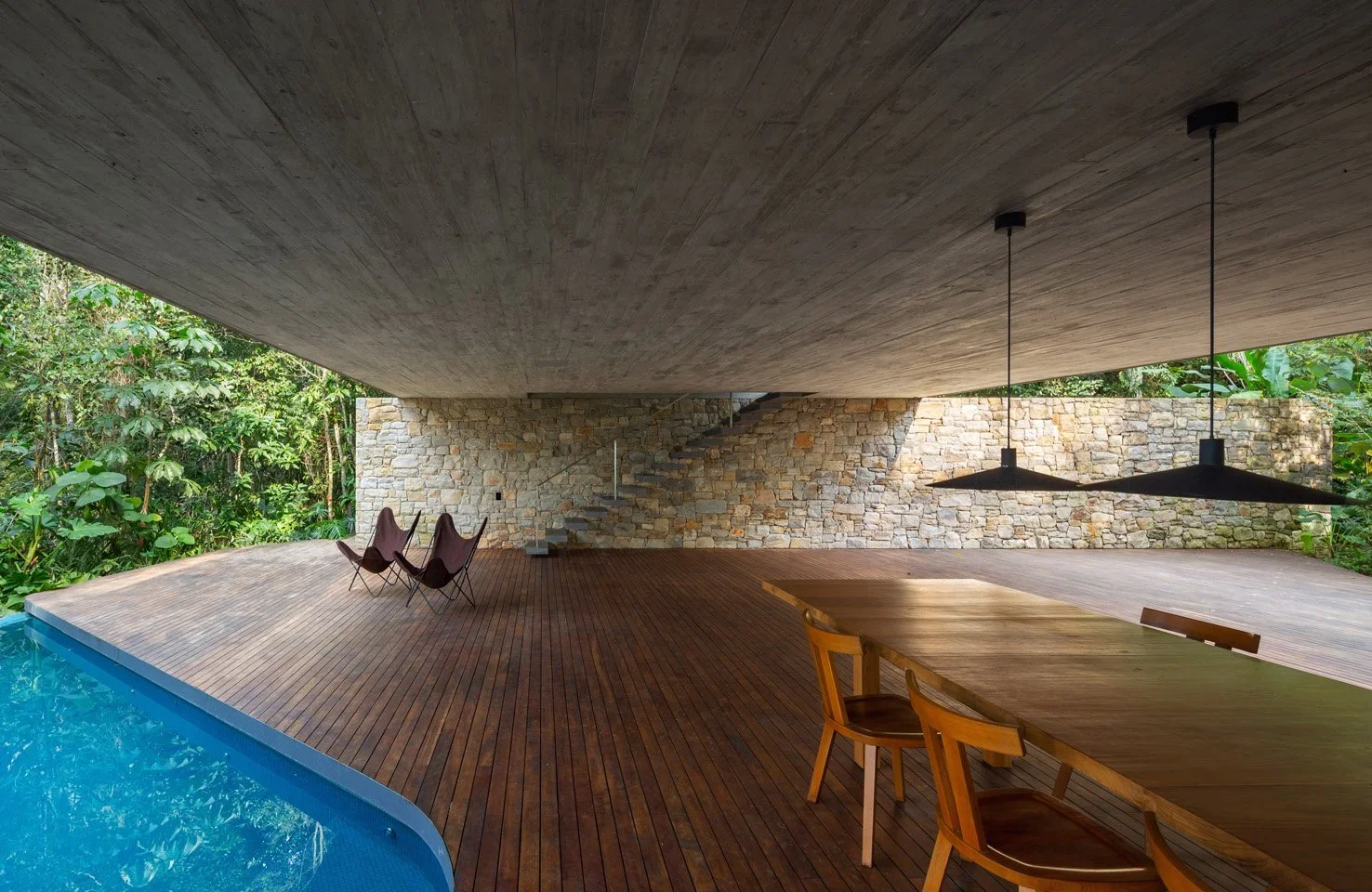
On Brazil’s coastal edge, Studio MK27 designed Casa Azul as a low, elongated structure that settles quietly into its landscape. Positioned within a warm coastal environment, the house is shaped by horizontality and openness, using wood, stone, and concrete to create a grounded material palette that feels both contemporary and tactile. The architecture does not rise above its setting but extends along it, echoing the rhythm of the coastline and the horizon beyond.
Large expanses of glass dissolve the boundary between interior and exterior, allowing light, wind, and sea air to move freely through the space. Living areas unfold toward terraces and an infinity pool, creating a continuous dialogue between shelter and landscape. The experience is defined by simplicity and openness, where indoor and outdoor living merge into a single atmospheric field. True to MK27’s approach, Casa Azul becomes a study in restraint and precision, where architecture recedes just enough to let nature take over the experience.
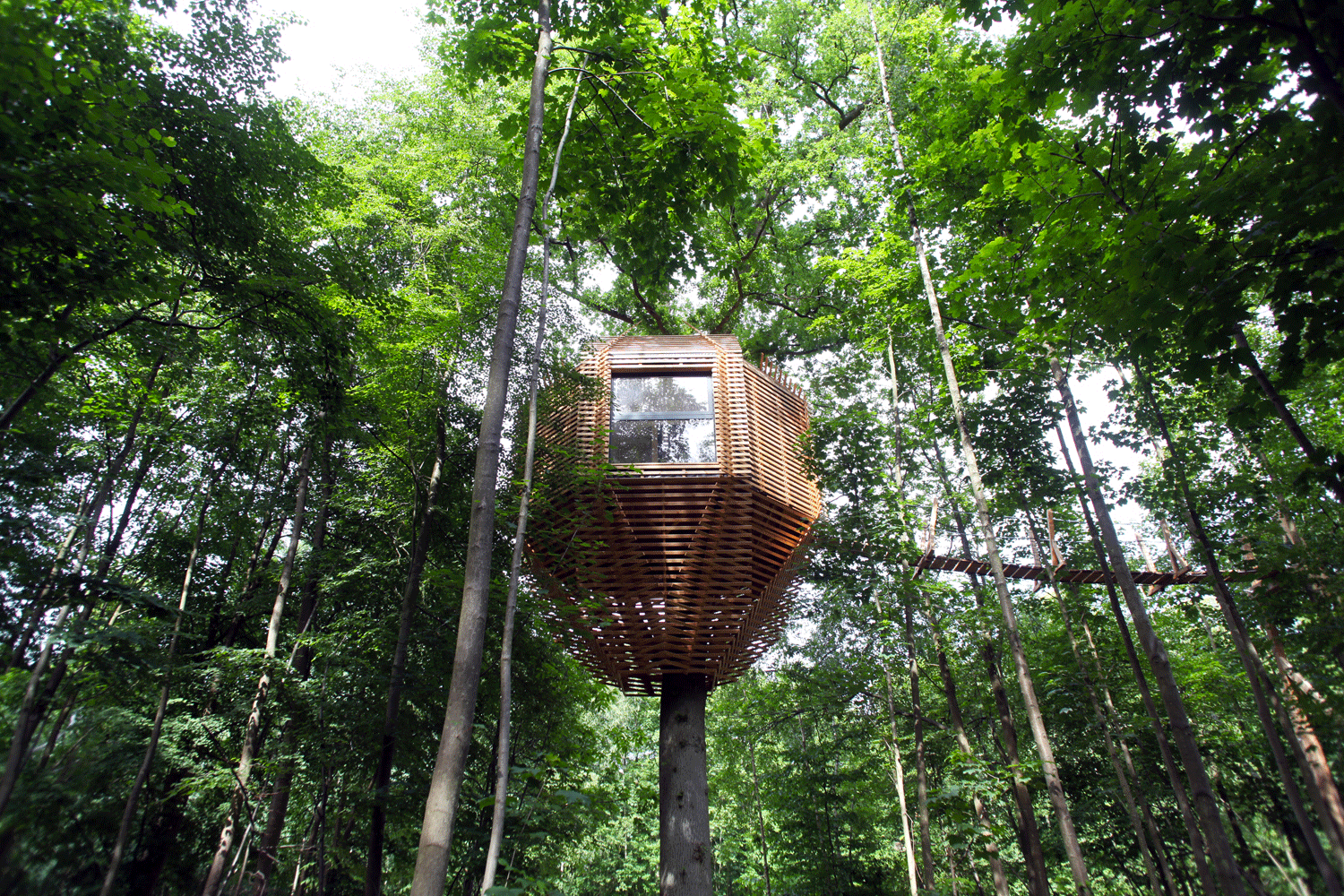
Photo by Atelier LAVIT
ORIGINS Tree House by Atelier LAVIT
Château de Raray, France
Within the forested grounds of Château de Raray, Atelier LAVIT designed ORIGINS Tree House as a singular structure shaped around a century-old oak, treating the tree as both origin and protagonist. Rather than placing architecture in the landscape, the project builds around it, forming a crafted wooden shell inspired by the logic of bird nests. The result is a suspended cabin that feels embedded in the canopy, as if it has always belonged to the forest, quietly blending precision carpentry with a poetic response to place.
The experience unfolds as a vertical sequence through the trees, beginning on a suspended platform and continuing along a narrow walkway that moves deeper into the canopy. A ladder leads upward to a concealed rooftop terrace with wide views across the forest, shifting perspective at every step. Inside, the oak sits at the center of the plan, around which calm, wood-lined interiors unfold in layered sequence. Light, material, and framing all reinforce a constant connection to the surrounding forest, creating a space that is both intimate and expansive, where architecture becomes a way of inhabiting the landscape rather than observing it.
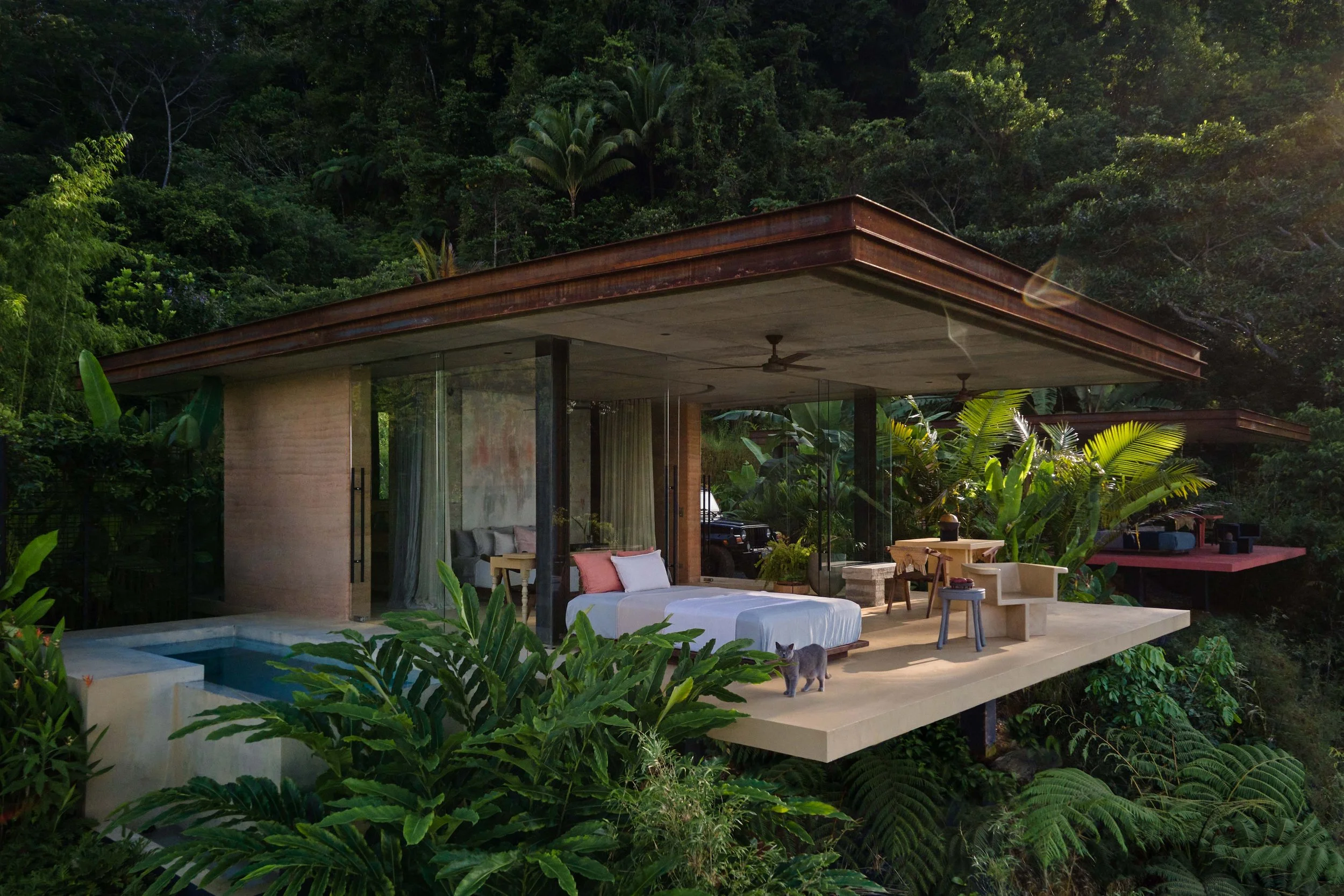
Photo by boysplaynice
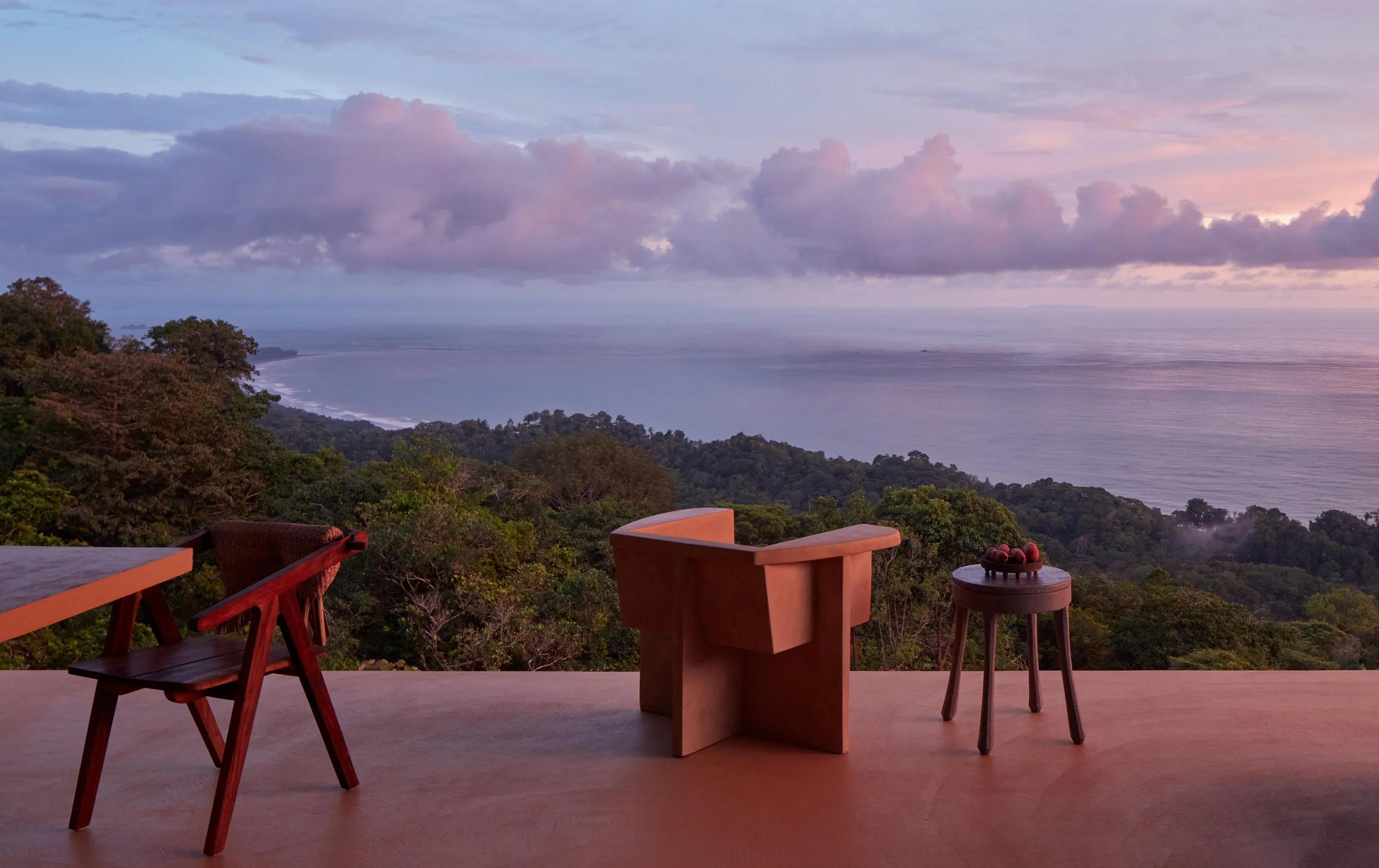
Photo by boysplaynice
Achioté Project by Formafatal
Costa Rica
In the Southern Zone of Costa Rica, Achioté is conceived as a system of two villas within dense rainforest near the Osa Peninsula. The geography is humid, layered, and constantly shifting, where jungle and ocean exist in close proximity. The project responds by embracing openness and permeability rather than enclosure.
Designed with a local Costa Rican studio, the villas use wood, palm, and regional materials to create breathable structures that dissolve into the landscape. Air, light, and vegetation move freely through spaces, shaping the experience moment to moment. Rooted in the cultural significance of the achiote plant, the project reflects a deeper relationship to land, offering a stay where architecture, nature, and heritage exist in quiet balance.
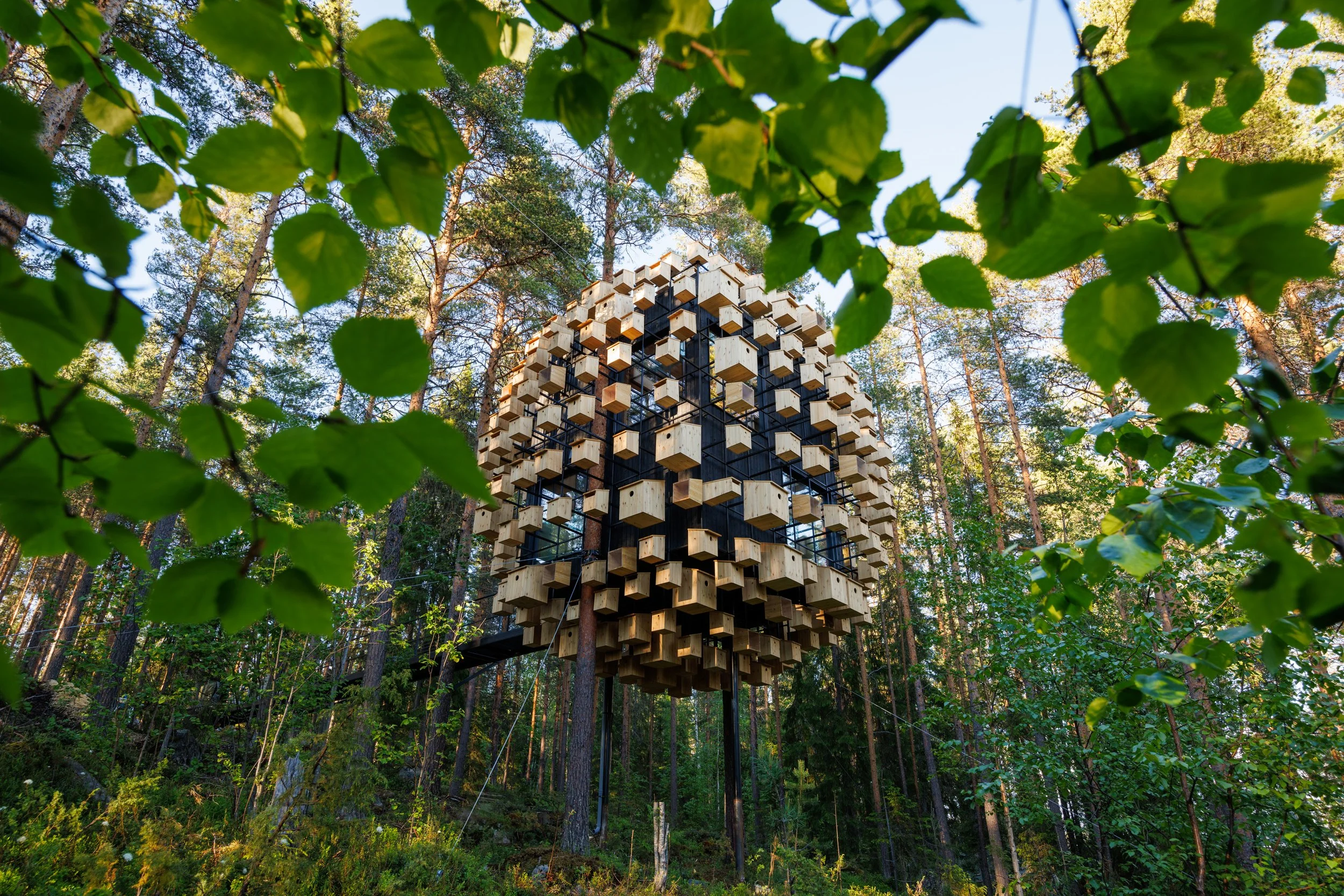
Photo by Mats Engfors
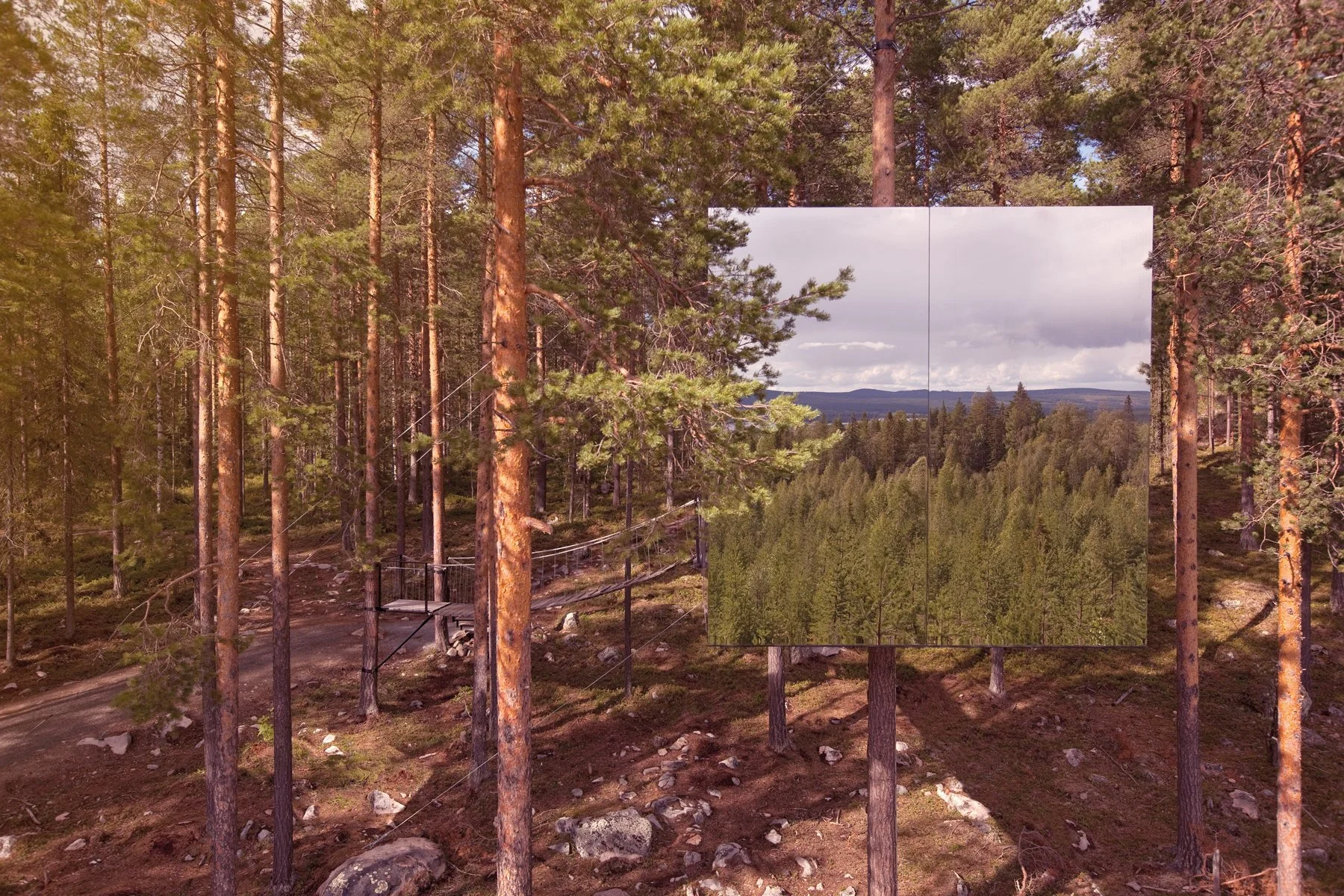
Photo by Peter Lyndstrom
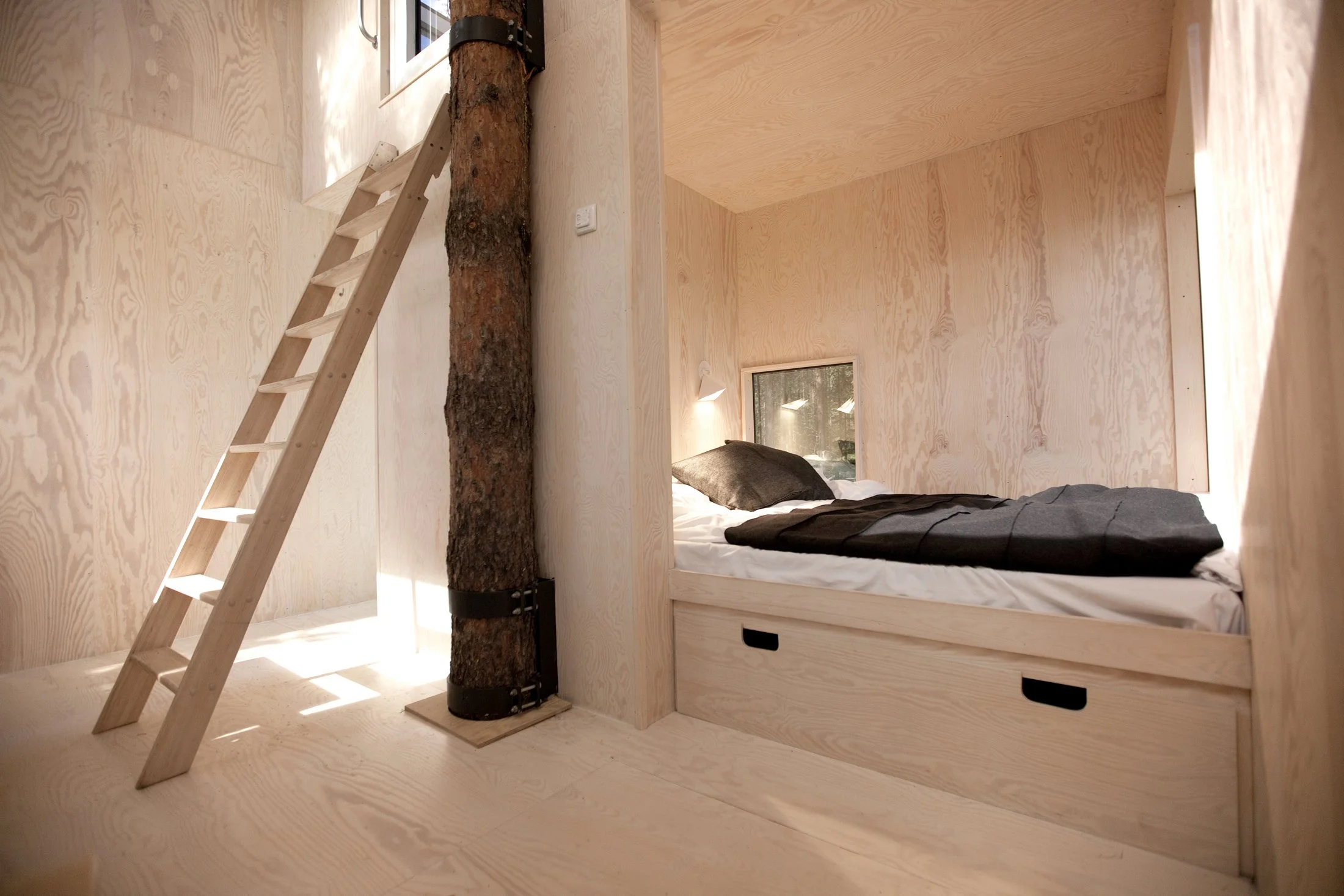
Photo by Peter Lyndstrom
Treehotel
Harads, Sweden
In the pine forests of northern Sweden, near the village of Harads, Treehotel exists as a dispersed collection of elevated rooms suspended within the canopy. The geography is defined by tall, straight pines, Arctic light, and proximity to the Lule River, where seasons dramatically reshape the landscape from deep snow to endless summer daylight. Rather than a single structure, the project unfolds across the forest, each cabin positioned to engage with views, height, and the surrounding ecosystem.
What defines Treehotel is its multiplicity of architectural voices. Each structure is designed by a different studio, including Snøhetta, BIG Bjarke Ingels Group, and Tham & Videgård, transforming the forest into a living exhibition of contemporary design. From mirrored volumes that disappear into the trees to suspended cabins with netted floors and spherical forms that support birdlife, each intervention responds differently to the same landscape.
The experience is one of elevation and immersion at once. Guests move through the forest, ascending into structures that frame the canopy rather than the ground. Large windows, minimal footprints, and lightweight construction allow the architecture to coexist with the environment rather than disrupt it. At night, the forest recedes into darkness or, in winter, opens to the possibility of the northern lights. Treehotel becomes less about staying in a room and more about inhabiting a vertical relationship with nature, where architecture offers new ways of seeing the landscape without ever leaving it behind.
Room + Wild is the world's first and leading collective and platform for landscape-enhanced accommodation, ecotourism, nature-based destinations, and sustainable luxury travel experiences. We consistently inspire, influence, and spread awareness through our tailored travel guides, curated media content/channels, brand activations, press trips as well as visual and narrative storytelling.
Set high above Chapada dos Veadeiros National Park in Brazil, Mirante de São Jorge by Alan Chu elevates the ancient human ritual of watching the sunset into an immersive spatial experience. Designed as a fifty-seven-meter elevated circular ribbon, this sustainable sunset pavilion and restaurant in Alto Paraíso de Goiás honors the raw Cerrado landscape through minimal-impact architecture.