
Landscape Hotels Built for Stargazing
The night sky looks the same no matter where you are in the world, yet our orientation to it changes with every shift in latitude, drawing us back to the same ancient tapestry of light. Looking up into the darkness is one of humanity’s oldest collective acts, a practice that bridges geographic distance and spans millennia. Across continents, humans have turned their gazes upward to read the cosmos for navigation, timekeeping, and spiritual orientation. When we travel to far-flung landscapes to stargaze, we are not searching for something new, but returning to an original perspective; a reminder of our smallness within a universe that spans an estimated 93 billion light-years across the observable sphere, housing hundreds of billions of galaxies like our own Milky Way.
Why do we travel for darkness? In an era defined by constant illumination, true night has become a rare, protected element. Stargazing is a form of slow travel, an intentional surrender to nature’s unhurried pace. It invites us to witness cosmic mechanics firsthand: the slow turn of the celestial sphere, the flash of meteors, and the shifting phases overhead. Earth's satellite acts as the sky’s natural conductor, reshaping the landscape with a soft ambient glow at its peak while stepping aside during a dark phase to reveal the dusty spiral arm of our home galaxy. Timing a journey around the lunar calendar deepens our connection to the wild, turning a simple vacation into a planetary pilgrimage.
“Looking up into the darkness is one of humanity’s oldest collective acts. Across continents, humans have turned their gazes upward to read the cosmos for navigation, timekeeping, and spiritual orientation. When we travel to far-flung landscapes to stargaze, we are returning to an original perspective; a reminder of our smallness within a universe that spans an estimated 93 billion light-years across the observable sphere, housing hundreds of billions of galaxies like our own Milky Way.”
Landscape hotels and dark-sky retreats make astro-tourism inherently sustainable through low-impact architecture and light-pollution preservation. By eliminating unnecessary exterior lighting, adopting down-shielded warm fixtures, and restricting structural footprints, these retreats safeguard nocturnal ecosystems while preserving the view overhead. Protecting dark skies benefits migratory birds, nocturnal mammals, and insect populations that rely on natural light patterns for survival. In choosing stays dedicated to dark-sky conservation, travelers actively support initiatives that treat the night as a fragile wilderness worth preserving for generations to come.
Utah Forever, Juab County by Seth Hamel
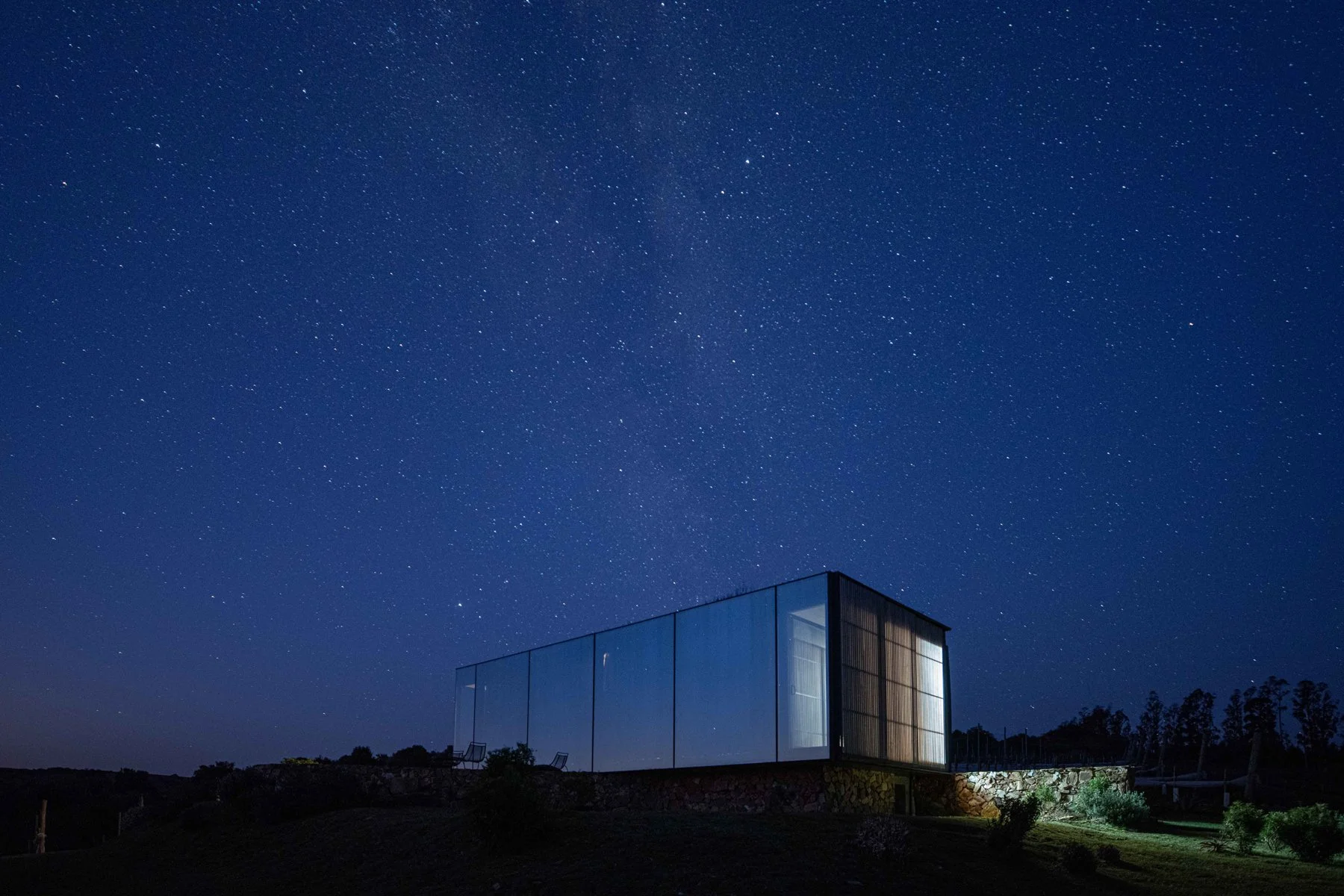
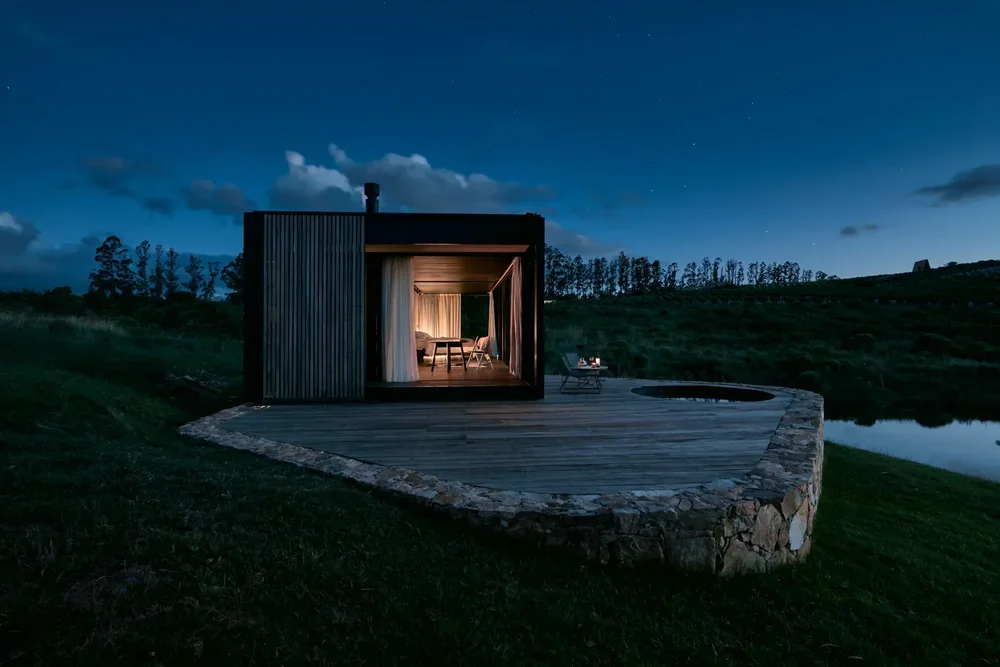
Sacromonte Landscape Hotel, Maldonado, Uruguay
Situated among the rolling, vineyard-carved hills of rural Maldonado, Sacromonte offers a deeply secluded retreat in eastern Uruguay where native grassland, rocky escarpments, and lush ravines meet minimal human interference. The geography creates a natural shield from city lights, allowing the ink-black southern sky to reveal itself in absolute clarity. Minimalist, prefabricated cabins feature mirrored glass facades that reflect the surrounding wild grapevines during the day, fading into complete transparency when night falls. Positioned far from the coastal glow of South America's major urban centers, the atmospheric transparency here is remarkable. Guests step onto expansive open decks or observe through floor-to-ceiling glass as the Southern Cross, Alpha Centauri, and the glowing dust clouds of the Large and Small Magellanic Clouds emerge over the unlit countryside, offering an exceptionally detailed encounter with the southern hemisphere’s dark canopy.
Photos by Tali Kimelman
Photos by Tali Kimelman
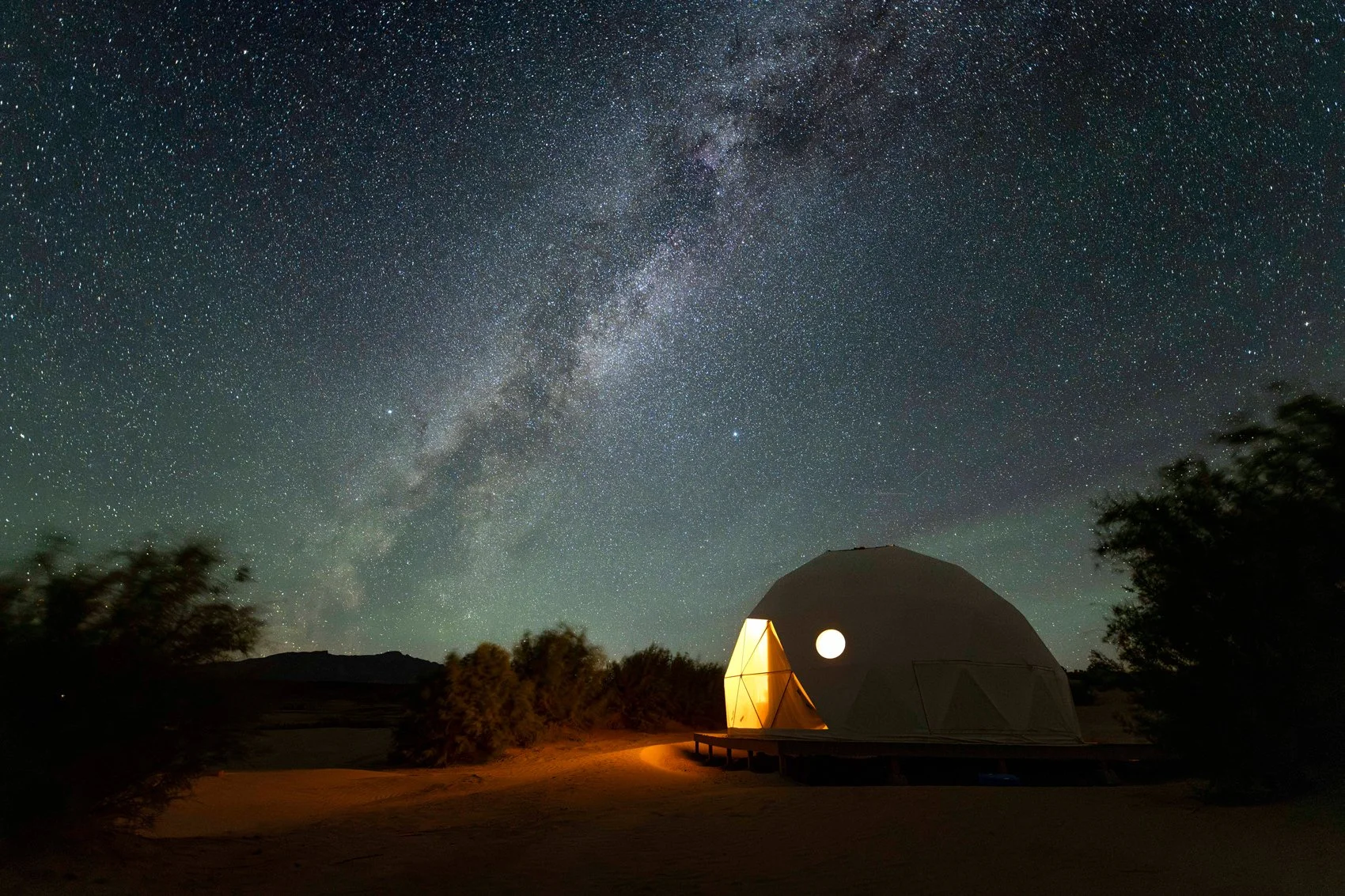
Open Sky Zion, Utah, USA
Set against the towering red sandstone cliffs and desert sagebrush of southern Utah, Open Sky Zion rests within the vast, arid landscapes surrounding Zion National Park. Utah’s high desert elevation and exceptionally low humidity mean there is very little atmospheric water vapor to distort incoming starlight, creating razor-sharp clarity across the celestial dome. Safari-inspired luxury canvas camps are integrated directly into the desert floor, featuring climate-controlled interiors, private fire pits, and open indoor-outdoor layouts. Sitting within a region celebrated globally for its dark-sky preservation, the night sky here presents an astonishing density of stars, where the galactic core of the Milky Way casts actual ground shadows on moonless nights. Falling asleep to the sight of stars through skylights or gathering around an outdoor fire pit under these certified dark conditions makes this desert refuge an unparalleled site for cosmic exploration.
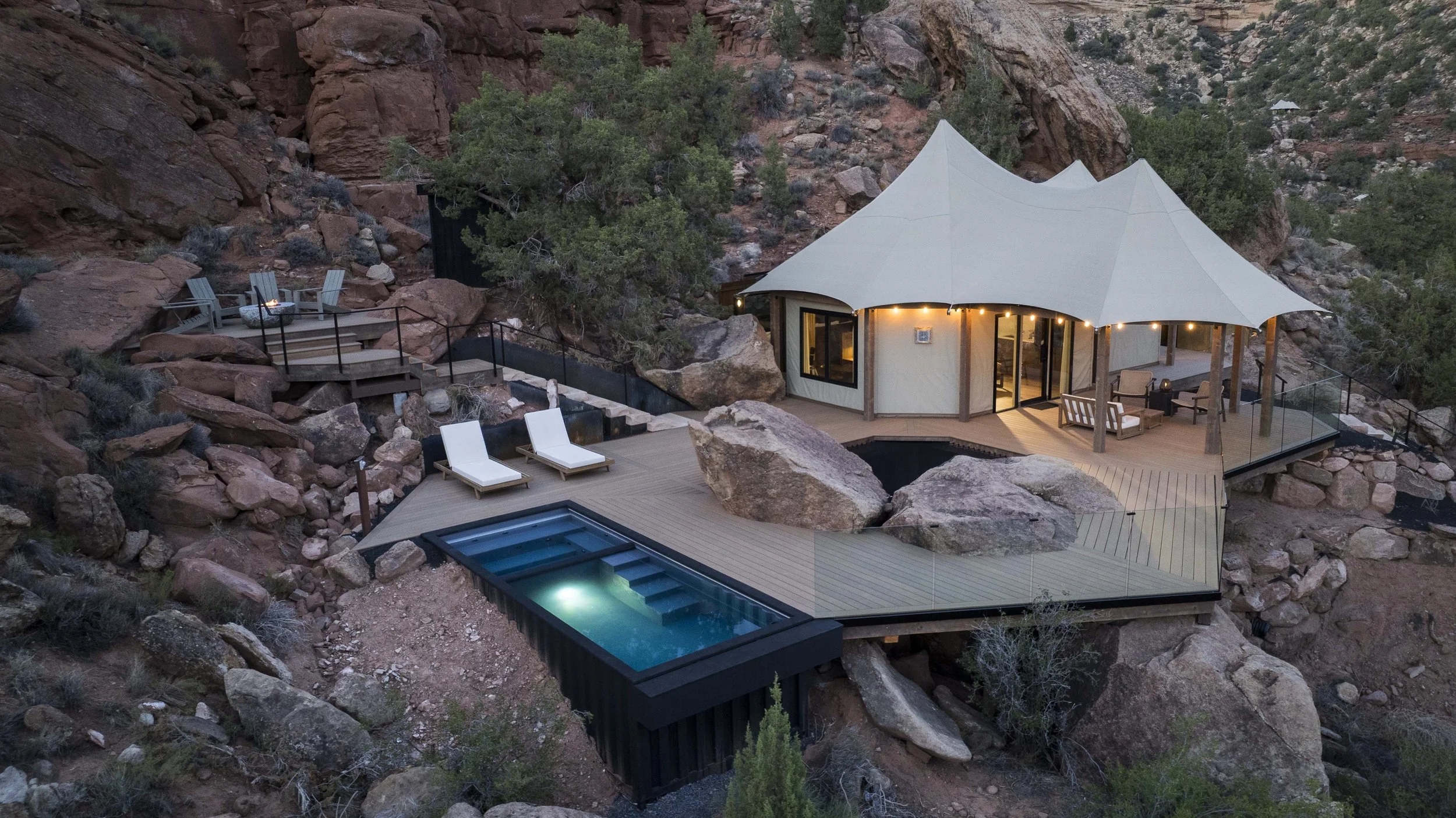
Photo by Open Sky Zion
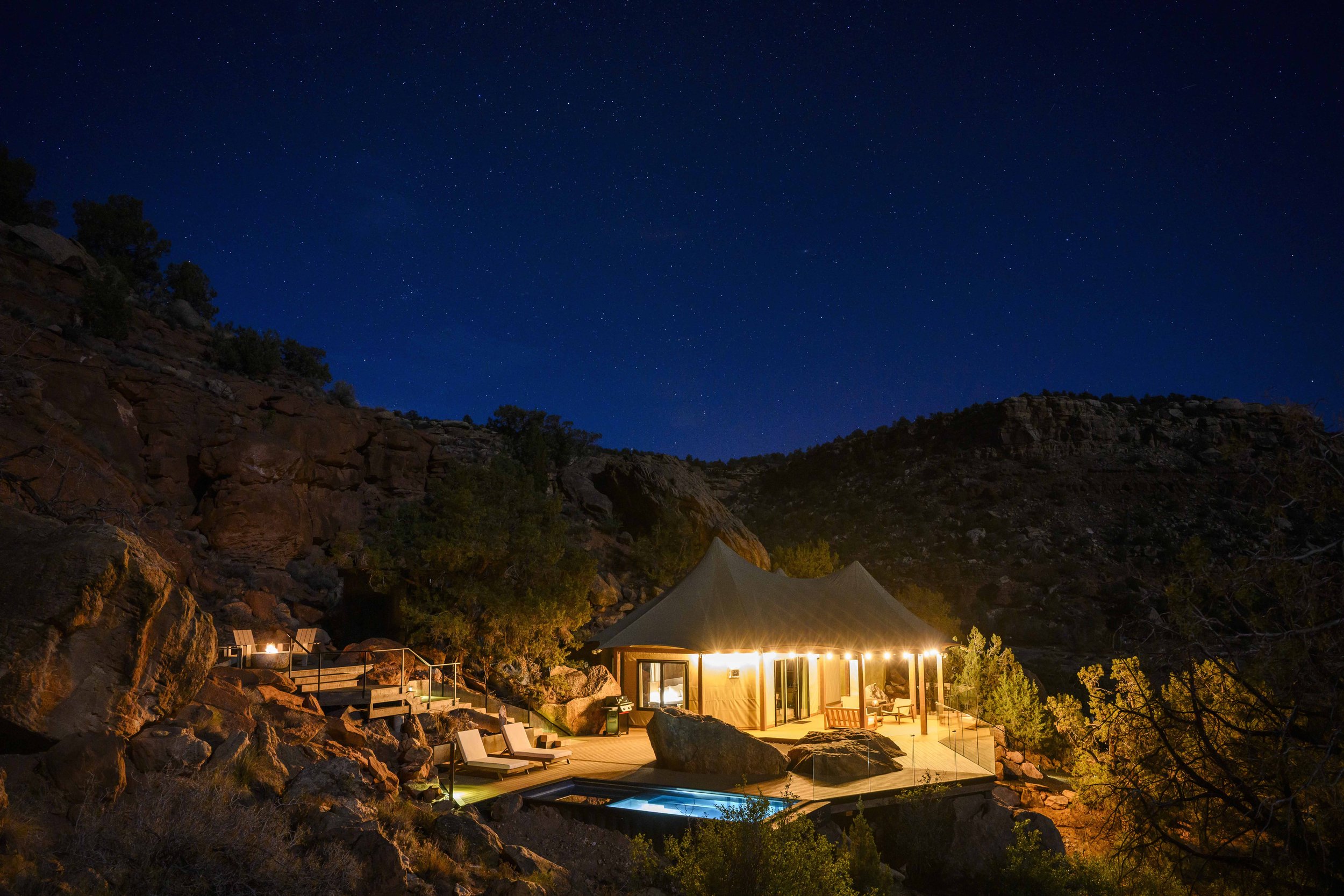
Photo by Open Sky Zion
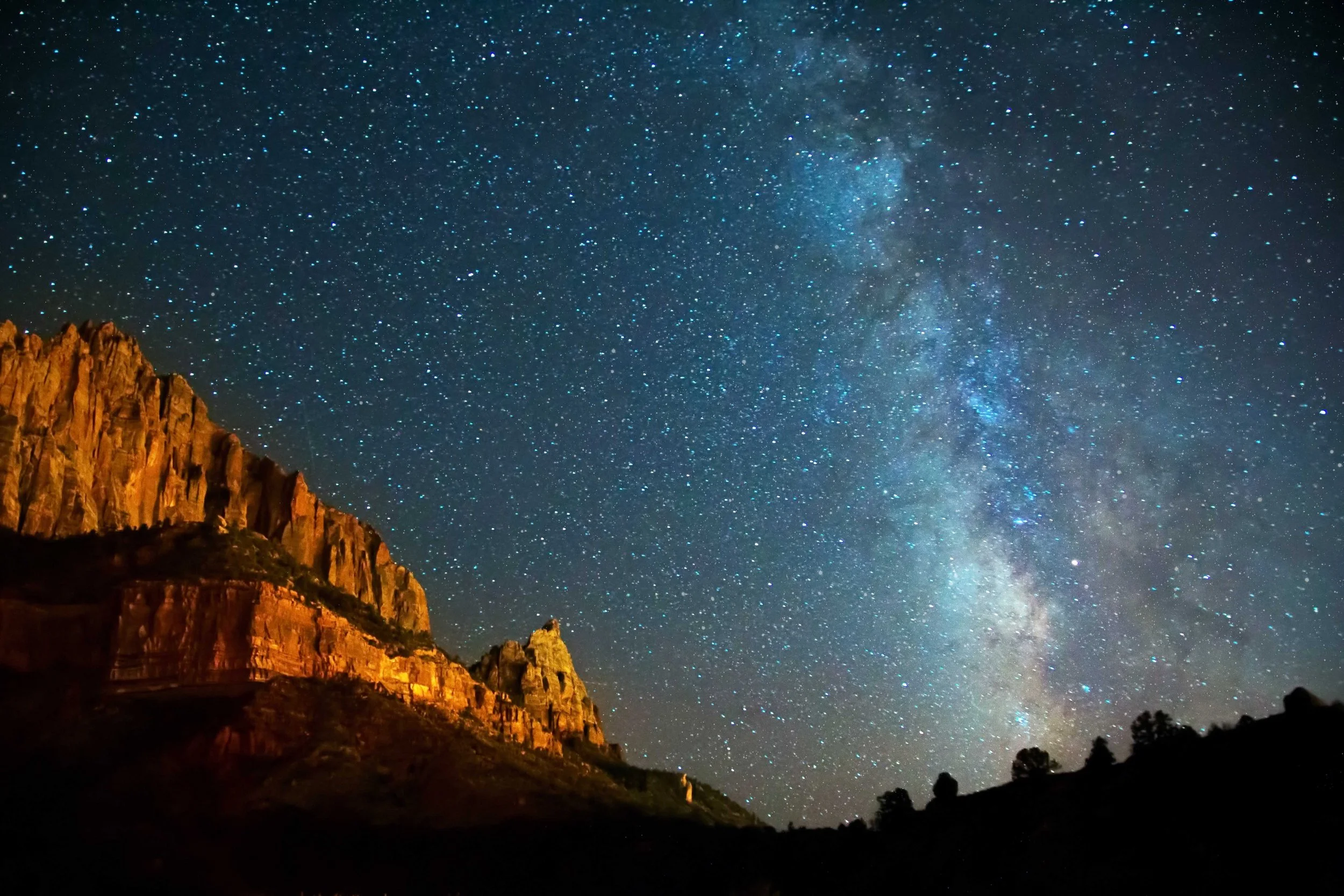
Zannier Sonop, Namib Desert, Namibia
Perched atop a sea of granite boulders at the edge of the Namib Desert, Zannier Sonop offers an extraordinary journey into one of Africa’s most isolated landscapes. Inspired by 1920s explorer camps, the ten luxury canvas tents are set on elevated wooden platforms, blending seamlessly into the vast desert terrain. Because the Namib Reserve benefits from exceptionally low light pollution and crisp desert air, nightfalls reveal a hyper-clear view of the Southern Hemisphere. Guests can observe the Milky Way through telescopes set up along private decks or roll up the canvas walls of their suites to drift off directly beneath the open cosmos.
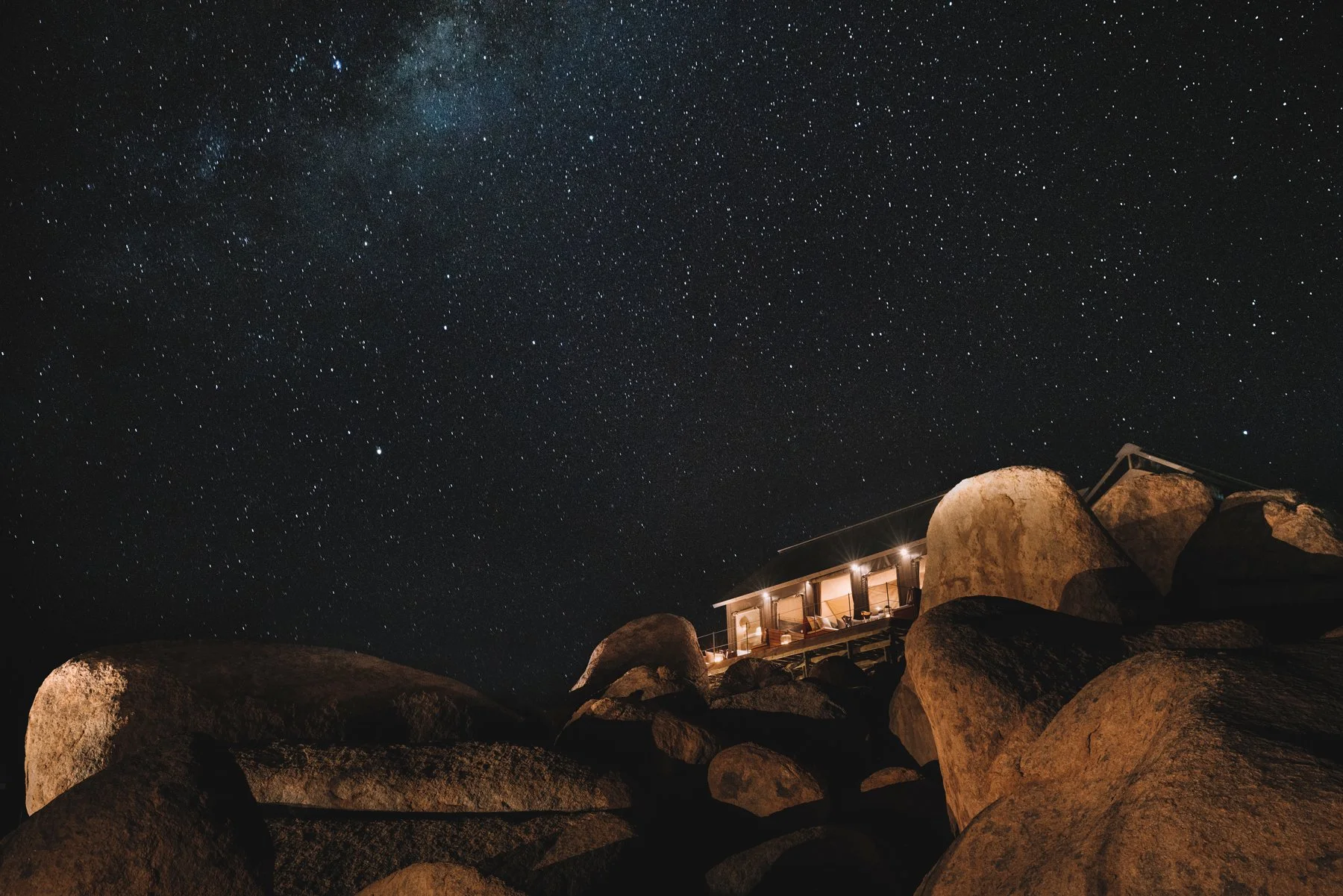
Photo by Zannier Sonop
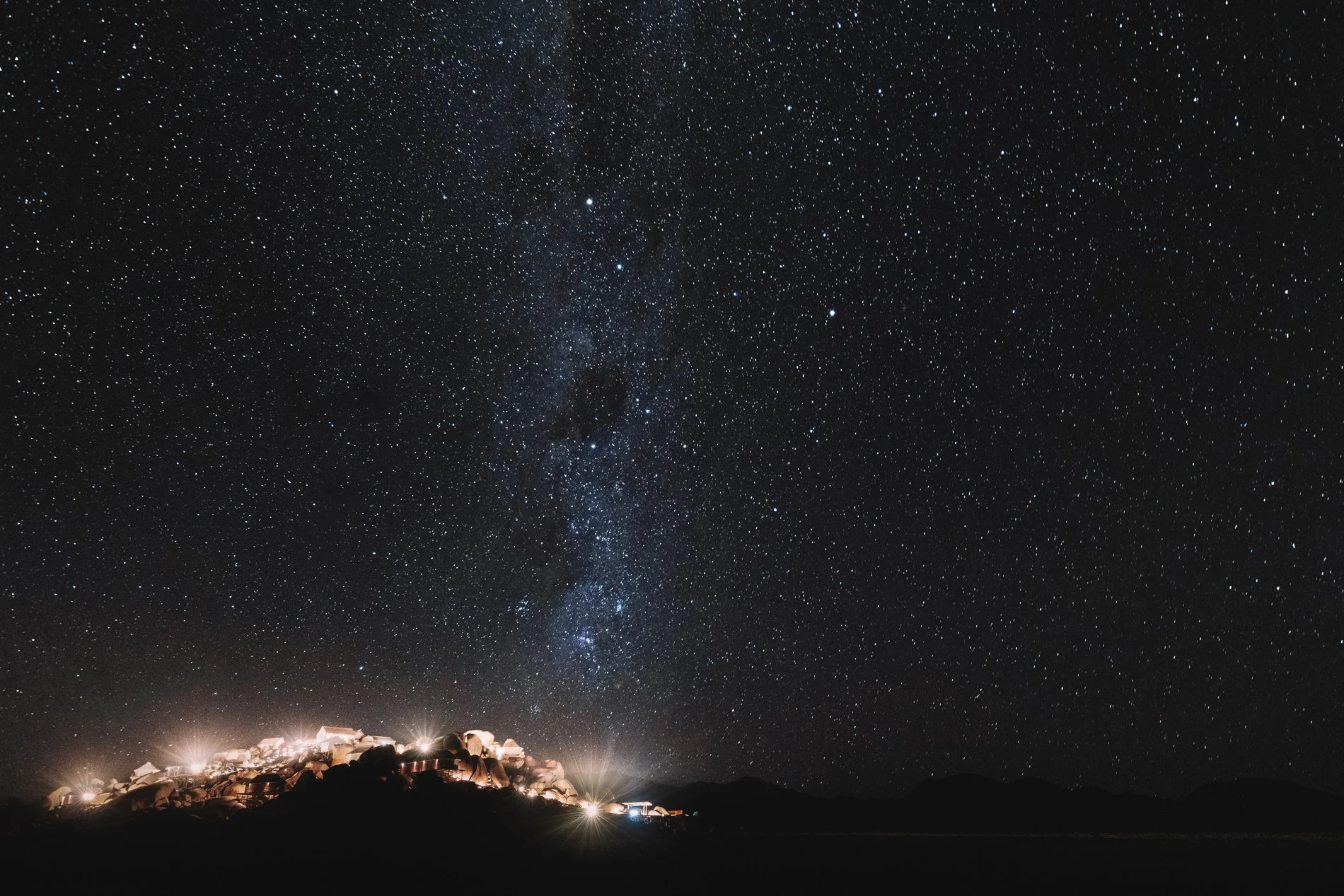
Photo by Zannier Sonop
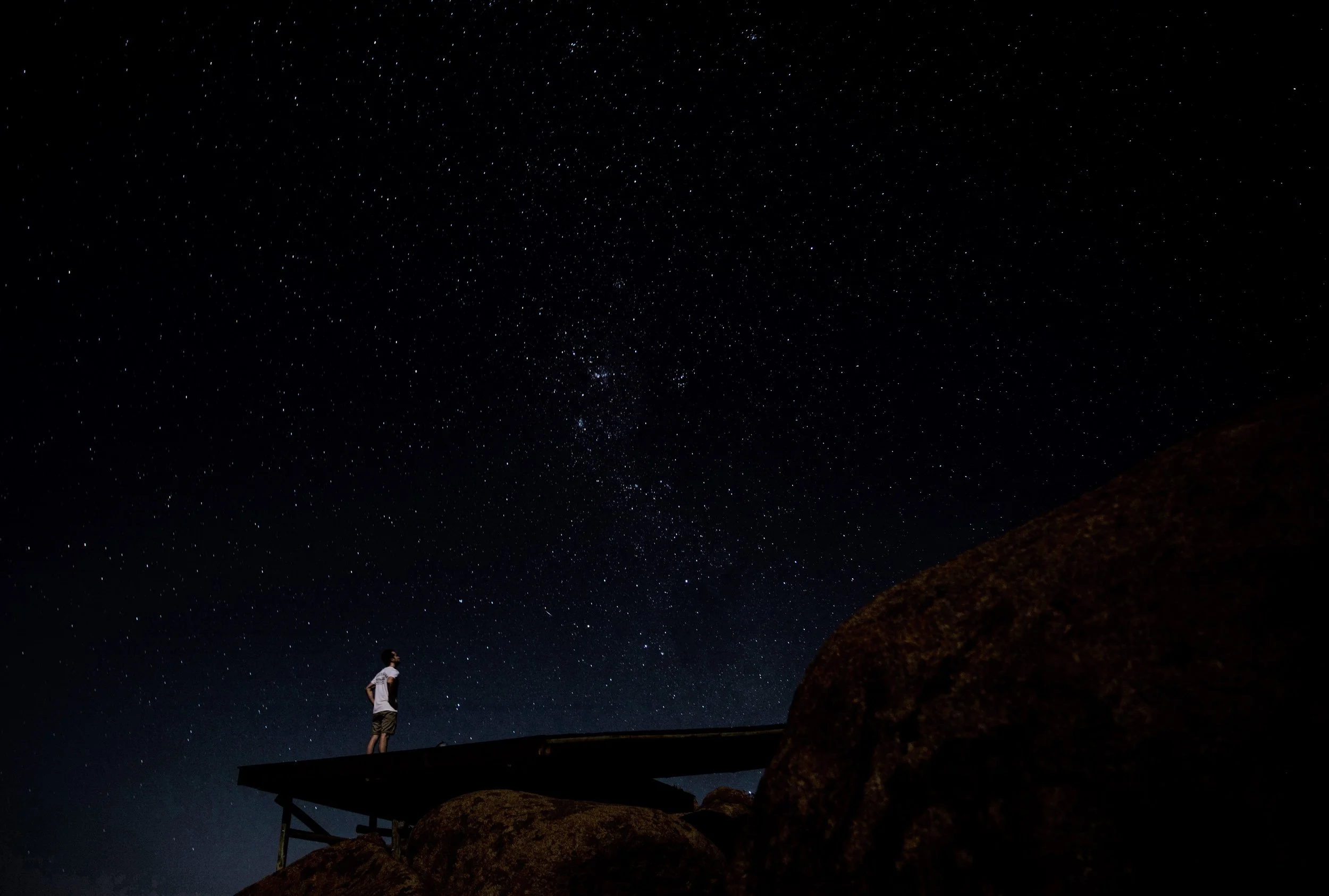
Photo by Zannier Sonop
The Lodge at Pine Cove, French River, Ontario, Canada
Resting along the rocky shores of the historic French River, The Lodge at Pine Cove sits nestled amidst Ontario’s vast northern pine forests and Precambrian shield geography. Handcrafted wooden cottages feature expansive screened porches and private water-facing decks surrounded by dense wilderness. Protected from city light by miles of crown land and calm river waters, the dark night sky over the French River opens up into an incredible expanse of brilliant star fields and planetary motion, best observed right from the lodge’s open-air porches or water-edge docks.
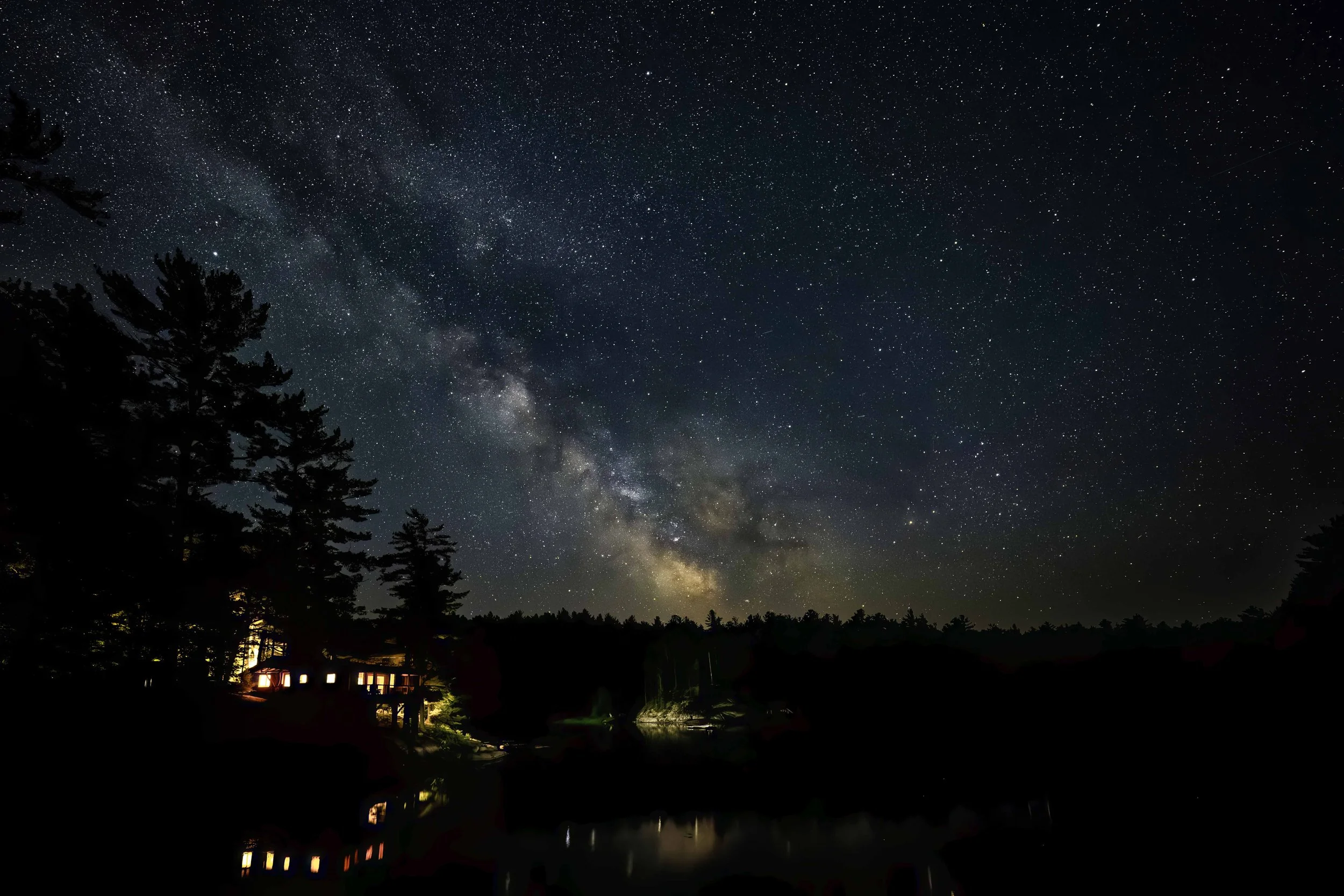
Photo by The Lodge at Pine Cove
Ambiente, A Landscape Hotel, Sedona, Arizona, USA
Resting on the edge of Coconino National Forest, Ambiente is framed by Sedona’s iconic crimson rock formations and natural creek pathways. Because Sedona was officially designated an International Dark Sky Community, local light codes strictly govern exterior illumination across the entire region, preserving pristine nocturnal conditions amidst breathtaking topography. The modern architecture consists of elevated glass-walled atriums raised on steel piers to preserve the delicate desert floor without disturbing natural terrain. Designed specifically to capitalize on these protected skies, each atrium is topped with a private rooftop deck equipped with a fire pit and daybed. Guests spend clear desert nights outdoors on their rooftops, watching constellation reflections across the silhouetted red rocks without a trace of urban glow, enjoying ideal atmospheric stability for tracking planetary movements.
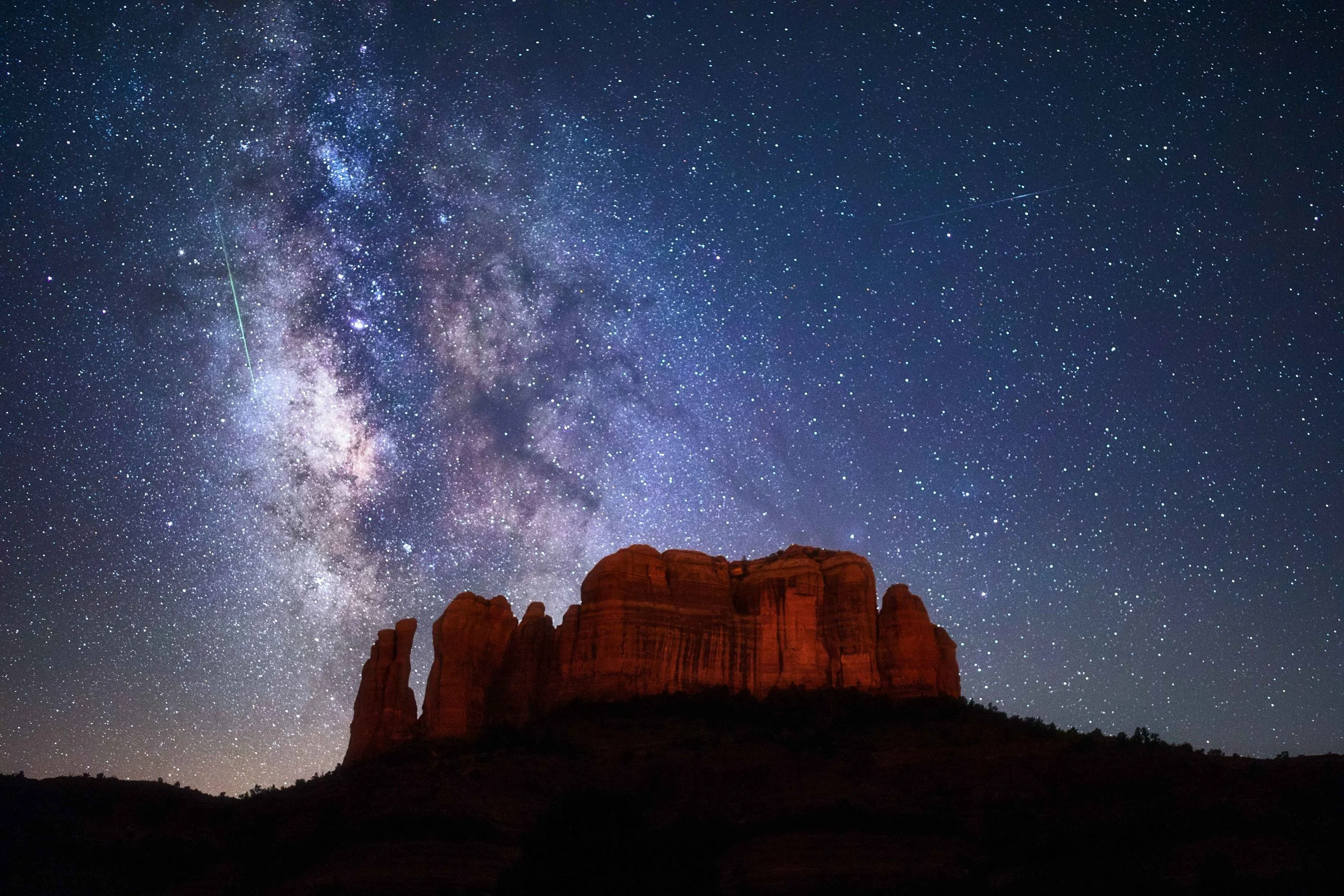
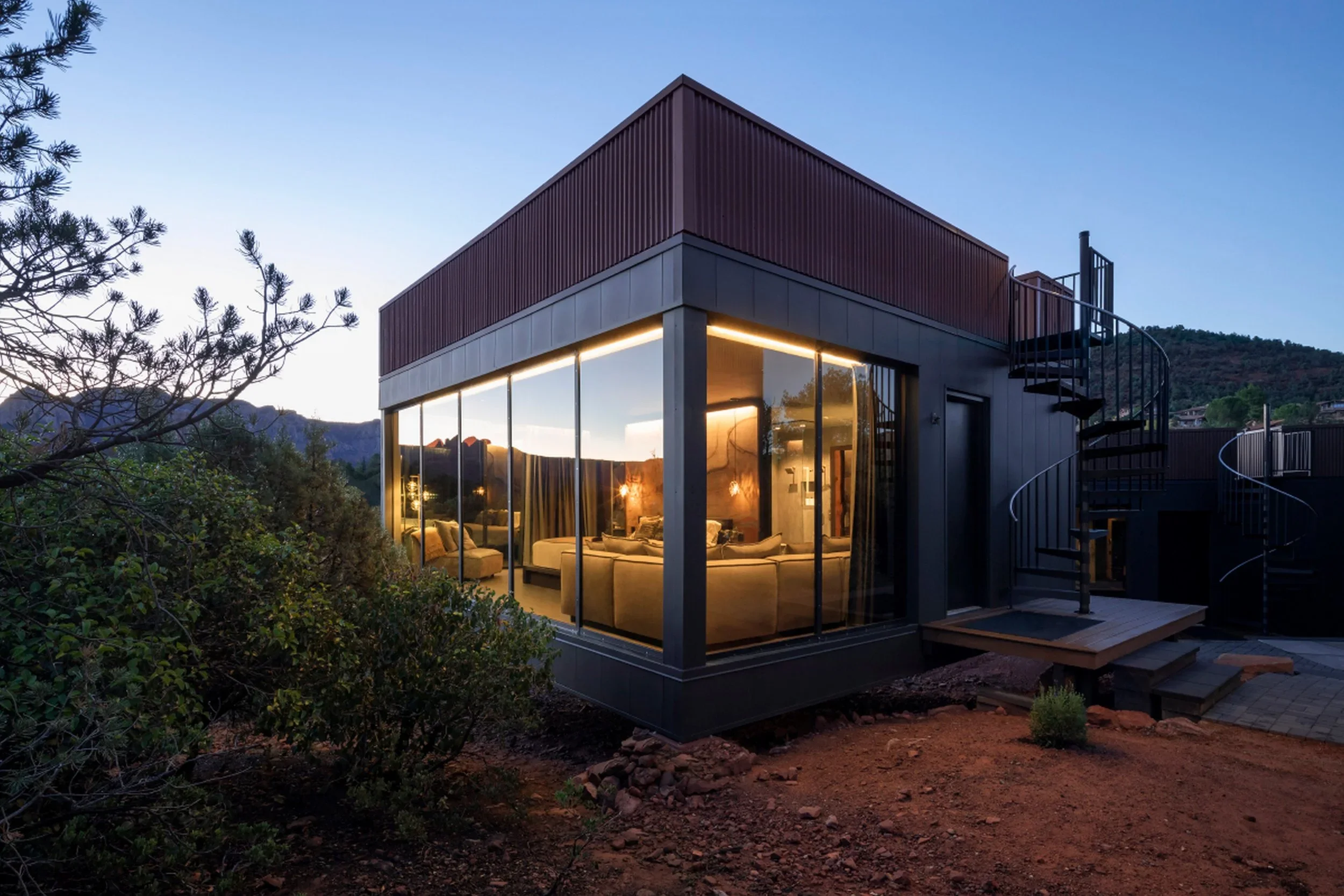
Photo by Jeff Zaruba
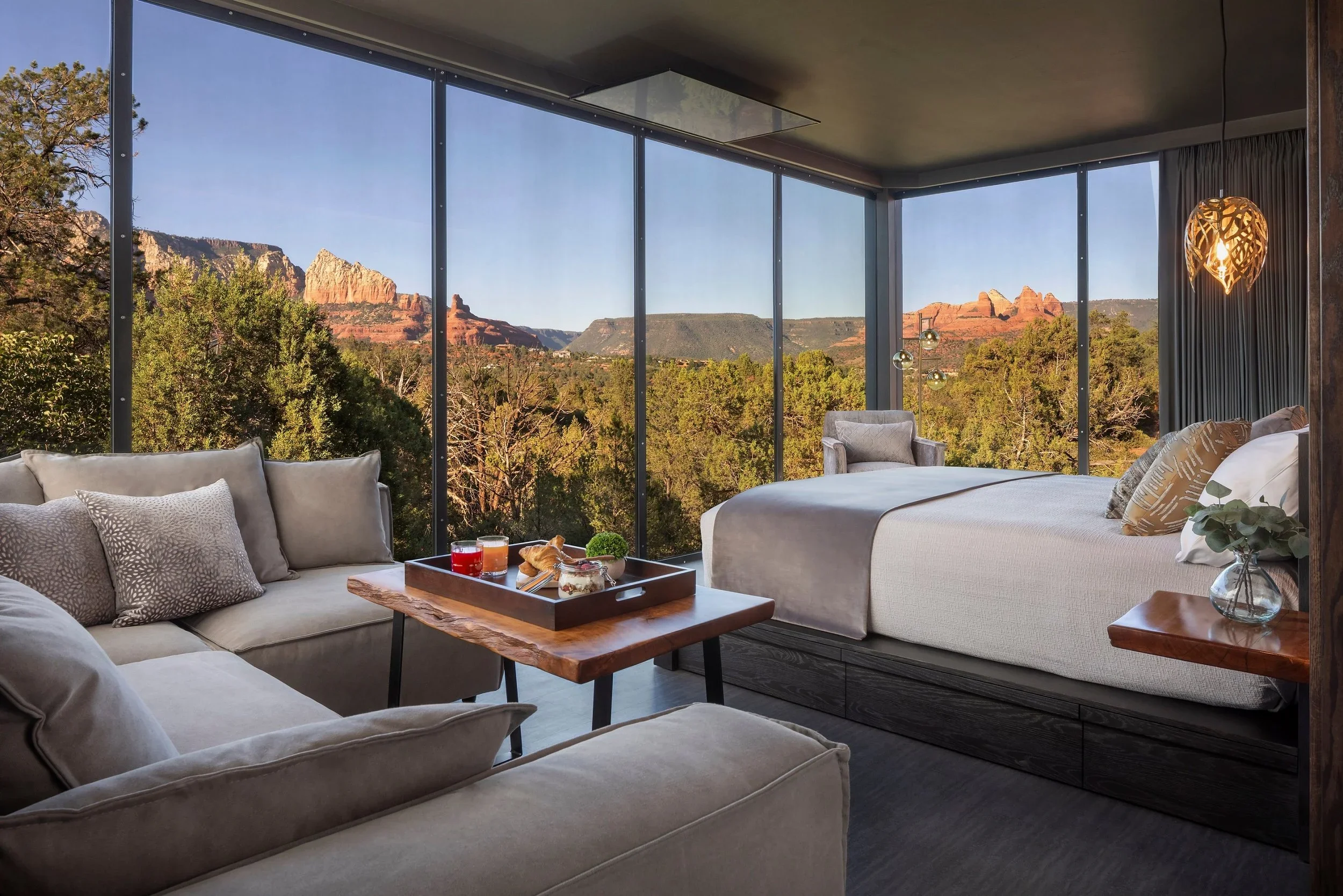
Photo by Jeff Zaruba
The Lindis, Ahuriri Valley, New Zealand
Tucked deep within the glacial Ahuriri Valley on New Zealand’s South Island, The Lindis is surrounded by conservation parks, braided rivers, and mountain ranges that wall off light pollution from distant coastal towns. The main lodge features an undulating roofline covered in timber slats that mimics the topography of the valley floor, alongside standalone glass pods with mirrored exteriors. The valley's microclimate often yields exceptionally crisp, dry mountain air, which minimizes twinkling caused by atmospheric turbulence and provides sharp planetary views. Positioned in one of the purest dark-sky regions on Earth, the glass pods allow guests to lie in bed while watching the brilliant band of the Southern Milky Way sweep directly across the clear alpine skies, revealing deep-sky treasures unavailable to northern observers.
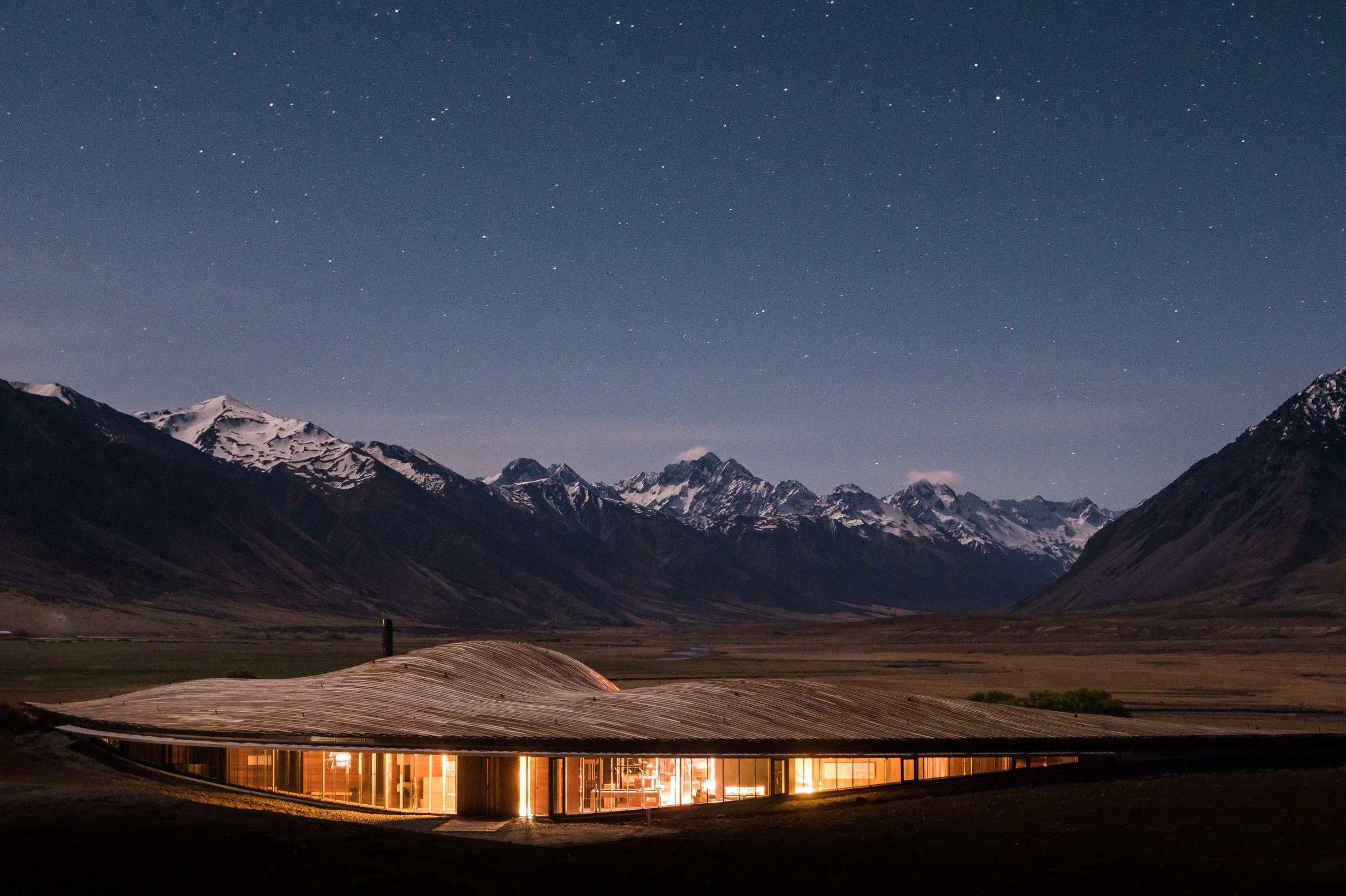
Photo by Lindis
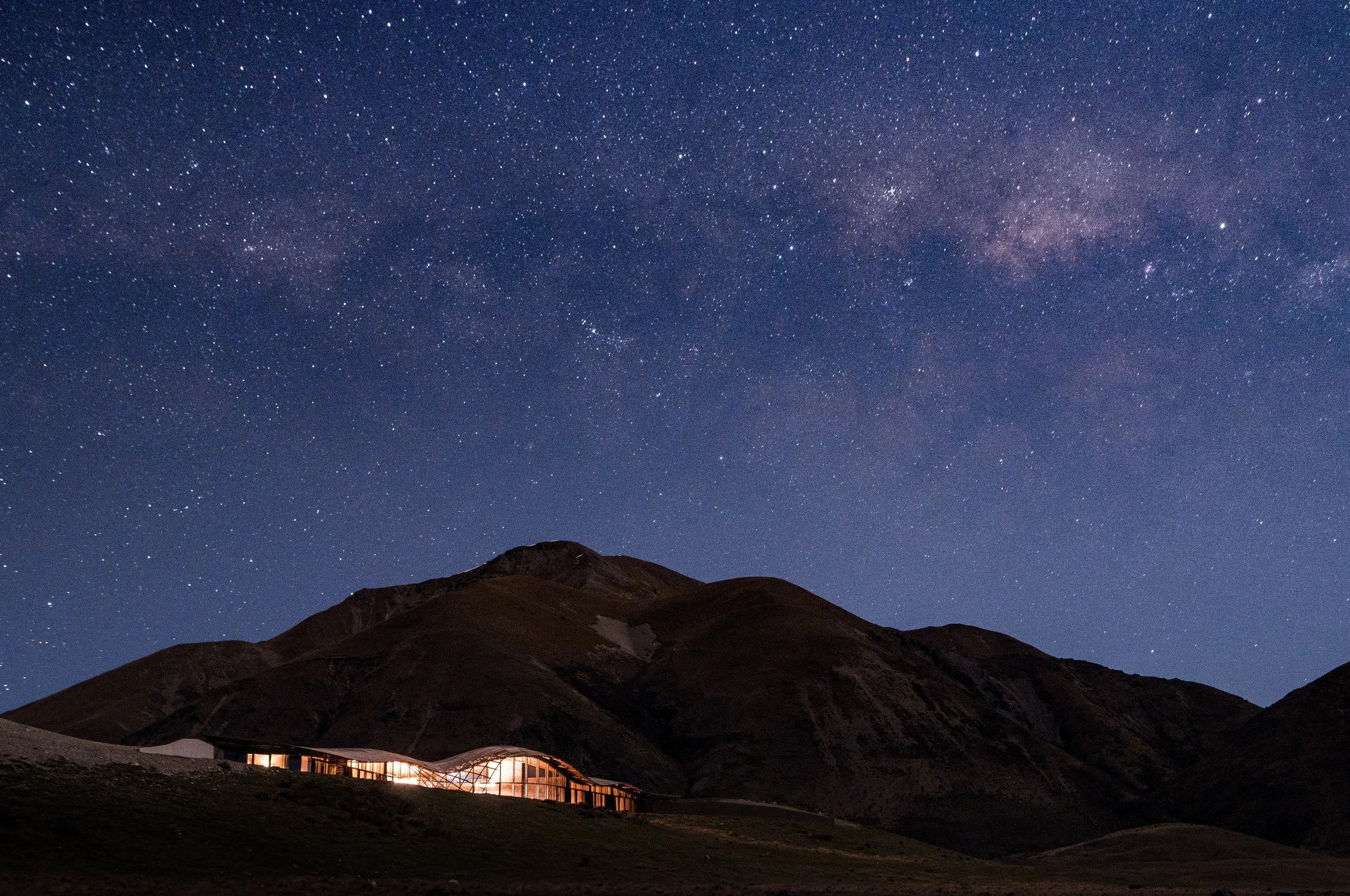
Photo by Lindis
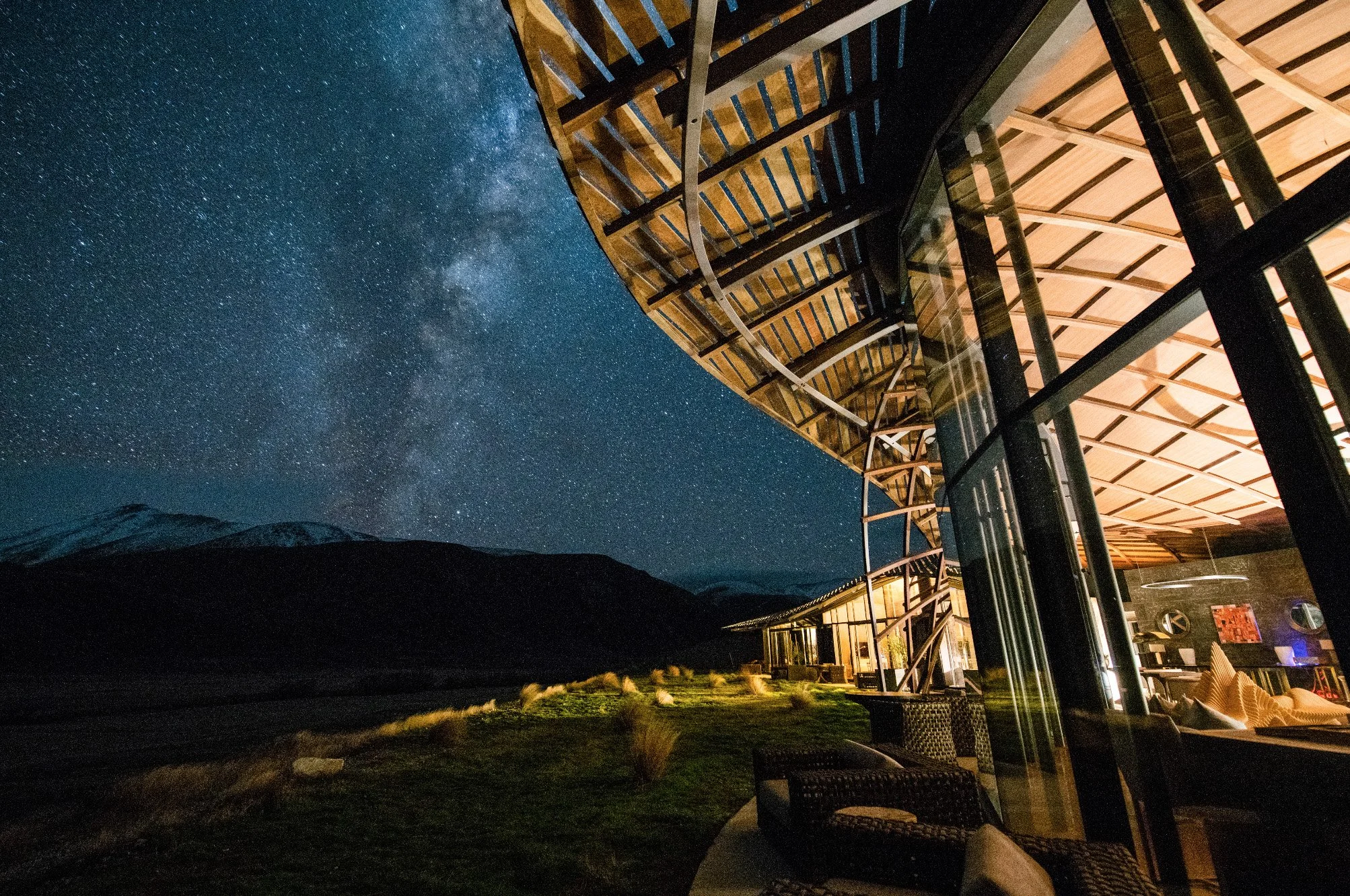
Photo by Lindis
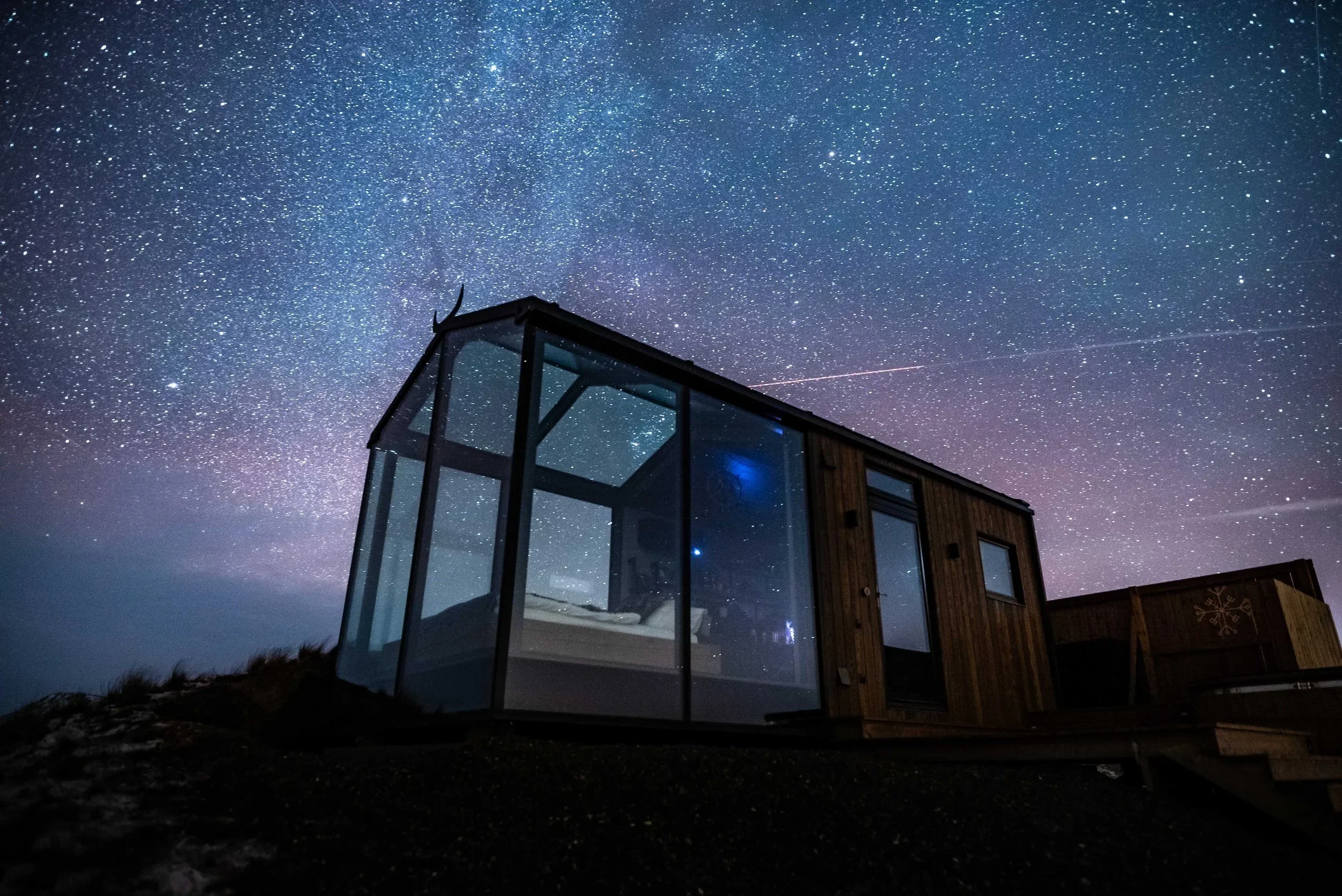
Panorama Glass Lodge, Hella, Iceland
Located along the unpopulated terrain of southern Iceland near Hella, Panorama Glass Lodge looks out across river basins, mossy lava fields, and distant volcanoes, completely unmarred by artificial light. Iceland’s high latitude places it directly under the Auroral Oval, making this region one of the finest locations on Earth for witnessing solar particles colliding with Earth's magnetic field. The custom-built cabins pair heavy wooden bases with floor-to-ceiling glass bedroom enclosures designed specifically for celestial viewing. During the autumn and winter months, when the arctic region plunges into prolonged darkness, guests can watch the vibrant green and violet ribbons of the Northern Lights dance over the horizon or track distant winter constellations without stepping outside into the arctic chill.
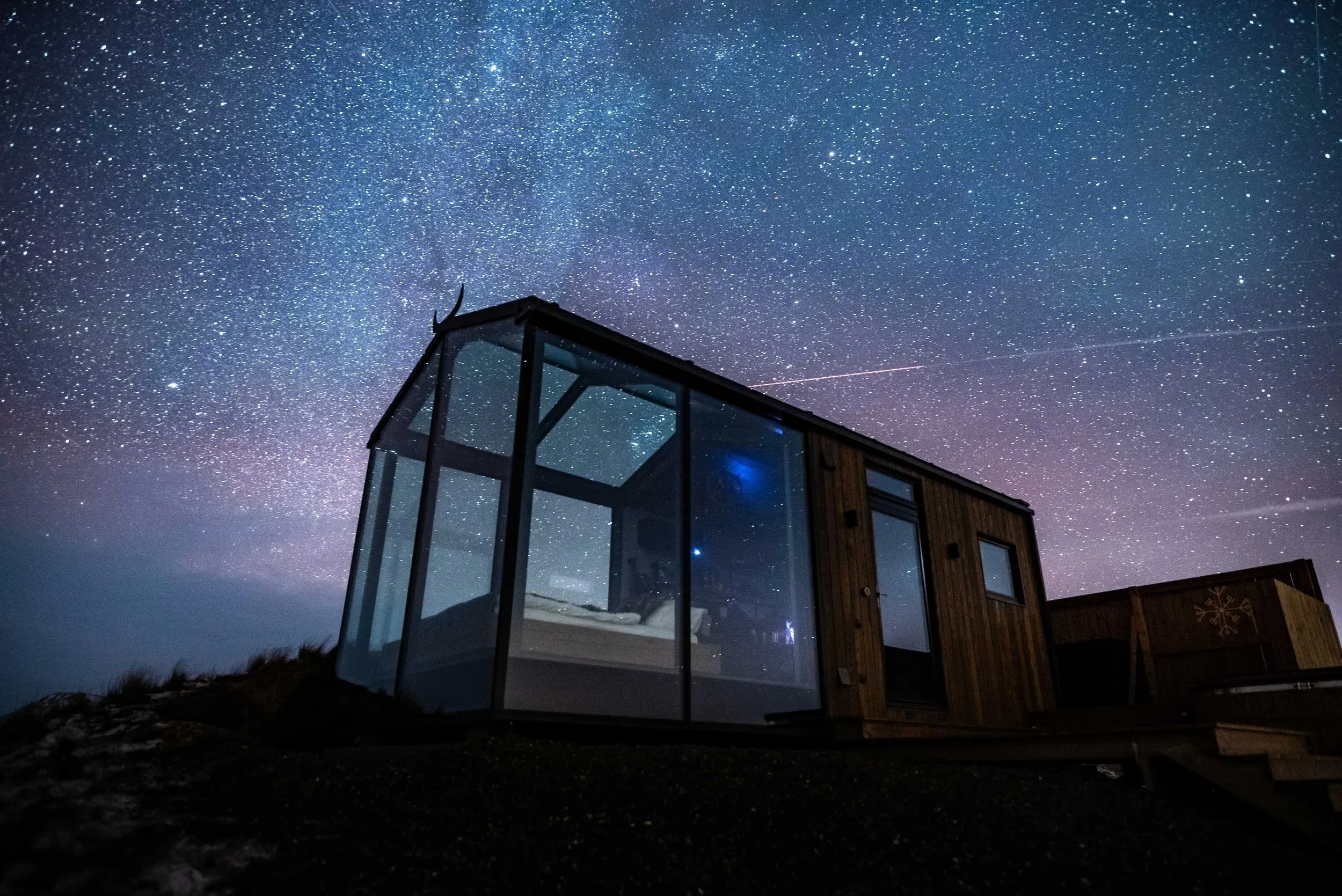
Photo by Panorama Glass Lodge
Bahia Bustamante Lodge, Chubut, Argentina
Situated along the remote Atlantic coast of Patagonia, Bahia Bustamante Lodge is surrounded by marine wildlife reserves, petrified forests, and red granite outcrops in an almost completely uninhabited stretch of coastline. The absence of industrial development or settlements for dozens of miles results in a pitch-black ocean horizon where starlight reflects off the water's surface. A converted seaweed-harvesting village, the eco-lodge features simple, sea-facing coastal cabins constructed to withstand Patagonian winds. With clear, dry air flowing off the Andes across the coastal steppe, the lodge offers expansive night skies where the sound of crashing waves accompanies crystal-clear views of southern constellations, shooting stars, and the glowing Magellanic clouds.
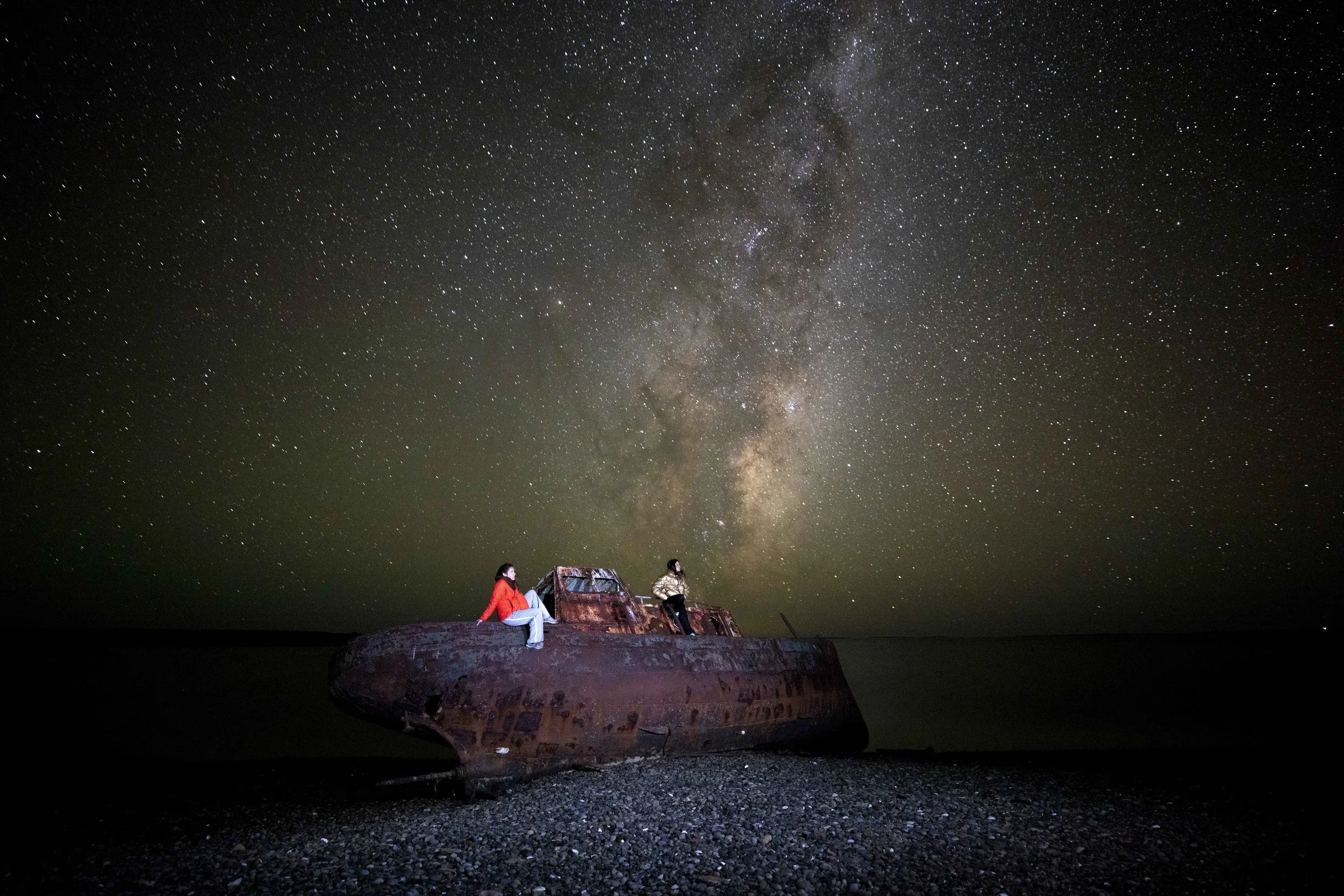
Photo by Jose Ayerza
Manshausen, Steigen Archipelago, Norway
Set on a private island within the Steigen Archipelago inside the Arctic Circle, Manshausen sits at the edge of the sea, surrounded by jagged granite peaks and clear coastal waters. Its high northern latitude puts it in prime position for aurora viewing during the dark polar nights, while the surrounding ocean provides clean, cool air that reduces atmospheric haze. The sea cabins feature glass cantilevered structures extending out over the water, lined with natural larch wood. During winter, when darkness dominates the maritime landscape, guests can observe the Aurora Borealis reflecting off the fjord surface through floor-to-ceiling glass walls, framed by the dramatically lit arctic peaks.

Photo by Steve King

Photo by Steve King
Whispering Springs Wilderness RetreaT, Ontario, Canada
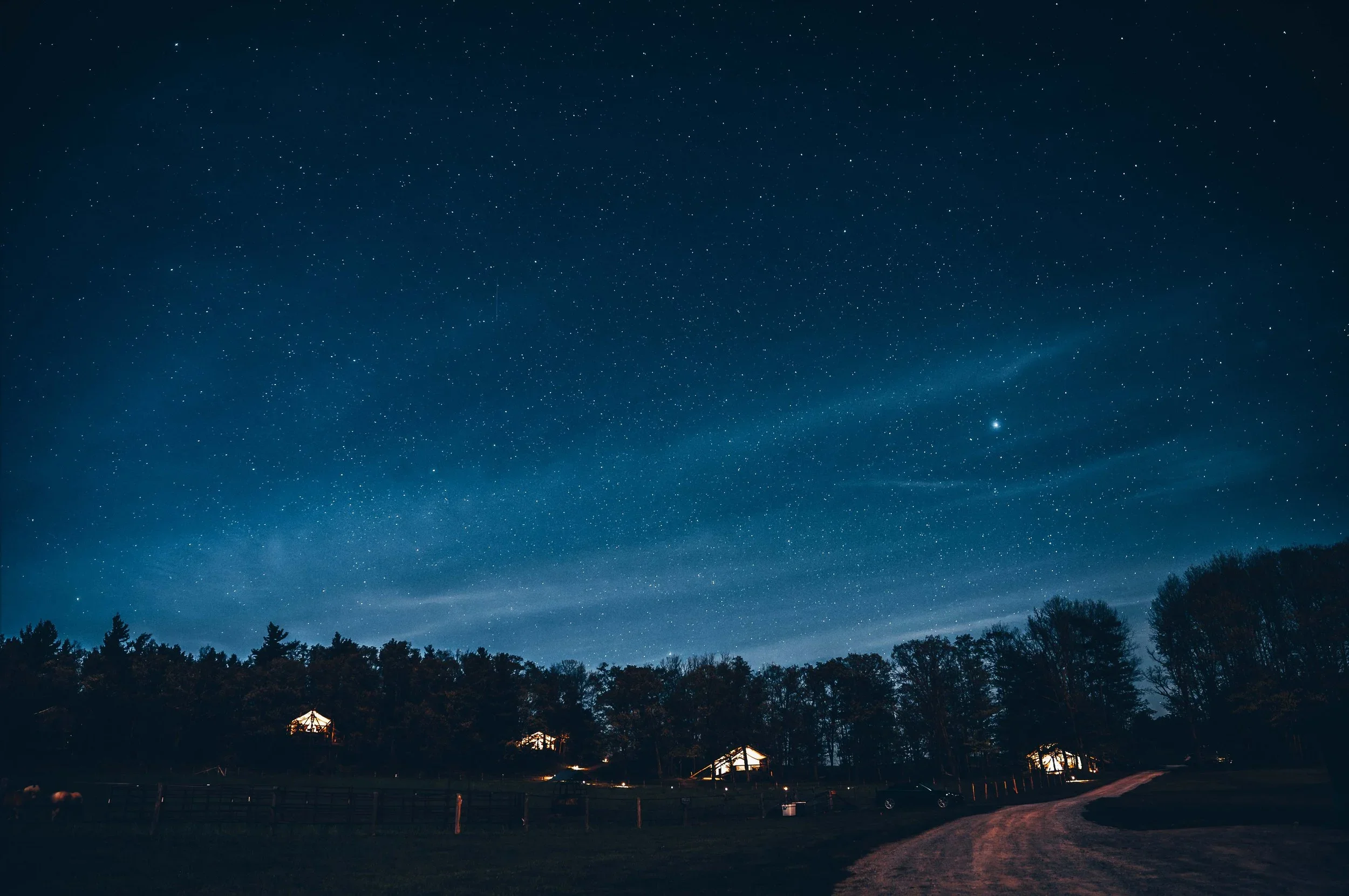
Nestled among the old-growth forests, spring-fed ponds, and rolling meadows of Northumberland County, Whispering Springs provides a serene getaway in rural Ontario. The geography is characterized by gentle moraine topography, where natural ridges help block light spill from surrounding rural roadways. Glamping tents and cedar cabins incorporate wide covered porches, outdoor soaking tubs, and open-air layout designs that emphasize outdoor living. As dusk settles over the ponds and the ambient temperature drops, the rural sky opens up into a rich field of starlight. Guests gather around open fire pits beneath dark woodland skies to watch the Milky Way break through the forest canopy, experiencing an authentic, rustic dark-sky retreat.
Awasi Atacama, San Pedro de Atacama, Chile
Located in the heart of the Atacama Desert—the driest non-polar desert on Earth—Awasi Atacama is positioned beneath what astronomers consider the clearest sky on the planet. The high altitude, near-zero humidity, and minimal atmospheric distortion mean starlight travels through fewer layers of air, resulting in pinpoint star clarity and unmatched viewing conditions. Built inside a historic adobe-walled compound, the private suites draw inspiration from traditional Atacameño architecture, utilizing native timber, stone, and mud brick. The desert’s pristine darkness lets travelers see deep-sky nebulae, glowing star clusters, and the intricate details of the galactic center with the naked eye, often accompanied by private astronomical guides who interpret the unique southern sky.
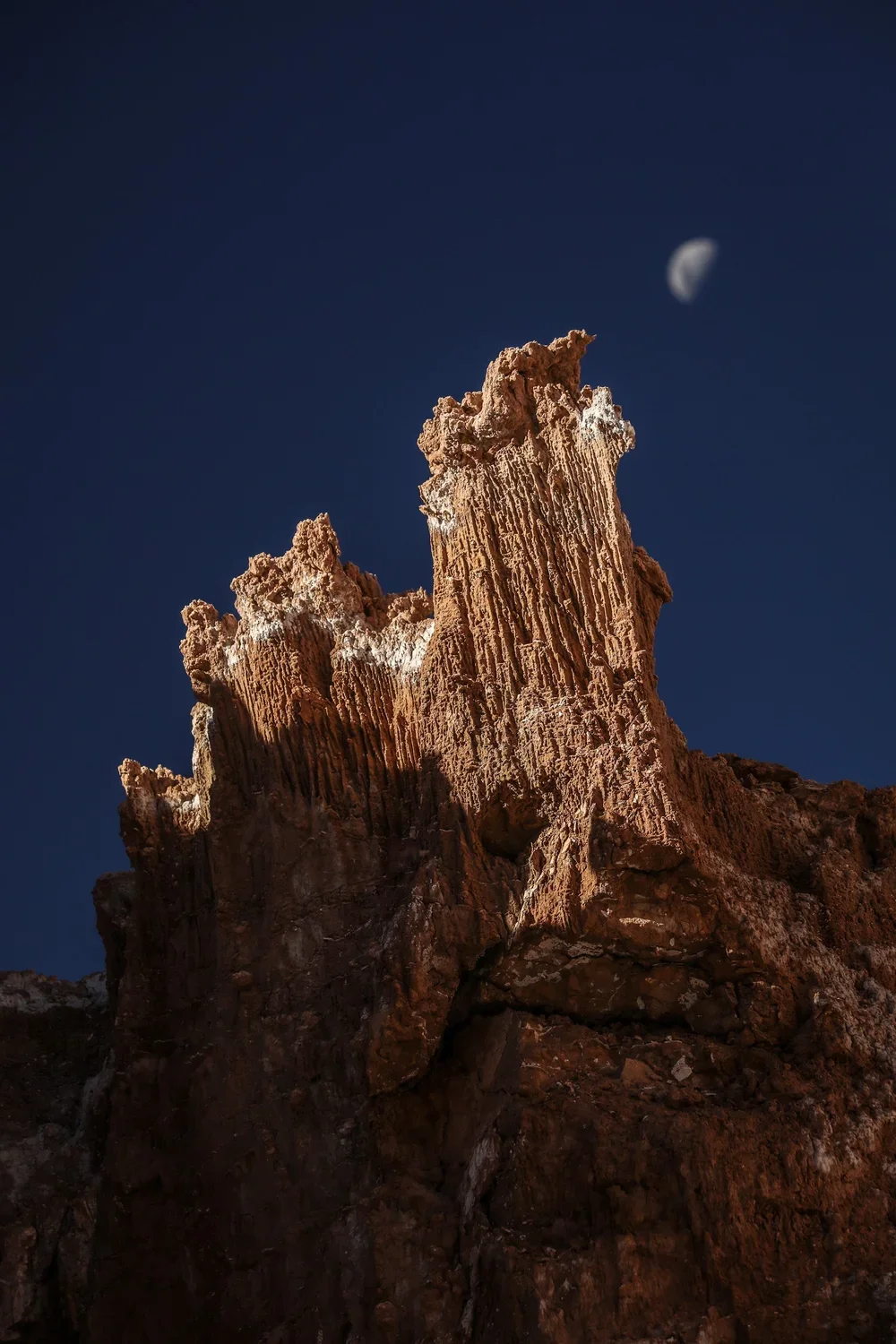
Photo by Luciano Bacchi
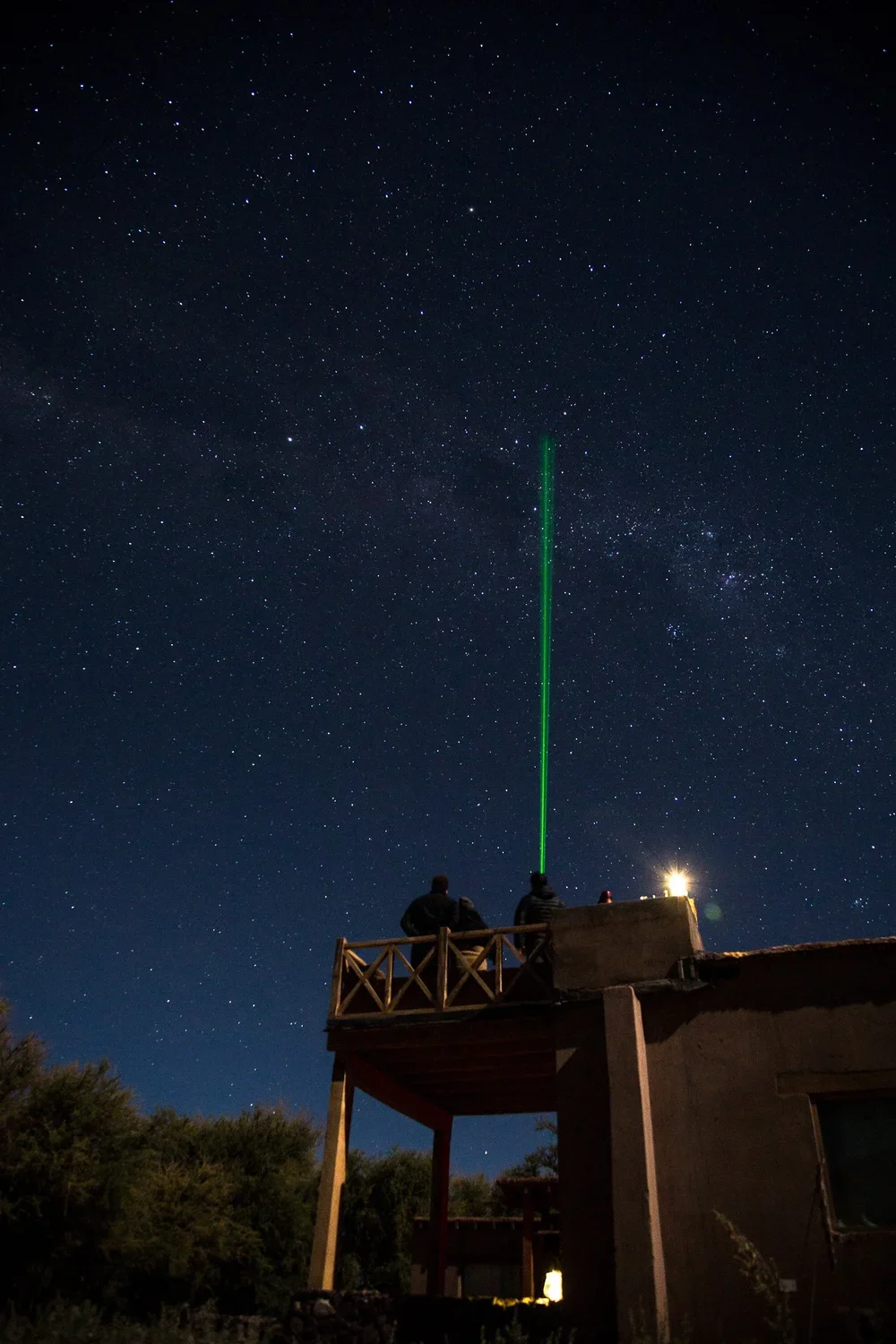
Photo by Luciano Bacchi
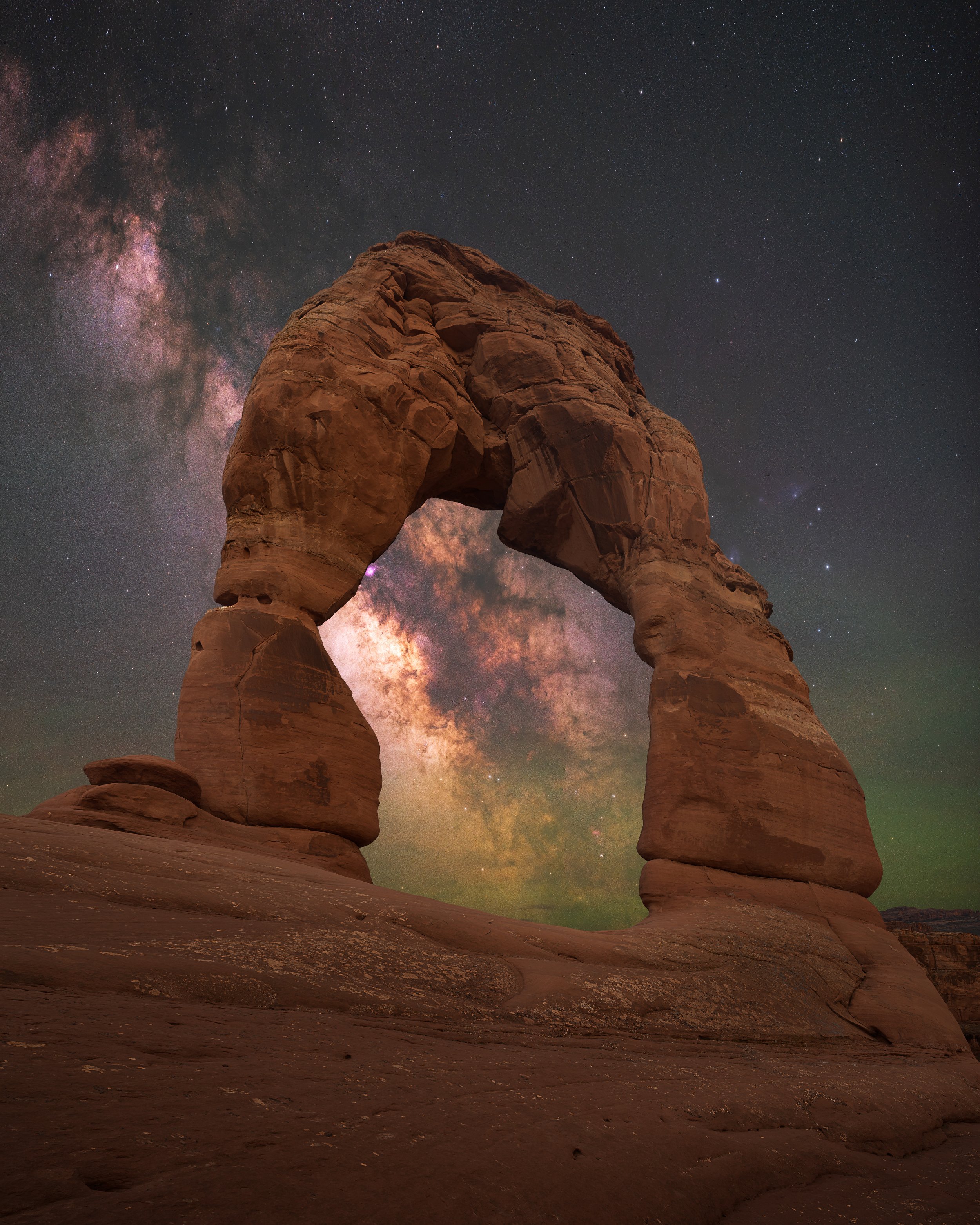
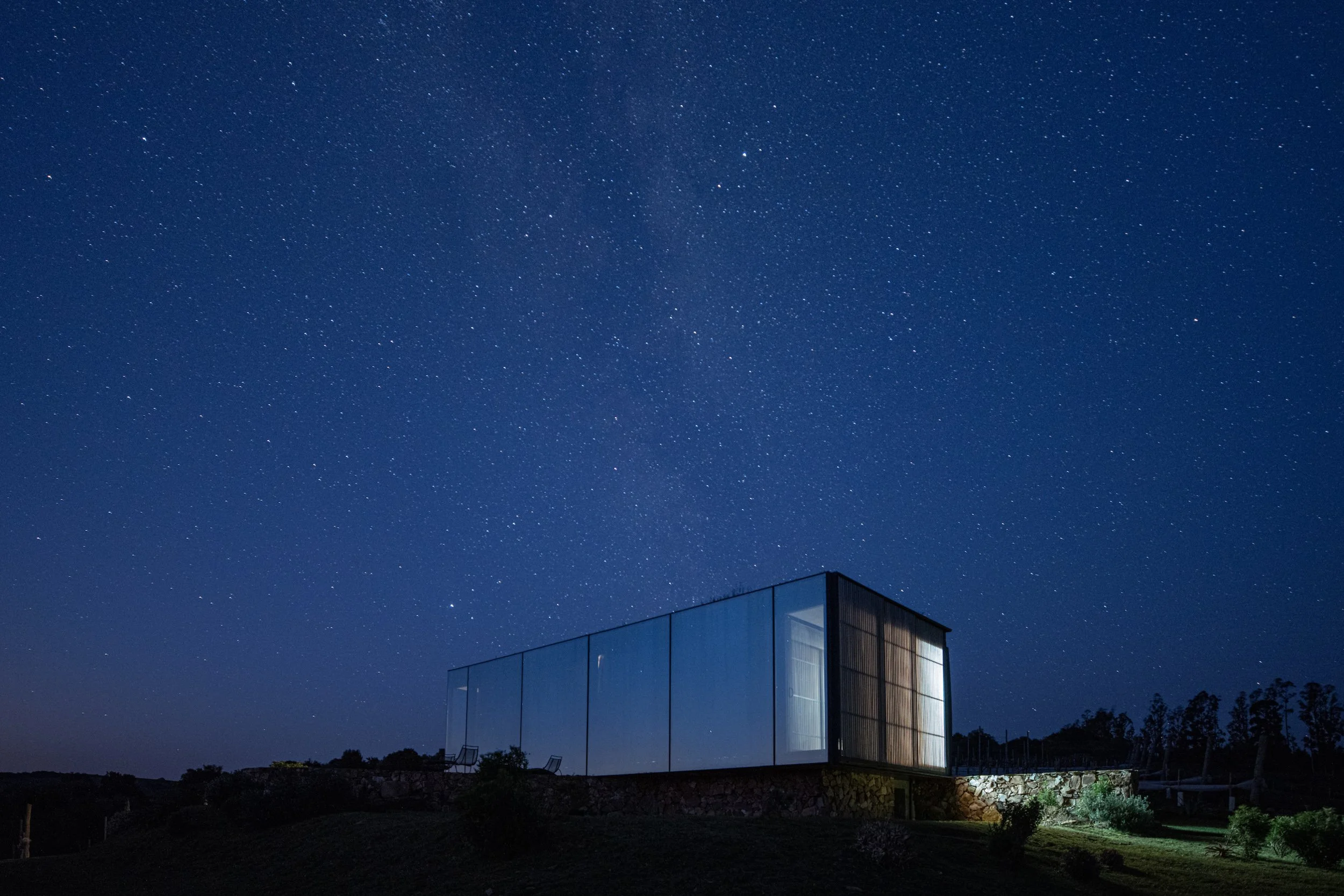
Room + Wild is the world's first and leading collective and platform for landscape-enhanced accommodation, ecotourism, nature-based destinations, and sustainable luxury travel experiences. We consistently inspire, influence, and spread awareness through our tailored travel guides, curated media content/channels, brand activations, press trips as well as visual and narrative storytelling.
Stargazing is humanity’s oldest form of travel, inviting us to reconnect with ancient cosmic rhythms far from city light pollution. Driven by lunar cycles and the search for truly dark skies, modern astro-tourism merges slow travel with ecological preservation. By choosing dark-sky retreats and landscape hotels built with low-impact architecture, travelers actively protect nocturnal ecosystems while unlocking front-row seats to the Milky Way, meteor showers, and the vast, 93-billion-light-year universe above.